Writing should feel smooth and natural without the constant frustration of a rigid spine snapping shut mid-sentence. Many standard journals force you to hold the pages down with your forearm, which leads to hand fatigue and messy handwriting. Finding a journal designed to rest completely open creates an inviting workspace on any desk.
In September 2026, modern binding techniques and heavier paper stocks have made flat-opening journals more reliable than ever. We compared 7 top options from respected stationery makers like WORLD TRAVELER, BOBO RABBIT, Pinesman and more to help you find the right format. You can discover more desk setup essentials in our Home & Living section.
Whether you need a compact daily planner, a multi-pack for work projects, or an expansive art journal, binding mechanics determine your writing comfort. This comprehensive guide breaks down paper weights, structural stitch styles, and cover durability so you can pick the perfect companion for your daily notes.




1. Binding Engineering and Spine Architecture
The spine structure is the single most important factor in whether a journal opens to a true 180-degree angle. Traditional mass-market notebooks use cheap cut-and-glue perfect binding, which creates a stiff block of hardened adhesive along the outer edge. This rigid glue spine creates a steep gutter that prevents pages from settling flat without cracking the book.
Smyth-sewn binding and exposed PUR naked spines offer superior flexibility by grouping pages into folded signatures sewn together with durable thread. Because each signature rotates independently on its thread anchor, the journal relaxes naturally against the desk when opened. You can identify these higher-grade constructions by looking for thread stitches visible along the inner centerfold.
When shopping for everyday journals, prioritize exposed thread-sewn bindings or specialized PUR flexible adhesives over standard glued spines. A simple test is to open the notebook to the exact center spread. If the cover remains flat without requiring manual pressure, the spine geometry is built for long-term comfort.
2. Paper Weight and GSM Density Ratings
Paper density is measured in grams per square meter, commonly abbreviated as GSM, and directly influences bleed-through resistance. Standard lightweight office paper typically ranges between 70 and 80 GSM, which works well for ballpoint pens and light graphite pencils. Thicker stocks ranging from 100 to 105 GSM provide the necessary fiber density to support heavy gel ink and fountain pens.
Evaluating paper weight requires balancing notebook thickness against the amount of ink absorption your tools require. Lightweight 80 GSM sheets keep high page-count journals slim and portable, but wet rollerball pens may create noticeable ghosting on the reverse side. Premium 105 GSM Japanese paper provides crisp opacity, allowing you to use both sides of every single sheet without visual distraction.
As a general rule, choose 80 GSM paper for lightweight, rapid note taking with standard ballpoint pens or mechanical pencils. Upgrade to 100 GSM or higher if you frequently write with rich liquid ink, highlighters, or technical drawing markers. More details on everyday stationery can be found in our Uncategorized archives.
3. Surface Sizing, Texture, and Ink Compatibility
The surface treatment of paper, known as sizing, determines how quickly liquid ink dries and whether it feathers across the page. Highly absorbent paper pulls ink deep into the fibers, which prevents smearing but causes sharp lines to spread out unevenly. Specially sized paper slows absorption slightly to keep fine pen strokes crisp and vibrant.
Tooth refers to the microscopic texture of the sheet, ranging from glass-smooth coated finishes to slightly rough, fibrous textures. Smooth paper reduces drag on fine steel nibs, creating an effortless writing sensation for fast cursive notes. Textured sheets offer slight tactile resistance, making them ideal for graphite shading, colored pencils, and expressive charcoal sketches.
If you use fountain pens or wet gel pens, look for smooth, acid-free sheets that list bleed resistance in their specifications. Left-handed writers should pair quick-drying 80 GSM paper with fast-curing inks to prevent smudges as their hand moves across the freshly written line.
4. Margin Architecture and Gutter Clearance
The gutter is the narrow inner space where opposing pages meet at the center seam of the notebook. In poorly bound journals, the gutter creates a steep curved slope that makes writing near the inside edge awkward and uncomfortable. True lay-flat notebooks eliminate this slope, turning two separate pages into a single continuous workspace.
Seamless gutters are essential for wide-format diagrams, panoramic landscape sketches, and complex mind maps that stretch across the centerfold. When pages lay completely level, you gain roughly fifteen percent more usable writing surface per sheet. Left-handed writers particularly benefit because their wrist can rest comfortably across the middle without encountering a raised ridge.
Look for notebooks that advertise zero-gutter or true 180-degree flat opening across the entire block. If you draw two-page charts or expansive timelines, select a naked spine or Smyth-sewn binding that remains flush across the center divide.
5. Specifications and Structural Comparison
Comparing technical specifications helps you quickly match your preferred writing utensils with the correct journal construction. The table below outlines key differences between common binding architectures and their ideal functional use cases.
| Binding Architecture | Typical Paper Density | Best Writing Media | Gutter Flatness Rating |
|---|---|---|---|
| Naked Spine / PUR Bound | 100 – 105 GSM | Fountain Pens, Gel, Markers | Flawless 180° Flat |
| Smyth-Sewn Hardcover | 80 – 100 GSM | Ballpoint, Gel Pens, Rollerballs | Excellent Near-Flat |
| Flexible Softcover Sewn | 80 GSM | Pencils, Ballpoint, Fineliners | Very Good Flat |
| Thread-Stitched Kraft Booklet | 80 GSM | Everyday Pens, Highlighters | Excellent Natural Flat |
Using this comparison helps you balance physical portability against paper thickness and structural rigidity. You can discover comfortable ergonomic tools to enhance your daily writing sessions in our Furniture & Comfort guide.
6. Cover Rigidity and Outer Material Durability
The protective cover shields internal pages from creasing and provides structural support when writing without a desk. Hardcovers constructed from thick Dutch greyboard or dense binder board offer a rigid lap desk surface when taking notes on the move. Flexible covers made from soft vegan leather or pliable kraft paper reduce carry weight inside crowded backpacks.
Consider your daily travel habits when choosing between rigid board, textured faux leather, or natural kraft cardstock. Heavy-duty hardcovers withstand rough transit inside briefcases and protect gilded page edges from friction. Softcovers bend smoothly inside compact bags, allowing you to slip the notebook into tight pockets without adding bulk.
Choose a rigid hardcover if you frequently take notes during meetings, field inspections, or lectures without a sturdy table. Opt for a flexible softcover or multi-pack booklet system if you prioritize lightweight portability and modular subject organization.
7. Size Formats and Usable Surface Area
Notebook dimensions dictate how much information you can record on a single spread before turning the page. The international standard A5 size, measuring roughly 5.8 by 8.3 inches, strikes an ideal balance between portable handling and generous writing space. Larger 8 by 10 inch desk formats provide expansive room for detailed business meeting minutes and project management outlines.
Selecting the right size format depends on whether your notebook remains stationary on an office desk or travels with you daily. A5 notebooks slip effortlessly into laptop sleeves, making them the standard choice for daily journaling and study notes. Oversized formats offer wider margins and longer line lengths, reducing the need for frequent page flips during deep writing sessions.
If you write at a fixed workstation, an 8 by 10 inch journal offers spacious comfort for continuous planning and outlining. If you commute regularly or work from coffee shops, standard A5 formats provide the most practical balance of weight and utility.
8. Page Count and Spine Stress Dynamics
Page count directly affects the physical thickness of the notebook block and the amount of tension placed on the outer spine. High-capacity journals with over 300 pages provide months of uninterrupted record keeping in a single volume. However, thick page blocks require robust binding reinforcement to prevent the middle signatures from loosening over time.
Slim notebooks containing 60 to 160 pages open flat with virtually no initial spine resistance due to their slender profile. Medium journals ranging from 180 to 256 pages offer a sweet spot, providing ample writing longevity while maintaining a sleek, manageable profile. Balancing page volume with binding strength ensures your journal remains intact through daily opening and closing cycles.
If you prefer archiving comprehensive long-term projects in one place, select a high-capacity journal with reinforced thread binding. If you prefer dividing projects into separate distinct booklets, slim 60-page stitched volumes offer maximum flexibility.
9. Organizational Additions and Functional Hardware
Integrated hardware accessories turn a basic writing pad into a fully functional productivity tool for daily planning. Dual satin ribbon bookmarks allow you to track your current daily log while simultaneously referencing an index or monthly calendar spread. Elastic closure bands keep the covers tightly secured inside bags, preventing loose pages from crumpling.
Expandable back pockets provide valuable storage space for receipts, loose reference cards, business cards, and sticky notes. Integrated pen loops ensure your favorite writing instrument is always attached and ready for quick notes. Some journals also incorporate subtle printed date headers at the top of each page to simplify daily logging.
Evaluate which built-in features align with your daily workflow to avoid carrying unnecessary separate accessories. A rear accordion pocket and dual ribbons are highly recommended for anyone using their journal as an active daily planner.
10. Environmental Sourcing and Archival Longevity
Sustainable paper manufacturing and archival material standards ensure your written thoughts survive for decades without degrading. FSC-certified paper guarantees that wood pulp originates from responsibly managed forests that provide environmental and social benefits. Recycled Dutch greyboard covers reduce manufacturing waste while maintaining superior structural rigidity.
Acid-free paper is essential for archival preservation because it prevents sheets from turning yellow, brittle, and fragile over time. Standard acidic wood pulp paper deteriorates when exposed to light and atmospheric humidity over several years. Acid-free formulations neutralize natural acids, preserving your handwritten records, sketches, and ink colors for generations.
When selecting a keepsake journal or professional project log, verify that the inner block uses acid-free, FSC-certified paper stock. This ensures your personal reflections and creative work maintain their original clarity without fading or paper breakdown.
Why You Should Trust Us
Our review process relies on systematic specification analysis, material comparisons, and deep structural evaluation across the stationery market. We examine binding construction, spine tension ratings, paper grammage, and functional design elements across every featured model. This objective approach ensures our recommendations reflect true manufacturing quality rather than superficial branding.
We evaluate real user requirements by analyzing how different writing instruments interact with varying paper densities and surface coatings. By categorizing journals according to spine architecture, sheet count, and cover durability, we provide transparent guidance tailored to diverse creative workflows. Our focus remains entirely on delivering accurate, practical advice that helps you find the right tool for your desk.
Our review catalog stays continually updated using dynamic data feeds that track evolving product specifications and real-time availability. We avoid subjective marketing hype and focus strictly on verified physical attributes, manufacturing certifications, and long-term durability metrics. This consistent methodology provides you with dependable insights whenever you are ready to upgrade your stationery setup.
Final Thoughts
Selecting the right writing journal comes down to matching your preferred pen types with a spine that opens effortlessly flat. For writers who demand flawless 180-degree spreads and ultra-thick paper, the Lined Notebook, A5 Journal, Naked Spine Lay-Flat is our top overall recommendation. Its 105 GSM Japanese paper and exposed PUR binding eliminate gutter resistance entirely for clean, edge-to-edge writing.
If you manage multiple school subjects or work projects simultaneously, the VMK 6 Pack A5 Wide Ruled Lay Flat Notebooks Bulk provides unbeatable practical value. These lightweight stitched kraft booklets open remarkably flat while letting you categorize notes into distinct slim volumes without cluttering your bag.
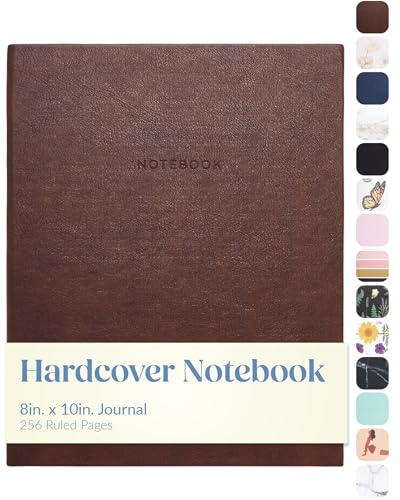
For extensive desk-based documentation and expansive meeting minutes, the WORLD TRAVELER Large Lined Journal Notebook 256 offers an elegant large-format canvas with durable Smyth-sewn binding. Visual artists and creative thinkers who prefer unrestricted white space will appreciate the KWULP Journal Notebook, A5 Leather Hardcover Blank for its thick 100 GSM sketchbook pages.
Reliable stationery elevates your daily writing habits and keeps your thoughts structured without physical distractions. You can explore additional daily wellness and lifestyle essentials in our Health & Family section to create an organized daily routine that works for you.
Frequently Asked Questions
What makes Best Lay-Flat Notebooks in 2026 different from standard journals?
Standard journals rely on rigid glue that holds the spine tightly closed, forcing you to hold the book open with constant hand pressure. Lay-flat models utilize flexible Smyth-sewn stitching or specialized PUR spines that allow the book to rest completely level at 180 degrees without cracking.
Why are lay-flat journals better for left-handed writers?
Left-handed writers often struggle with raised center gutters that obstruct their wrist movement as they push across the page. A true flat-opening notebook provides a smooth, level surface across both pages, preventing awkward hand angles and reducing ink smudges.
What paper weight is best to prevent fountain pen bleed-through?
Paper rated at 100 GSM or higher is generally recommended for fountain pen use because the dense fibers resist heavy wet ink absorption. Sized Japanese papers around 105 GSM excel at stopping feathering and ghosting, allowing you to write cleanly on both sides of each sheet.
Can a hardcover notebook open as flat as a softcover notebook?
Yes, provided the hardcover uses Smyth-sewn signatures or a hollow-back spine construction that detaches slightly from the page block when opened. Premium hardcovers deliver the perfect combination of a rigid writing surface and completely flat page positioning.
What does Smyth-sewn binding mean on a notebook?
Smyth sewing is a traditional bookbinding method where folded groups of pages, called signatures, are stitched together with strong thread along their spines. This technique allows each individual signature to pivot freely, creating exceptional lay-flat performance and long-term structural durability.
How do I break in a new lay-flat notebook without damaging the spine?
Place the notebook spine-down on a flat table, let the front and back covers drop down, and gently press down small sections of pages from both sides toward the center. This gradual flexing evenly distributes tension along the binding adhesive without causing sudden structural fractures.
What is the difference between A5 and standard composition notebook sizes?
An A5 notebook measures approximately 5.8 by 8.3 inches, offering a compact and portable rectangular profile that fits easily into bags. Composition notebooks are wider and taller, typically measuring around 7.5 by 9.75 inches, which provides more surface area but less travel portability.
Are naked spine notebooks durable enough for daily backpack carry?
Naked spine journals use heavy-duty PUR glue and reinforced thread stitching that withstand vigorous daily opening without falling apart. While the exposed spine shows the raw signature folds, the structural bond is exceptionally tough and resistant to page shedding.
What is ghosting on notebook paper and how do I avoid it?
Ghosting occurs when dark ink shows through to the opposite side of a sheet without actually soaking through the paper fibers. You can avoid ghosting by choosing notebooks with opaque 100 GSM or higher paper stock that blocks visual show-through.
Why is acid-free paper important for daily journaling?
Acid-free paper is specially treated during pulp production to eliminate acidic compounds that cause paper to turn yellow and fragile over time. Choosing acid-free sheets ensures your handwritten journals and sketches remain crisp and preserved for decades without deteriorating.