Remote collaboration requires dependable storage hardware that handles continuous read and write requests across multiple time zones. Choosing the wrong storage drive can cause unexpected network downtime and sluggish file synchronisation for your entire workforce.
In this guide updated for September 2026, we evaluate 5 reliable drives from brands like Seagate, Western Digital, Synology and more. We explore how proper network hardware prevents data bottlenecks and keeps distributed teams productive throughout the business week. For additional equipment reviews across multiple departments, browse our Uncategorized hub.
Deploying consumer desktop drives inside high-concurrency network enclosures often leads to premature hardware degradation and catastrophic data loss. This guide details essential technical specifications so you can pick storage media engineered specifically for demanding multi-user environments.



Recording Technology: CMR vs SMR
Conventional Magnetic Recording writes data on parallel magnetic tracks without overlapping adjacent tracks during continuous operational cycles. Shingled Magnetic Recording layers tracks on top of each other, which severely degrades write speeds during sustained data modifications.
Remote teams consistently upload modified assets, synchronized spreadsheets, and system backups across shared network volumes throughout the workday. SMR drives struggle with high rewrite volumes, leading to dropped connections and timeouts during intensive team collaboration sessions.
Always verify that your target drive explicitly utilizes CMR technology before purchasing it for a multi-user storage array. A simple rule is to reject any drive that fails to state its recording architecture clearly in the manufacturer datasheet.
Workload Rate and Annualized Duty Cycle
Hard drive manufacturers measure durability using annualized workload ratings expressed in total terabytes transferred per calendar year. Standard desktop drives usually support up to 55 terabytes annually, whereas enterprise units easily manage 550 terabytes each year.
A team of ten remote developers syncing software repositories can easily exceed basic consumer drive workload thresholds within months. Exceeding rated workload limits accelerates mechanical wear and significantly increases the likelihood of unrecoverable drive failures during peak office hours.
Calculate your estimated annual throughput by multiplying daily team backup volume by 365 days before selecting drive tiers. Pick drives rated for at least 180 to 550 terabytes per year to guarantee sufficient operational headroom for growing organizations.
Rotational Speed and Data Transfer Rates
Spindle speed directly influences how quickly internal drive platters can position magnetic heads over requested data blocks. Drives operating at 7200 RPM deliver sustained transfer rates up to 250 megabytes per second, while 5400 RPM models prioritize quiet operations.
Fast sequential throughput accelerates large video file rendering, continuous database queries, and massive virtual machine image transfers. Slower rotational speeds create noticeable network latency when dozens of remote staff members attempt simultaneous media access over virtual private networks.
Select 7200 RPM drives whenever your remote team handles uncompressed media, real-time analytics, or high-volume shared project databases. If your primary objective is low-noise background archiving, lower RPM drives provide adequate performance with reduced acoustic output.
Vibration Resistance and Multi-Bay Scaling
Multiple spinning mechanical drives mounted inside a single chassis generate cumulative rotational vibrations that disrupt adjacent disk tracking heads. High-capacity network storage enclosures require integrated rotational vibration sensors that dynamically adjust drive head actuators to preserve tracking accuracy.
Standard drives lack specialized vibration compensation firmware, which causes erratic read performance inside enclosures housing more than two bays. Professional units incorporate advanced sensors that allow reliable continuous operations in enterprise rackmount systems containing up to twenty-four drive bays.
Count the total number of drive bays in your present enclosure as well as planned expansion units before buying hardware. Ensure your chosen drive series supports your specific chassis bay density to avoid unexpected performance throttling across the storage pool.
Cache Memory and Random Access Performance
Onboard dynamic RAM cache acts as a high-speed buffer between network interface controllers and physical magnetic platters. Modern enterprise drives feature buffer capacities ranging from 256 megabytes to 512 megabytes to manage sudden bursts of inbound file requests.
When remote colleagues simultaneously request small configuration files, code snippets, or document updates, cache memory absorbs these random operations efficiently. Insufficient cache causes read queues to back up rapidly, introducing frustrating lag during collaborative remote editing tasks.
Target drives containing at least 256 megabytes of onboard cache memory for general small business network file sharing duties. Workgroups managing large multimedia assets should prioritize premium drives equipped with 512 megabytes of DRAM to maintain fluid file transfer speeds.
Power Consumption and Thermal Dissipation
Storage arrays run continuously without interruption, making thermal management and operational electrical efficiency essential considerations for modern server hardware. High-efficiency drives consume less electrical wattage during active read cycles, which minimizes heat generation inside compact desktop enclosures.
Excessive heat inside an unventilated server closet degrades drive lubricants and increases the risk of unexpected motor bearing failure. Implementing cooler-running hardware protects your organizational data and reduces ongoing utility expenses across long equipment deployment cycles. Discover ergonomic office tips in our Furniture & Comfort guide for better workspace efficiency.
Maintain internal drive operating temperatures below forty degrees Celsius by selecting drives with optimized power management profiles. Review manufacturer thermal dissipation metrics and ensure your network enclosure fans provide adequate airflow across every populated drive sled.
Error Recovery Controls and RAID Firmware
Specialized network drives feature built-in Error Recovery Control or Time-Limited Error Recovery algorithms designed specifically for RAID architectures. These protocols limit the time a drive spends attempting to recover a bad sector before notifying the RAID controller.
Standard desktop hard drives may pause operations for minutes to recover damaged sectors, causing the RAID controller to drop the drive entirely. Once a drive drops out, the array enters a degraded state that severely slows down access for remote employees.
Never install standard desktop drives in multi-disk RAID environments where operational uptime remains critical to everyday business routines. Verify that your drives support dedicated RAID error recovery firmware to maintain uninterrupted network storage accessibility for your distributed workforce.
Solid State Caching and Tiered Storage
Combining mechanical high-capacity hard drives with solid-state drives creates an optimal hybrid storage pool for demanding work environments. Solid-state media delivers rapid random read speeds that accelerate frequently accessed corporate files, metadata indexes, and virtual machines.
Fast SATA or NVMe SSDs absorb intense input-output spikes, while large mechanical platters supply affordable bulk capacity for historical archives. This tiered configuration ensures that remote workers experience instant responsiveness without inflating overall infrastructure budgets with all-flash storage hardware.
Allocate roughly ten percent of your total active storage volume to dedicated solid-state read-write caching drives. Pairing high-capacity spinning disks with responsive SSD cache balances raw storage volume against lightning-fast interactive responsiveness for remote collaboration.
Warranty Coverage and Rescue Data Services
Comprehensive warranty protection reflects manufacturer confidence in drive longevity under rigorous around-the-clock enterprise operating conditions. Premium commercial drives offer three-year to five-year replacement coverage along with specialized technical support channels for network administrators.
Some top-tier drive series include bundled data recovery services that provide professional cleanroom retrieval in case of catastrophic mechanical breakdown. Having access to certified data recovery technicians provides priceless peace of mind when offsite backups suffer synchronization lags.
Factor the value of integrated recovery plans and multi-year warranties directly into your total cost of hardware ownership calculations. Investing in enterprise-grade drives with five-year warranties minimizes unexpected replacement expenses and secures ongoing operational continuity for remote staff.
| Storage Class | Recording Tech | Rotational Speed | Workload Rating | Recommended Bays |
|---|---|---|---|---|
| Consumer Desktop | SMR or CMR | 5400 RPM | 55 TB/Year | 1 Bay |
| Standard NAS | CMR | 5400 – 7200 RPM | 180 TB/Year | Up to 8 Bays |
| Enterprise NAS Pro | CMR | 7200 RPM | 550 TB/Year | Unlimited Bays |
| SATA SSD Cache | 3D NAND | Solid State | High Endurance | Dedicated Cache Bays |
Why You Should Trust Us
Our hardware evaluation methodology centers on objective technical specifications, verified enterprise endurance ratings, and rigorous multi-user architecture analysis. We examine real-world manufacturer datasheets, mean time between failures metrics, and workload capacity ratings to isolate high-performing storage hardware.
Rather than relying on superficial marketing claims, we assess compatibility across major server platforms, RAID controllers, and network protocols. Our continuous research tracks evolving firmware revisions and drive architectures to provide accurate purchasing recommendations for remote teams.
We maintain complete editorial independence and focus on verifiable engineering data to help organizations make cost-effective hardware investments. For related lifestyle and home office health topics, check out our guide on best clean skin care for aging skin that works.
Final Thoughts
Equipping your remote workforce with dependable storage infrastructure requires matching technical drive capabilities to your specific multi-user workloads. Balancing raw storage capacity, spindle speed, and annualized duty cycles ensures uninterrupted collaboration across different office locations.
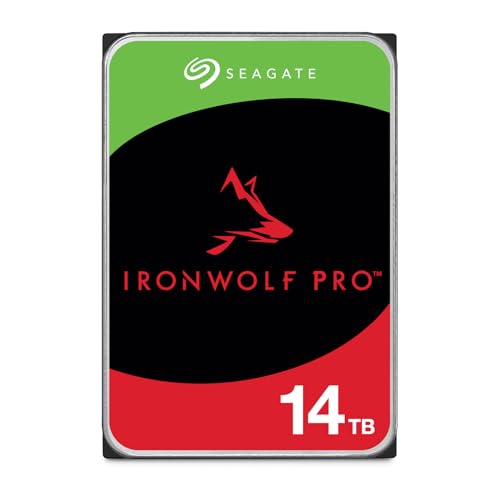
For top-tier multi-bay arrays handling intense collaborative projects, we recommend the Western Digital 16TB WD Red Pro NAS Internal Hard. Its 550 terabytes per year workload rating, 7200 RPM speed, and massive cache make it ideal for high-concurrency remote office environments.
Teams seeking balanced everyday reliability for medium-sized network enclosures will appreciate the Western Digital 12TB WD Red Plus NAS Internal Hard. It delivers excellent CMR performance and broad NASware compatibility without consuming unnecessary electrical wattage during standard operational hours.
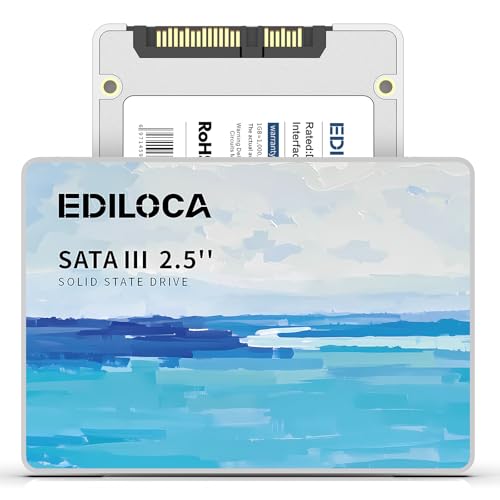
Organizations wanting a turnkey all-in-one storage solution should consider the Synology DS223 2-Bay Diskstation NAS, which arrives bundled with dependable drives. If you need lightning-fast read caching for database indexing, the Ediloca 512GB SSD Internal Solid State Drive offers an affordable boost. Explore our Home & Living archive for additional hardware management tips.
Frequently Asked Questions
What makes Best NAS Hard Drives for Remote Teams different from standard desktop hard drives?
Dedicated network storage drives feature vibration compensation sensors and specialized RAID error recovery firmware designed for continuous operation. Desktop drives lack these multi-bay optimizations and wear out rapidly under heavy multi-user workloads.
How much storage capacity does a typical remote workgroup need in 2026?
Most small remote teams require at least eight to sixteen terabytes of raw capacity to accommodate shared project files and version histories. Estimating your three-year data growth ensures you will not need to rebuild your storage array prematurely.
Can our remote team mix different hard drive brands inside the same RAID array?
Mixing drive brands with identical capacities and rotational speeds is technically possible and can prevent simultaneous batch failures. However, maintaining identical drive models within specific arrays simplifies warranty tracking and guarantees uniform access times.
Why is CMR technology essential for Best NAS Hard Drives for Remote Teams?
Conventional Magnetic Recording prevents write performance degradation during continuous multi-user synchronization tasks across shared folders. SMR technology introduces severe write latency that can disconnect remote users and corrupt RAID parity calculations.
How often should remote teams replace hard drives in their primary network enclosure?
Enterprise and professional network drives should typically be refreshed after four to five years of continuous service. Proactive drive replacement prevents unexpected hardware failures and protects critical business data before mechanical wear accelerates.
What RAID configuration offers the best balance of speed and redundancy for remote teams?
RAID 5 provides single-drive fault tolerance with efficient capacity utilization for small four-bay storage enclosures. Larger teams should implement RAID 6 or RAID 10 to ensure business continuity even if two disks fail simultaneously. Review our Health & Family category for workplace wellness recommendations.
Can adding an SSD cache improve remote file transfer speeds across a VPN?
Solid-state caching accelerates metadata lookups and small file random reads, making directory browsing feel instant for remote workers. However, overall sequential transfer speeds will still be bounded by your office Internet uplink bandwidth.
What is the ideal operating temperature for Best NAS Hard Drives for Remote Teams?
Mechanical drives operate reliably when internal temperatures remain between thirty and forty degrees Celsius during active workloads. Operating drives above fifty degrees Celsius significantly accelerates mechanical degradation and shortens component lifespan.
How does drive rotational speed affect multi-user network storage performance in 2026?
Drives running at 7200 RPM deliver lower latency and higher sustained data throughput during simultaneous file access requests. Lower 5400 RPM drives run cooler and quieter but may bottleneck high-volume multi-user collaboration sessions.
What steps should remote administrators take when a storage drive reports SMART errors?
Administrators should verify recent offsite backups immediately and order a certified replacement drive without delay. Once the replacement arrives, hot-swap the degraded disk and monitor the array rebuild process closely.