Broadcasting live video places intense demands on your electrical infrastructure because even a microsecond voltage drop can terminate a broadcast instantly. Content creators regularly invest in powerful graphics processors and high-end microphones while overlooking the electrical foundation that keeps those sensitive components alive. Exploring the Best Uninterruptible Power Supplies for Streaming Setups in September 2026 ensures your production stays online through storms and grid fluctuations.
A modern production station combines dual personal computers, audio interfaces, dynamic capture cards, and studio key lights into a single electrical load. When utility power fluctuates, sensitive digital signal processors and power supplies with active power factor correction can instantly shut down without proper protection. Our curated selection of 7 units from reliable brands like CyberPower, APC, GOLDENMATE helps you maintain pristine stream uptime without risking corrupted local video recordings.
Finding the right balance between battery runtime, quiet acoustic operation, and pure waveform delivery remains essential for any professional creator. Many creators make the mistake of buying standard office backups that buzz loudly or fail under modern active PFC power supply loads. You can explore our broader home gear evaluations in the Home and Living directory for additional setup recommendations.


Pure Sine Wave Output vs Simulated Waveforms
Modern gaming rigs and dedicated streaming computers utilize high-efficiency power supplies that feature active power factor correction circuitry. These advanced components expect a smooth, continuous alternating current wave that mirrors clean grid electricity exactly. When a backup unit delivers a stepped or simulated sine wave, the power supply can detect harmonic distortion and shut down instantly.
Pure sine wave architecture generates clean power that reduces electrical stress on sensitive studio audio interfaces and camera capture cards. Simulated wave units often introduce noticeable electrical humming into analog audio cables and high-gain preamplifiers. Investing in a true sine wave model prevents audio buzzing while safeguarding your delicate components against unexpected internal component degradation.
When comparing technical specifications, verify that the manufacturer explicitly states pure or true sine wave output rather than modified stepped approximations. A quick rule of thumb involves checking your primary PC power supply efficiency rating, as Gold and Platinum units almost universally require pure sine wave delivery. Opting for clean waveform delivery guarantees seamless operation whether running on utility power or active battery backup.
Power Capacity and Wattage Headroom
Determining your electrical load requires calculating the combined power consumption of your gaming system, capture workstation, monitors, and networking hardware. Backup units list two distinct measurements: volt-amperes, which indicates apparent power, and true wattage, which represents actual usable energy. A broadcast setup running a flagship graphics card and dual high-refresh displays can easily pull substantial wattage during intensive gaming sessions.
Operating a backup unit near its maximum capacity drastically reduces available runtime and increases internal thermal strain. Selecting a unit with at least twenty to thirty percent headroom above your peak load ensures the system can absorb sudden graphics card transient spikes without triggering an overload warning. This additional headroom also leaves space for future gear upgrades like secondary monitors or additional studio lighting panels.
Calculate your total system draw by adding the maximum power ratings of your essential broadcast equipment before making a purchase. If your workstation consumes six hundred watts under heavy load, target an uninterruptible unit rated for at least eight hundred to one thousand watts. This buffer ensures reliable handover during sudden power cuts while giving you ample time to save local video tracks.
Battery Chemistry: Lithium Iron Phosphate vs Lead Acid
Traditional uninterruptible power systems rely on sealed lead-acid batteries that offer affordable entry points but degrade steadily over three to five years. Newer backup units incorporate Lithium Iron Phosphate cells, commonly known as LiFePO4, which deliver several thousand charge cycles and extended operational life. Lithium technology maintains consistent voltage output across the entire discharge cycle while drastically reducing total unit weight.
While lead-acid models require periodic battery replacements that increase ownership costs, lithium units often function reliably for up to a decade without maintenance. Lithium cells also recharge significantly faster after a blackout, ensuring your setup regains full protection before subsequent power interruptions occur. For content creators managing daily production schedules, the long-term reliability of lithium chemistry eliminates unexpected battery failure headaches.
Assess your budget and maintenance preferences when deciding between these two dominant battery chemistries across the category. Lead-acid remains a practical budget choice if you do not mind swapping internal cells every few years. Creators seeking a fit-and-forget solution that handles thousands of discharge cycles should prioritize modern LiFePO4 configurations.
Automatic Voltage Regulation and Line-Interactive Topology
Electrical grids frequently experience minor voltage sags, brownouts, and brief surges that do not qualify as complete blackouts. Line-interactive topology incorporates Automatic Voltage Regulation, which dynamically boosts low voltage or trims excessive voltage back to safe levels. This regulation happens seamlessly through internal transformers without engaging the battery pack, preserving stored power for actual emergency outages.
Without Automatic Voltage Regulation, a backup unit must switch to battery mode every time your home air conditioner or refrigerator compressor kicks on. Frequent switching wears down battery chemistry rapidly and introduces unnecessary mechanical relay wear over time. Quality voltage regulation stabilizes power delivery, ensuring sensitive studio cameras and audio mixers receive consistent voltage continuously.
Check the input voltage tolerance range on prospective units to ensure they handle standard household fluctuations effectively. Quality systems correct voltage variations ranging from ninety to one hundred forty volts without draining internal reserves. You can discover more technical equipment guides in our Uncategorized hub for related consumer technology analysis.
Outlet Density, Layout, and Surge-Only Separation
A comprehensive streaming workspace incorporates numerous peripheral devices with bulky external transformer plugs that can block adjacent receptacles. Backup units divide their rear panels into battery-backed outlets and surge-only protected outlets to manage total load. Connecting non-essential equipment like ambient background lights or phone chargers to surge-only ports keeps battery capacity reserved for critical PC hardware.
Wider spacing between individual receptacles prevents bulky wall-wart adapters from obscuring neighboring ports and wasting valuable plug positions. Units featuring eight to twelve total outlets provide sufficient flexibility to organize your primary rig, secondary streaming encoder, router, and audio interface cleanly. Effective outlet layout simplifies cable management behind your desk, reducing clutter and accidental cord disconnections during live productions.
Map your studio power requirements by categorizing every plug as either critical for broadcast continuity or non-essential peripheral gear. Reserve battery-supported receptacles strictly for your computer, main monitor, network modem, and primary microphone interface. Place secondary decorative lighting, charging stands, and utility fans on surge-only receptacles to maximize emergency runtime.
Acoustic Noise Levels and Cooling Fan Operation
Live broadcasting demands a quiet room environment because sensitive condenser microphones capture subtle background fan noise and coil whine easily. Many commercial-grade backup units feature aggressive cooling fans that run continuously, creating unacceptable ambient noise in a home studio. Desktop-oriented units utilize intelligent thermal management where cooling fans only spin up during active battery discharge or heavy recharging cycles.
Look for models engineered to operate below fifty decibels under normal load conditions to keep your broadcast audio crystal clear. Units featuring durable metal chassis often dissipate heat passively through their enclosures, delaying active fan engagement during short voltage dips. Silent operation allows you to place the backup unit close to your desk without adding post-processing noise suppression filters to your broadcast.
Evaluate user manuals to determine whether fan operation is continuous or temperature-triggered based on internal thermal sensors. If your streaming setup shares space with home climate gear, visit our Heating, Cooling, and Air section for tips on managing room acoustics. Selecting a quiet power unit ensures high broadcast sound fidelity without constant background hums.
| Feature Spec | Entry Lithium Units | Flagship Pure Sine Models | Standard Lead-Acid Units |
|---|---|---|---|
| Wattage Rating | 600W to 1000W | 900W to 1000W | 900W to 1000W |
| Battery Lifespan | Up to 10 Years (LiFePO4) | 3 to 5 Years (Lead-Acid) | 3 to 5 Years (Lead-Acid) |
| Waveform Output | Pure Sine Wave | Pure Sine Wave | Simulated Sine Wave |
| Typical Outlets | 8 Battery and Surge | 10 to 12 Split Bank | 10 to 12 Split Bank |
Automated Shutdown Software and PC Communication
A power outage occurring while you are away from your streaming desk can result in sudden data corruption if the battery drains completely. Quality backup systems feature integrated USB communication ports that link directly to your operating system or dedicated management software. This digital connection monitors real-time battery status and triggers an automated, graceful system shutdown before reserve energy is exhausted.
Advanced management software enables creators to configure customized actions, such as closing streaming software cleanly and saving local recording buffers. Native compatibility with Windows, macOS, and Network Attached Storage devices ensures seamless integration across diverse hardware setups. These automated protocols protect your expensive solid-state drives from partition corruption and prevent lost video files during extended blackouts.
Verify whether the backup unit requires proprietary management software or supports standard operating system battery drivers natively via USB. Units that work with native operating system power settings provide plug-and-play simplicity without consuming background system memory. Ensuring reliable software communication guarantees your investment protects system data around the clock.
Real-Time Display Telemetry and Alarm Controls
Monitoring your electrical load in real time allows you to identify power-hungry components and calculate available runtime accurately during live streams. Front-panel liquid crystal displays provide immediate visibility into incoming utility voltage, estimated runtime minutes, battery charge percentage, and active load wattage. Detailed telemetry eliminates guesswork, letting you know exactly how many minutes remain before your system must shut down.
Audible alarms alert users when utility power drops, but sudden loud beeps can disrupt an ongoing broadcast or startle an audience. Top-tier units offer physical mute buttons or software toggles that silence warning buzzers immediately while keeping visual screen alerts active. Look for auto-dimming or display sleep functions that prevent bright screen illumination from interfering with your studio lighting balance.
When positioning your backup hardware, ensure the front panel display remains easily visible from your primary seated broadcasting position. An easily readable screen lets you check power draw before launching demanding software applications. Configurable alarm options guarantee that minor power interruptions will not interrupt your live vocal commentary.
Surge Protection Ratings and Network Line Shielding
High-voltage electrical spikes caused by nearby lightning strikes or utility switching can bypass standard power strips and destroy fragile computer circuitry. Reliable uninterruptible power systems integrate heavy-duty metal oxide varistors measured in joules to absorb dangerous electrical spikes safely. Robust surge suppression serves as the primary barrier protecting your workstation, audio interface, and capture equipment.
Power surges do not travel exclusively through standard wall receptacles; they can also enter your system via Ethernet and coaxial cables. Advanced units include shielded RJ45 data line ports that prevent transient surges from traveling along your network connection directly into your motherboard. Protecting your wired internet connection ensures complete perimeter defense for your entire broadcasting production environment.
Examine the joule rating and connected equipment guarantees provided by reputable manufacturers before finalizing your equipment selection. Higher joule ratings signify greater surge absorption capacity and extended component longevity under turbulent electrical conditions. Complete data line protection guarantees your network hardware survives unexpected electrical storms undamaged.
Why You Should Trust Us
Our editorial team analyzes power protection equipment through rigorous spec verification, technical blueprint examination, and real-world electrical load calculations. We evaluate pure sine wave fidelity, battery chemistry endurance, internal cooling designs, and software integration capabilities across every price category. We focus entirely on data-driven metrics to identify hardware that genuinely meets the rigorous demands of modern digital creators.
We do not accept paid manufacturer placements or promotional biases, ensuring our evaluations remain completely transparent, objective, and creator-focused. Our team cross-references real-world hardware telemetry against manufacturer claims to highlight both strengths and potential operational limitations. We continually update our recommendations to reflect dynamic market availability, new battery chemistries, and evolving broadcast hardware requirements.
By comparing verified continuous wattage ratings, surge capacities, and acoustic performance, we help you select gear with complete confidence. Our goal is to save you time and safeguard your valuable streaming equipment against unexpected electrical hazards. We believe reliable power management forms the essential foundation of every professional digital production environment.
Final Thoughts
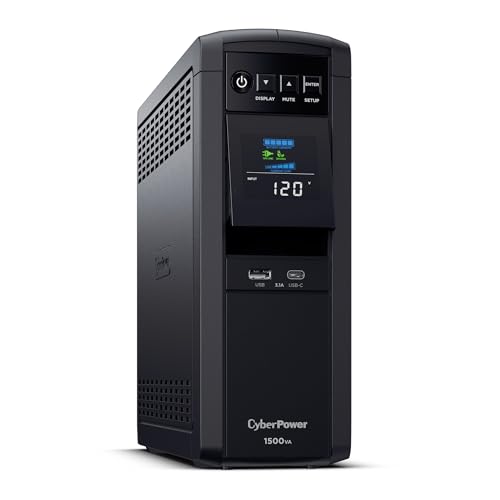
Selecting the ideal power backup depends on your specific rig configuration, workspace layout, and budget parameters. For creators running active PFC power supplies and demanding multi-monitor setups, the CyberPower CP1500PFCLCD PFC Sinewave UPS Battery serves as our top overall recommendation. Its twelve well-spaced outlets, pure sine wave delivery, and proven automatic voltage regulation deliver outstanding stability for heavy streaming workloads.
If you want cutting-edge battery longevity without the hassle of routine cell replacements, the GOLDENMATE 1500VA/1000W Lithium UPS Battery Backup represents the ultimate future-proof investment. Its advanced Lithium Iron Phosphate cells offer thousands of charge cycles and over a decade of dependable service. For creators who also maintain mobile power setups, our Auto and Vehicles guide offers complementary portable power perspectives.
Broadcasters operating compact single-PC arrangements or looking for maximum value can rely on the GOLDENMATE 1000VA/600W Lithium UPS Battery Backup for dependable protection. Alternatively, the APC UPS 1500VA/900W, LCD, AVR delivers exceptional brand reliability with dedicated Ethernet surge protection for high-bandwidth broadcast connections. Investing in the right power protection keeps your broadcast live, protects your audience engagement, and secures your hardware investment.
Frequently Asked Questions
What makes pure sine wave output necessary for streaming PCs?
Modern gaming and workstation power supplies use active power factor correction that requires clean, smoothly curved electrical waveforms. Simulated sine waves can cause active PFC supplies to shut down unexpectedly during blackouts or create loud buzzing in audio mixers. Pure sine wave delivery guarantees uninterrupted operation and protects sensitive digital broadcast components from electrical stress.
How many watts should my backup unit support for a dual-PC setup?
A dual-PC streaming configuration with monitors and networking gear typically requires a backup unit rated between nine hundred and one thousand watts. Calculating your peak hardware draw and adding twenty percent headroom prevents transient power spikes from overloading the unit. Sufficient wattage headroom gives you adequate time to finish matches or save recordings safely.
Why are Lithium LiFePO4 batteries gaining popularity in 2026?
Lithium Iron Phosphate batteries provide up to ten years of operational lifespan and handle over three thousand charge cycles easily. They weigh significantly less than conventional lead-acid batteries and recharge much faster between power interruptions. This longevity reduces total ownership expenses while eliminating the routine maintenance associated with older battery designs.
Can I plug my studio lights and audio interface into the backup unit?
You can connect studio lights and audio interfaces, but you should distribute them carefully between battery-backed and surge-only outlets. Essential audio gear should connect to battery-supported ports, while non-critical ambient lighting belongs on surge-only receptacles. This outlet management prevents secondary peripherals from rapidly depleting your emergency runtime during an outage.
How long will a 1500VA unit keep my streaming rig running during an outage?
A 1500VA unit generally delivers between ten and twenty minutes of runtime for a high-end streaming setup pulling four hundred to five hundred watts. At lighter loads, such as powering only a router and laptop, runtime can extend past an hour. The primary goal is providing enough time to inform your audience and shut down cleanly.
What is the difference between line-interactive and standby power backups?
Line-interactive models feature automatic voltage regulation to correct minor brownouts and over-voltages without engaging the battery pack. Standby units remain inactive until power drops completely, forcing frequent battery usage during simple grid fluctuations. Line-interactive topology preserves battery life and delivers more consistent voltage to delicate streaming gear.
Will an uninterruptible power supply protect my Ethernet connection?
Many advanced models feature shielded RJ45 pass-through ports designed to filter electrical surges traveling along network cables. Routing your broadband line through these ports shields your computer motherboard from dangerous transient spikes during electrical storms. This extra layer of defense ensures your wired network interface remains operational and undamaged.
How does automatic shutdown software work with streaming software?
Management software connects to your computer via USB to monitor battery levels and trigger automated operating system shutdowns before power runs out. While it can safely close open file handles and save local recordings, you should still manually end your stream when possible. Automated shutdown prevents operating system file corruption if an outage occurs while you are away.
Can I silence the audible alarm during a live broadcast?
Most modern units include dedicated front-panel mute buttons or software controls that silence loud beeping alarms immediately. Disabling the audible buzzer keeps your live broadcast audio clean while visual screen alerts keep you informed of power changes. Silencing alarms prevents sudden auditory distractions from interrupting your competitive gaming commentary.
How does room temperature affect backup battery lifespan?
Excessive heat accelerates chemical degradation inside both lead-acid and lithium battery cells, shortening their overall operating lifespan significantly. Maintaining a climate-controlled studio environment between sixty-eight and seventy-seven degrees Fahrenheit ensures optimal battery health and longevity. For more tips on maintaining a balanced home environment, browse our Health and Family section.