Securing vulnerable entry points remains the foundation of any comprehensive residential defense plan. Windows represent frequent target locations for unauthorized entry because standard latches offer minimal resistance against determined intruders. Installing modern contact hardware creates an active perimeter that alerts you before someone navigates deeper inside your living space.
In September 2026, homeowners can choose from 7 Best Wireless Window Sensors offering versatile connectivity options. Brands like SanJie, SimpliSafe, PHILIPS and more provide solutions ranging from standalone sirens to cloud-connected home automations. Selecting the right setup prevents false alarms while ensuring continuous monitoring across every ground level opening.
Many shoppers purchase contact hardware without verifying gap tolerances or hub requirements for their specific frames. Our comprehensive analysis helps you evaluate transmission protocols, mounting requirements, and notification speeds to protect your household. Explore our Home & Living resources for broader residential security recommendations.



1. Wireless Communication Protocols
The transmission protocol dictates how quickly a sensor communicates state changes to your central alarm system or smartphone. Standalone radio frequency units communicate directly with plug-in chime receivers across dedicated local frequencies. These systems operate independently of your local internet connection, providing continuous reliability during broader broadband outages.
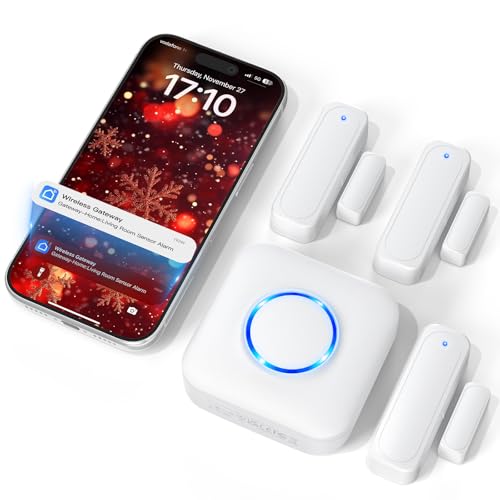
Wi-Fi enabled hardware connects directly to your residential 2.4GHz network without requiring dedicated intermediate hardware. Devices like the Gaoducash contact sensor leverage standard Wi-Fi to push notifications directly to smartphone applications. While convenient, direct Wi-Fi contact hardware consumes battery reserves faster than low-power mesh alternatives.
Mesh networking standards such as Zigbee route signals through dedicated hubs to minimize power draw and maximize operational stability. The Aqara Zigbee contact sensors communicate through low-energy radio channels to ensure sub-second response times. This configuration prevents bandwidth congestion on your primary wireless router when managing dozens of connected openings.
Proprietary encrypted frequencies utilized by unified security systems offer superior resistance against digital interference and jamming attempts. Proprietary systems like SimpliSafe maintain long-range connections between components and base stations across dedicated bands. Evaluate whether you prefer standalone convenience, broad smart home integration, or dedicated security architecture before buying.
2. Magnetic Gap Tolerance and Alignment Range
Magnetic contact hardware relies on a reed switch inside the primary sensor body paired with a companion magnet. When a window opens, the magnetic field separates, breaking the internal circuit and triggering an immediate alert. The maximum allowable separation distance between these two components determines whether a sensor functions properly on uneven trim.
Standard architectural moldings and recessed vinyl window frames often prevent flush side-by-side mounting. Units with wide gap allowances, such as the 0.86-inch threshold found on Aqara contact hardware, accommodate complex trim offsets effortlessly. Narrow tolerance sensors require supplemental spacer shims to keep internal switch mechanisms aligned within functional operating limits.
Measure the horizontal and vertical depth variations between your movable window sash and stationary frame before purchasing hardware. If the sash sits significantly higher than the adjacent casing, standard flat adhesive installation will fail to align the magnetic field. Selecting hardware engineered with broad detection zones eliminates false trigger events caused by wind rattles or thermal expansion.
A reliable rule of thumb requires selecting sensors with at least a 15 millimeter operational gap for residential windows. This clearance provides sufficient leeway for structural settling and heavy vinyl weatherstripping without breaking the circuit. Proper alignment verification during physical installation ensures dependable trigger accuracy throughout varying seasonal climate conditions.
3. Acoustic Output and Audible Alarm Modes
Decibel ratings determine whether an triggered alert successfully scares away intruders and wakes sleeping residents across multi-level residences. Standalone security chimes from brands like PHILIPS and SanJie incorporate internal sirens capable of producing 120 to 125 decibels. This intense acoustic output creates an immediate deterrent effect at the exact point of physical entry.
Adjustable volume settings provide crucial flexibility for balancing daytime safety awareness with nighttime intrusion deterrence. Hardware featuring multiple chime melodies and stepped volume controls lets you monitor child wandering without sounding a piercing siren. You can check our Health & Family guides for complementary home childproofing and family safety recommendations.
Multi-unit receivers that plug directly into interior hallway outlets bridge the gap between loud sirens and silent notifications. Systems like Satisure utilize dedicated plug-in base units supporting up to five selectable volume tiers. This ensures perimeter alerts remain clearly audible in remote bedrooms or bustling home workshops without requiring smartphone access.
Standalone alarms lacking external connectivity rely exclusively on raw audio output to communicate security breaches. Ensure the internal piezo sounder faces outward toward the room interior rather than pressed against window glass or deep frame recesses. Proper directional acoustic placement maximizes sound dispersion throughout adjacent living areas.
4. Smart Home Automation and Ecosystem Compatibility
Integrating contact hardware into automated smart ecosystems transforms basic security sensors into powerful behavioral triggers. Modern Wi-Fi and Zigbee contact sensors communicate seamlessly with platforms like Amazon Alexa, Google Assistant, and Apple HomeKit. These integrations allow you to query window open status using hands-free voice commands from any smart speaker.
Beyond voice querying, connected sensors enable sophisticated conditional automation routines across smart lighting and environmental hardware. For instance, opening a window can trigger smart thermostats to suspend cooling cycles, conserving electricity automatically. Similarly, opening a window after sunset can illuminate exterior floodlights to deter suspicious perimeter activity.
Tuya and Smart Life ecosystems support cross-device communication without requiring expensive proprietary subscription agreements. Contact sensors operating on these standards allow direct pairing with connected wall switches, motorized blinds, and secondary sirens. This open architecture provides tremendous customization options for tech-savvy homeowners building unified smart environments.
Always verify explicit platform compatibility before investing in multi-pack sensor bundles for your property. Certain Zigbee sensors require dedicated brand-specific bridges and will not connect directly to third-party home automation hubs. Selecting hardware that integrates natively with your existing voice assistants guarantees smooth automation execution without bridge communication failures.
| Sensor Model | Protocol | Gap Tolerance | Alarm Volume | Ecosystem Support |
|---|---|---|---|---|
| SimpliSafe Entry Sensor | Proprietary RF | Standard (0.5 in) | Base Station Chime | SimpliSafe Gen 3 |
| WiFi Door Sensor Chime | Wi-Fi (2.4GHz) | Standard (0.6 in) | 110 dB Receiver | Tuya, Smart Life |
| Gaoducash WiFi Sensor | Wi-Fi (2.4GHz) | Standard (0.6 in) | App Push Alerts | Alexa, Google, Tuya |
| Philips Personal Security | Standalone RF | Standard (0.5 in) | 120 dB Onboard | None (Standalone) |
| Aqara Mini Contact Sensor | Zigbee 3.0 | 0.86 in (22 mm) | Hub Siren / Push | HomeKit, Alexa, Aqara |
| Sanjie Door Window Alarm | Standalone RF | Standard (0.5 in) | 125 dB Onboard | None (Standalone) |
5. Battery Architecture and Operating Lifespan
Battery architecture directly influences ongoing maintenance schedules and long-term operating reliability across all installed contact points. Compact contact hardware typically utilizes miniature button cells like LR44 or coin-style CR2032 lithium batteries. These low-profile power cells allow manufacturers to maintain exceptionally small footprints that blend discreetly into window frames.
Larger sensors powered by standard AAA alkaline batteries offer extended operational longevity and widely available replacement options. Devices utilizing dual AAA cells frequently deliver six to twelve months of reliable daily transmission performance. Furthermore, replacement alkaline cells cost significantly less when servicing numerous monitoring points throughout expansive multi-story properties.
Automated low-voltage warning notifications protect your security perimeter against unexpected power depletion. Smart sensors transmit push alerts to your smartphone weeks before internal voltage drops below functional communication thresholds. Standalone units feature flashing LED visual indicators and audible chirps to remind homeowners when manual cell replacement is required.
Calculate your annual maintenance workload by multiplying your total window count by sensor battery replacement intervals. Choosing hardware engineered with efficient sleep cycles minimizes the hassle of frequent battery changes across hard-to-reach second-story windows. Reliable power management guarantees uncompromised perimeter detection throughout prolonged holiday absences.
6. Physical Mounting Methods and Surface Adhesion
Installation flexibility determines whether security hardware can be deployed on specialized architectural trim without permanent structural damage. Most residential contact sensors rely on pre-applied double-sided foam tape engineered for rapid peel-and-stick application. High-grade adhesives from manufacturers like 3M form enduring bonds on painted wood, vinyl, aluminum, and composite frames.
Permanent screw mounting hardware provides crucial reinforcement for high-traffic entry points subject to continuous vibration. SimpliSafe sensors include dedicated mounting brackets that accommodate mechanical fasteners alongside adhesive pads. This dual-installation capability ensures components remain firmly attached despite severe window slamming or extreme seasonal temperature fluctuations.
Surface preparation remains the single most critical factor in preventing sensor dislodgement and subsequent false alarm triggers. Cleaning the mounting zone with isopropyl alcohol removes grease, moisture, and dust particles that compromise adhesive bonding strength. You can review our Furniture & Comfort guides for additional tips on preserving delicate finished interior woodwork during hardware mounting.
When positioning hardware, place the heavier electronic sensor body on the stationary window frame casing whenever possible. Attach the lighter magnetic strip to the moving sash to reduce mechanical shock impact during daily window operation. This positioning strategy extends internal component longevity while preserving adhesive integrity over years of continuous usage.
7. Multi-Point Coverage and Expandability Options
Securing an entire residence requires deploying contact sensors across multiple accessible ground floor windows and patio sliders. Multi-pack bundles containing four, five, or more paired units deliver substantial economic value compared to individual unit purchases. Bundled packages also ensure uniform aesthetic styling and identical setup workflows across all monitored rooms.
Expandable wireless architectures allow homeowners to scale their perimeter protection gradually as security requirements evolve. Centralized receiver systems, such as Satisure chime kits, support up to twenty individually paired sensor modules on a single chime. This expansive pairing capacity lets you cover basement casements, garage side doors, and secondary sliding panels effortlessly.
Zone-specific chime configuration enables instant acoustic identification of triggered openings without consulting mobile application dashboards. Assigning distinct melodic tones to front, rear, and basement zones provides immediate spatial awareness during unexpected opening events. This feature proves invaluable for busy parents tracking toddlers or caregivers managing individuals with memory impairment.
Map your ground-level floor plan carefully before ordering to identify every unmonitored opening vulnerable to exterior intrusion. Prioritize rear-facing basement windows, hidden side casements, and ground-floor bedrooms shielded from street-level visibility. Comprehensive multi-point deployment guarantees robust perimeter protection without leaving hazardous blind spots in your residential defense perimeter.
8. Automation Triggers and Secret Notification Modes
Modern security contact hardware extends far beyond traditional loud sirens by offering discreet surveillance alerting capabilities. Secret Alert functionality, pioneered by systems like SimpliSafe, sends silent mobile notifications without sounding audible indoor sirens. This discreet monitoring allows you to track sensitive areas like liquor cabinets, medicine chests, or private home offices quietly.
Real-time push notifications delivered via cloud applications keep you informed of perimeter activity while traveling away from home. Wi-Fi enabled sensors transmit immediate opening timestamps directly to authorized family members simultaneously. This instantaneous digital logging creates a verifiable record of daily entry patterns across your household.
Advanced automation scripts can pair contact sensor triggers with residential security cameras to capture synchronized video clips. When an exterior window opens unexpectedly, the contact sensor prompts nearby indoor cameras to initiate high-definition recording. This synchronized workflow provides immediate visual verification of potential intrusion attempts directly on your mobile device.
Evaluate whether your daily lifestyle benefits more from loud deterrence sirens or quiet informational monitoring capabilities. Homes with active indoor pets often favor silent smartphone alerts to prevent sudden siren blasts from causing animal distress. Balancing audible alarms with discreet notifications provides optimal security tailored to your household dynamics.
9. Hub Dependencies and Local Network Resilience
Understanding hardware communication architecture prevents unpleasant surprises during home network disruptions or internet service outages. Standalone sensors operate entirely on local circuitry, ensuring immediate siren activation regardless of broadband connectivity status. These self-contained units provide dependable localized defense for remote vacation cabins or rental properties lacking internet access.
Hub-dependent Zigbee architectures centralize automation processing locally within dedicated bridge hardware plugged into your router. Because automation rules execute locally on the hub, connected sirens and lights trigger instantly even during broader cloud outages. This local processing speed ensures vital security responses execute without relying on external cloud server responsiveness.
Direct Wi-Fi sensors require active 2.4GHz wireless network coverage and continuous internet routing to transmit remote notifications. A power disruption or router crash halts mobile alert delivery until wireless network connectivity is fully restored. Homeowners choosing Wi-Fi contact hardware should consider backing up networking routers with uninterruptible power supply battery units.
Assess your local network stability and property layout before finalizing your wireless sensor protocol selection. Large properties with detached outbuildings or thick masonry interior walls benefit significantly from dedicated low-frequency wireless bridges. Selecting resilient network architectures guarantees persistent perimeter awareness across all environmental conditions.
Why You Should Trust Us
Our editorial evaluation framework combines meticulous specification analysis with exhaustive smart home compatibility mapping. We systematically examine wireless transmission ranges, magnetic gap tolerances, acoustic output levels, and battery efficiencies across dozens of market contenders. This analytical approach cuts through marketing hyperbole to present transparent, data-driven security recommendations for your residence.
We closely track evolving wireless communication standards, firmware reliability updates, and smart ecosystem protocols across all major home automation platforms. Our team audits verified technical documentation, manufacturer warranty commitments, and physical structural designs to verify durability. We remain entirely objective by benchmarking hardware features directly against rigorous residential safety standards.
Perimeter home defense demands absolute hardware dependability without unexpected operational failures or frustrating false alarms. By evaluating multi-pack scalability, ease of installation, and recurring ownership requirements, we help you make informed security investments. Our commitment is to deliver transparent, practical guidance that genuinely elevates your household safety.
Final Thoughts
Selecting the ideal perimeter security hardware depends heavily on whether you prioritize integrated professional monitoring, automated smart ecosystems, or straightforward local sirens. For homeowners seeking an expandable whole-home defense network, the SimpliSafe Entry Sensor (Pack of 4) represents our top overall recommendation. Its seamless base station communication, customizable secret alerts, and durable dual-mounting options deliver uncompromising residential protection.
If you desire reliable acoustic deterrence without managing smartphone applications or hub hardware, the Philips Personal Security Window and Door Alarm provides unmatched value. Its piercing 120-decibel onboard siren and straightforward mechanical chime switch offer instant perimeter protection straight out of the package. This self-contained design makes it an exceptional choice for rental apartments, dorm rooms, or detached storage workshops.
Smart home enthusiasts prioritizing advanced automation scripts should strongly consider the Aqara Zigbee Door and Window Sensor 3 Pack. Its generous 0.86-inch gap tolerance, rapid Zigbee communication, and broad Apple HomeKit integration make it ideal for modern automated households. Alternatively, the WiFi Door Sensor Chime, Smart Door Open Alert delivers an outstanding plug-and-play solution featuring a loud 110dB indoor chime without recurring monthly fees.
Securing your ground-level perimeter creates an essential safety buffer that protects your family and property year-round. Investing in reliable contact hardware eliminates dangerous security blind spots while automating daily energy management routines. For comprehensive home wellness and comfort advice, explore our guides on mattresses for back pain king size picks and residential essentials.
Frequently Asked Questions
How do wireless window sensors detect when a window opens?
Wireless contact sensors utilize a two-piece magnetic reed switch assembly mounted across the window sash and frame. When the window closes, the magnetic field holds the internal switch contacts together. Opening the window separates the magnet from the sensor, breaking the electrical circuit and instantly triggering an alert signal.
What is the top rated option among Best Wireless Window Sensors in 2026?
The SimpliSafe entry hardware ranks among the highest rated options due to its dependable range, secret alert features, and seamless system integration. Smart home enthusiasts also heavily favor Aqara Zigbee contact sensors for their ultra-fast response times and broad Apple HomeKit compatibility. Your ideal selection depends on whether you utilize a centralized security hub or standalone smart platforms.
Can wireless window sensors work on horizontal sliding windows?
Yes, wireless contact sensors function effectively on horizontal sliding windows as well as standard vertical single-hung or double-hung frames. You must mount the primary sensor body on the stationary side frame and place the magnetic companion strip on the moving sash. Ensure the components remain within the manufacturer specified gap limit when the window rests fully closed.
Do I need a paid monthly subscription to use wireless window sensors?
Most standalone and Wi-Fi enabled window sensors operate completely free of ongoing monthly subscription fees. Hardware running on Tuya, Smart Life, or Zigbee platforms delivers free smartphone push notifications and automation capabilities out of the box. Only professional security monitoring services require optional recurring monthly monitoring subscriptions for emergency dispatch.
How long do batteries last in wireless window contact sensors?
Battery longevity typically ranges from six months to two full years depending on the wireless transmission protocol and daily opening frequency. Low-energy Zigbee and proprietary RF sensors consume minimal power, often operating for over a year on a single coin cell. Direct Wi-Fi sensors require more power and generally need battery replacements every six to twelve months.
Can window sensors trigger home automation routines like adjusting thermostats?
Smart contact sensors integrated with Alexa, Google Assistant, or Apple HomeKit can easily execute automated conditional routines. For example, opening a window can trigger your smart thermostat to pause HVAC cooling cycles to conserve electrical power. Check our Heating, Cooling & Air resources to learn more about optimizing climate control efficiency.
What happens if an intruder breaks the glass instead of opening the window?
Standard magnetic contact sensors only trigger when the physical magnetic connection between the sash and frame separates. If an intruder breaks the glass without moving the frame sash, a contact sensor will not activate. Homeowners should supplement contact hardware with dedicated acoustic glass break detectors or motion sensors for complete window defense.
Can I use wireless window sensors outdoors on gates or shed windows?
Standard residential window sensors are engineered exclusively for indoor climate-controlled environments and lack weatherproof water ingress sealing. Installing standard indoor contact hardware outdoors exposes internal circuitry to rain, freezing humidity, and rapid battery failure. To monitor outdoor garden gates or unheated sheds, choose specialized exterior-rated contact hardware with waterproof silicone gaskets.
Will wireless window sensors fall off over time?
High-quality industrial double-sided foam tape provides years of reliable adhesion when applied to properly cleaned, smooth surfaces. Failure typically occurs when adhesive tape is applied over powdery drywall dust, greasy trim residue, or peeling paint. Thoroughly cleaning the contact surface with isopropyl alcohol before firm pressure application ensures an enduring mechanical bond.
How far can wireless window sensors be placed from their base station or router?
Standard Wi-Fi and Zigbee contact sensors reliably transmit signals across 30 to 100 feet depending on wall density and construction materials. Proprietary sub-gigahertz radio frequencies utilized by unified security systems can reach up to 400 feet across open indoor spaces. Adding intermediate Zigbee repeater plugs or mesh Wi-Fi nodes easily extends coverage to distant basement casements.