Heating a living space efficiently requires more than standard radiant coils and basic dials. Modern homeowners are upgrading to automated systems that balance rapid warmth with lower utility costs. Choosing the right appliance ensures consistent warmth throughout the winter months while keeping energy waste to a minimum.
Finding the Best Smart Heaters means looking closely at connectivity, room coverage, and thermal regulation. Today’s market includes sleek wall-mounted ceramic units as well as freestanding ambient electric stoves from DREO, Modern Ember. Exploring our comprehensive Heating, Cooling & Air guide can also help you understand how supplemental heating fits your overall home climate strategy.
In this September 2026 guide, we analyze 5 leading options to help you avoid common buying pitfalls. Many shoppers overlook critical factors like circuit draw, app compatibility, and physical placement limitations. Our breakdown highlights the essential criteria that guarantee reliable comfort, safety, and seamless voice control.




Selecting the ideal heating hardware involves balancing thermal output with modern wireless capabilities. The right device should heat your specific room size rapidly without creating unsafe power surges. Consider these essential technical factors before selecting a model for your home.
| Feature Category | Entry Level Specs | Premium Smart Standards | Key Consumer Impact |
|---|---|---|---|
| Heating Tech | Standard Mica / Wire Fan | Advanced PTC Ceramic | Faster heat dispersion and lower casing temperatures |
| Smart Controls | Basic On/Off Timers | Alexa, App, Wi-Fi Scheduling | Automated schedules and hands-free temperature adjustments |
| Coverage Area | Up to 150 sq ft primary | 400 to 750 sq ft supplemental | Eliminates cold spots across large living areas |
| Safety Systems | Basic thermal fuse | 5VA flame-retardant, IP24, auto-off | Worry-free operation in bedrooms and humid environments |
Smart Ecosystem Compatibility and Voice Integration
A true smart climate unit should integrate effortlessly into your existing connected home ecosystem. Compatibility with platforms like Amazon Alexa or Google Home allows you to adjust target temperatures using quick voice commands. This convenience makes a substantial difference when settling into bed or relaxing on the couch.
Examine the wireless connection standards before purchasing. Most connected heating devices operate strictly on 2.4 GHz Wi-Fi frequencies rather than faster 5 GHz bands. Ensuring your home router supports dual-band auto-switching prevents connection dropouts and offline appliance errors during cold spells.
Look for mobile apps that offer deep customization rather than simple power toggles. Quality companion software allows you to calibrate internal sensors, configure custom timers, and adjust backlighting brightness. You can learn more about managing climate appliances by checking our general Home & Living resources.
Heating Technology and Thermal Efficiency
The internal heating mechanism directly dictates how quickly a room reaches comfortable temperatures. Positive Temperature Coefficient ceramic elements are among the most efficient heating cores available today. These specialized ceramic stones self-regulate heat generation, minimizing excess power consumption once the target temperature is reached.
Airflow engineering works alongside the heating element to circulate warmth evenly. Units equipped with high-velocity internal blowers can push warm air at speeds exceeding eleven feet per second. This rapid displacement prevents hot air from pooling at ceiling level, delivering immediate floor-level comfort.
A useful rule of thumb is to calculate ten watts of heating power per square foot of living space. A standard 1500-watt heating core can easily warm a 150 square foot bedroom as a primary heat source. In well-insulated spaces, that same wattage serves as an effective supplemental source for up to 750 square feet.
Precision Thermostats and Intelligent ECO Modes
Basic heaters rely on rudimentary mechanical bimetallic strips that create severe room temperature swings. In contrast, advanced digital models use solid-state sensors to track ambient air within single-degree increments. This level of precision maintains consistent warmth without constantly overshooting your desired comfort level.
Smart ECO modes actively modulate wattage output based on real-time temperature differentials. Rather than running continuously at full capacity, an intelligent heater steps down to lower wattage as the room approaches its target. This dynamic power adjustment reduces energy spikes and prevents unnecessary electrical strain.
Always verify whether the device supports sensor calibration via its mobile interface. Wall-mounted units or heaters tucked into corners can occasionally trap localized warm air, misreading the actual room temperature. Offset calibration features correct these sensor errors to keep your entire space balanced.
Form Factor, Mounting, and Spatial Requirements
Choosing between a wall-mounted system and a freestanding stove depends largely on available floor space. Wall-mounted designs preserve valuable floor area and keep heating elements well away from pets and small children. These models frequently include mounting templates and secure brackets for quick, sturdy installation on standard drywall studs.
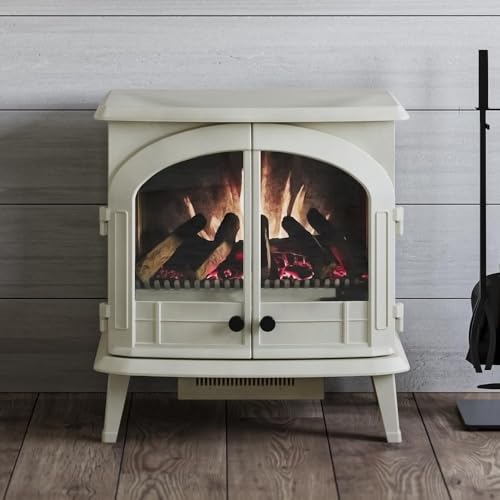
Freestanding electric stoves offer greater aesthetic presence and portable flexibility throughout your home. These traditional arched units provide substantial visual warmth and can be relocated between living rooms, home offices, or dens. They require dedicated floor clearance and level placement on non-combustible flooring surfaces.
Measure your intended installation footprint and proximity to electrical outlets before buying. Avoid using heavy extension cords, as high-draw heating appliances can overheat external wiring. Ensure the power cord offers at least six feet of length to reach your wall outlet safely without tension.
Comprehensive Safety Systems and Material Standards
Safety is the most critical consideration when operating any high-wattage heating appliance indoors. Reliable units are constructed using 5VA flame-retardant housing materials designed to resist high internal thermal stress. Internal thermal cut-off switches must automatically sever power if components exceed safe operational temperatures.
Moisture protection ratings indicate whether a heater can safely handle humidity fluctuations. An IP24 water-resistance rating ensures the enclosure protects internal electronics from accidental water splashes and ambient vapor. This specification makes certain wall units suitable for damp basements, laundry zones, and transitional entryways.
Check for automatic shut-off timers and tilt sensors on all freestanding models. If an active stove or portable heater gets knocked over, instant disconnect relays prevent fire risks immediately. Investing in certified safety hardware protects your household and provides complete peace of mind.
Acoustic Noise Levels and Motor Engineering
Loud fan motors can disrupt sleep, work meetings, and home entertainment. High-performance smart heaters utilize brushless direct-current fan motors paired with aerodynamically shaped fan blades. This design delivers strong air throw while keeping operating noise down to a whisper-quiet 28 decibels.
Evaluate the noise characteristics across different fan speed settings. High-speed warmth distribution naturally produces a gentle air rushing sound, but motor whine or rattling indicates poor housing construction. Well-built appliances dampen internal vibrations to ensure smooth, quiet operation across all power levels.
Look for dedicated night or sleep modes that turn off display LEDs while locking the fan on low speed. These settings allow light-sensitive and sound-sensitive sleepers to stay warm through cold nights without disturbances. Proper acoustic performance transforms a heating appliance into a seamless background fixture.
Year-Round Visual Ambiance and Independent Flame Effects
Modern electric fireplace heaters provide dual utility by separating visual lighting effects from thermal heating elements. Multi-color LED ember beds and glowing resin log sets create a cozy hearth atmosphere at any time. This visual centerpiece enhances your living space and complements your Furniture & Comfort arrangement.
Independent flame controls allow you to operate the visual lighting without activating the 1500-watt heating core. This capability means you can enjoy the relaxing aesthetic of dancing flames and glowing embers during warm summer evenings. Premium models also include selectable flame colors and adjustable brightness levels.
Some advanced electric stoves incorporate synthetic crackling sound generators for an authentic wood-burning experience. When evaluating decorative options, check whether the sound effects feature dedicated volume controls or mute switches. Customizable visual and audio settings let you tailor the exact mood of your living space.
Airflow Directionality and Oscillation Range
Directing heat toward specific seating areas or workstations significantly improves perceived comfort without raising overall energy usage. Fixed-vent heaters push air in a static linear path, which can create localized hot spots while leaving peripheral corners cold. Dynamic airflow louvers solve this problem by dispersing heat across a wider perimeter.
Check the mechanical adjustment range of the unit’s oscillation system. Manual or motorized 30-degree louvers let you angle warm air downward toward the floor or sweep it across open rooms. This directional flexibility ensures that warm air circulates past furniture barriers efficiently.
When installing wall units, mount the device at the manufacturer recommended height to maximize oscillation benefits. Proper clearance beneath the air intake allows the fan to draw cooler ambient air smoothly. Optimized intake and exhaust pathways extend internal motor longevity while accelerating room warmth.
Why You Should Trust Us
Our heating appliance evaluations are driven by thorough technical analysis and real-world specification comparisons. We scrutinize internal component engineering, thermal dissipation curves, and smart connectivity protocols across top-rated market options. We focus purely on verified manufacturer performance metrics, safety certifications, and functional design standards.
We analyze customer setup friction, app responsiveness, and long-term hardware durability across varying climate conditions. By tracking firmware updates, smart assistant compatibility, and material safety compliance, we ensure our recommendations remain accurate and reliable. Our data-driven methodology eliminates marketing hype to help you make well-informed buying choices.
Final Thoughts
Upgrading your indoor heating setup with smart technology provides both noticeable comfort and refined energy efficiency. For homeowners seeking maximum floor space savings and whisper-quiet performance, the DREO Smart Electric Wall Heater for Indoor Use is our top overall pick. Its powerful PTC ceramic core, 28 dB quiet mode, and IP24 water resistance deliver outstanding warmth and flexible room placement.
If you prefer classic visual charm combined with reliable heating performance, the Modern Ember Harlowe Freestanding Electric offers exceptional traditional value. Its arched double-door aesthetic, six-color LED ember bed, and Alexa connectivity bring warmth to spaces up to 400 square feet. It serves as both a cozy decorative focal point and a capable supplemental heating powerhouse.
For modern living rooms requiring an expansive visual display, the Modern Ember Skyline Smart Digital 3-Sided is an outstanding multi-angle choice. Featuring three-sided glass viewing, integrated crackling sound effects, and digital touch controls, it provides unmatched ambiance throughout the entire year. Choose the unit that matches your spatial needs and smart home setup to stay comfortable all winter.
Frequently Asked Questions
How do Best Smart Heaters save money on winter electricity bills?
Smart heaters reduce electricity costs by utilizing precision digital thermostats and automated schedules. Instead of heating an entire home using central HVAC, you can warm only occupied rooms. Features like ECO mode also throttle wattage downward once your target temperature is reached, cutting excess electrical draw.
Can Best Smart Heaters operate without an active Wi-Fi connection?
Yes, smart heating appliances retain full manual functionality through on-unit buttons or included physical remote controls. If your internet connection drops, the internal thermostat continues regulating heat safely based on your last active setting. However, mobile app access and voice assistant routines require an active 2.4 GHz network.
Are smart wall-mounted heaters safe to leave running overnight in bedrooms?
Modern wall-mounted smart heaters are engineered with advanced safety features including overheat protection and flame-retardant 5VA housings. When securely mounted away from bedding and curtains, they operate safely through the night. Utilizing the sleep timer or ECO mode ensures comfortable temperatures without overheating your bedroom.
What makes PTC ceramic heating efficient in Best Smart Heaters for 2026?
PTC ceramic elements use specialized semi-conductive stones that heat quickly and naturally limit their maximum operating temperature. This self-regulating property allows the system to produce rapid thermal output without burning out or wasting excess energy. Paired with high-velocity blowers, PTC cores circulate heat across large areas in minutes.
How do voice commands work with smart fireplace heaters and wall units?
Once linked to Alexa or Google Home through their companion smartphone app, smart heaters accept hands-free voice instructions. You can turn the power on, modify the target temperature, or switch operating modes using simple conversational phrases. This functionality lets you manage room warmth without leaving your bed or desk.
Can electric fireplace stoves heat a room without displaying flame effects?
Most smart electric stoves feature independent controls for heating elements and decorative LED displays. You can run the heating blower completely dark if you prefer zero ambient light while resting in a bedroom. Conversely, you can also run the flame effects independently during warm seasons without generating heat.
What is the difference between primary heating coverage and supplementary heating?
Primary heating coverage refers to a heater warming a completely unheated room up to standard comfort levels, typically covering around 150 square feet. Supplementary heating means boosting the temperature in a room that already receives baseline warmth from a central furnace. In well-insulated spaces, a 1500W unit can provide supplementary heat for up to 750 square feet.
How does IP24 water resistance benefit bathroom-friendly smart wall heaters?
An IP24 rating certifies that the heater enclosure resists water splashing from any direction and blocks objects larger than 12.5 millimeters. This splash resistance makes the unit safe for installation in damp environments where steam and water droplets occur. It protects internal electrical components against moisture-related short circuits.
What electrical circuit requirements exist for 1500-watt smart electric heaters?
A standard 1500-watt space heater draws approximately 12.5 amps on a standard 120-volt household electrical circuit. To prevent breaker trips, it is best to plug the heater into a dedicated 15-amp or 20-amp wall outlet. Avoid sharing the same circuit with other high-draw appliances like hair dryers, microwaves, or electric kettles.
How do ambient flame effects work during summer months on Best Smart Heaters?
Electric fireplace heaters use energy-efficient LED light engines and rotating reflective spindles to project dynamic flame patterns. Because these LED arrays consume very little electricity and generate minimal warmth, you can operate them independently with the heating element turned off. This provides pleasant visual ambiance in any season.