Hard surfaces like hardwood and tile present safety concerns once infants start rolling over and attempting their first steps. Balancing child safety with modern home aesthetics requires dedicated floor coverings that provide impact absorption. In this guide to the Best Living Room Rugs for Babies for September 2026, we evaluate 10 cushioned options built for family living.
Standard decorative carpets often lack sufficient cushioning and trap household dirt within coarse synthetic fibers. Modern nursery mats and hybrid floor rugs bridge this gap by offering high-density memory foam beneath stain-resistant, velvety surfaces. Choosing the right rug protects delicate knees and elbows while keeping your primary living area visually appealing.
Many new parents make the costly mistake of buying thin accent mats that slide unpredictably across slick floorboards. Investing in certified non-toxic padding ensures a reliable environment for daily tummy time and toddler play. Explore our helpful guides on home and living essentials to coordinate safe furnishings throughout your household.


How to Choose the Best Living Room Rugs for Babies
Selecting a dedicated family floor covering involves assessing shock absorption, material toxicity, cleanability, and structural durability. The right choice creates a safe learning zone without turning your main living space into a cluttered playroom.
Cushioning Thickness and Foam Core Density
Impact protection is the primary reason parents upgrade to specialized rugs for infants. High-density memory foam layers between 1.0 and 1.3 inches absorb falls effectively when babies learn to sit, crawl, and stand. Inadequate thickness leaves vulnerable joints exposed to hard floorboards underneath.
Foam density determines whether a rug provides true shock absorption or collapses under minimal weight. Slow-rebound elastic foams distribute body weight evenly and prevent bottoming out against the subfloor. Check that the foam core retains its rebound properties after repeated compression cycles.
A practical rule of thumb is the knuckle test. Press your fist firmly into the center of the mat to see if you can feel the solid floor underneath. If the foam compresses completely with light pressure, it will not protect a falling toddler from head bumps.
Many high-density mats arrive vacuum-compressed to minimize shipping footprints and carbon output. Allow up to a week for the inner foam matrix to expand to its full advertised thickness before judging its cushioning capability.
Non-Toxic Safety Certifications
Babies spend countless hours with bare skin, mouths, and hands pressed directly against living room floor surfaces. Selecting rugs certified by independent bodies ensures that your child is not inhaling volatile organic compounds or absorbing heavy metals. Chemical safety is non-negotiable for early childhood products.
Look specifically for OEKO-TEX Standard 100, CertiPUR-US, ASTM, and CPSIA compliance badges on manufacturer specifications. These testing protocols verify the absence of phthalates, formaldehyde, lead, and hazardous flame retardants. Avoid unbranded budget rugs that lack verifiable third-party lab documentation.
Check the initial off-gassing scent when unboxing any compressed foam product in your living room. High-quality certified foams emit minimal odor that dissipates rapidly within well-ventilated spaces. For more tips on family wellness, review our guide to health and family products.
A reliable method to verify safety claims is checking the testing certificate numbers against public registry databases. Legitimate manufacturers clearly list their OEKO-TEX testing IDs and testing standards directly on packaging labels.
Non-Slip Backing and Floor Grip
A rug that shifts or bunches underfoot creates a severe tripping hazard for both energetic toddlers and carrying adults. Secure grip systems on the underside keep the entire surface anchored across hardwood, polished tile, or laminate flooring. High-friction backings prevent sudden slippage during active play sessions.
Look for silicone dot arrays, thermoplastic rubber backing, or textured elastane coatings integrated into the rug base. These materials grip smooth floor finishes without transferring sticky chemical residues or scratching expensive wood seals. Smooth fabric bottoms should always be avoided unless paired with a heavy-duty rug pad.
Inspect the border finishing and edge seams around the perimeter of the non-slip backing. Reinforced binding prevents the rubberized grip points from peeling away after routine vacuuming or gentle laundering. Consistent edge weight also prevents corners from curling upward into trip hazards.
Test the grip stability by placing one foot on the edge of the mat and applying lateral forward pressure. If the rug slides more than an inch across your flooring, consider adding an auxiliary rug anchor beneath the central area.
Surface Material and Skin-Friendly Softness
Infants have delicate skin that easily develops friction burns or rashes from coarse rug fibers. Premium living room play rugs utilize high-grade coral velvet, silky microfibers, or jacquard faux fur to deliver velvety comfort. These ultra-soft textures encourage extended tummy time and sensory discovery.
Fiber construction directly influences how easily the rug sheds over months of active foot traffic. Non-shedding synthetic weaves prevent loose fibers from clinging to baby clothes or ending up in curious infant mouths. Tightly knitted loop or cut-pile microfiber maintains a smooth profile without trapping excessive dust.
Evaluate the tactile warmth and thermal insulation offered by the surface weave during cold winter months. Thick velvet piles create an effective thermal barrier that isolates little bodies from freezing basement or slab floors. This consistent surface temperature makes floor playtime comfortable year-round.
Rub a dark cotton cloth across the surface of a new rug to check for loose lint or shedding fibers before setting up play equipment. High-quality jacquard or coral fleece will leave zero residue behind on clothing.
Water Repellency and Stain Resistance
Accidental spit-ups, spilled milk bottles, and dropped baby snacks are everyday realities in active households. A rug featuring hydrophobic coating or liquid-repellent fiber treatment prevents liquids from penetrating deep into the internal foam core. Surface beading allows parents to wipe away puddles before odors develop.
Internal foam layers that absorb moisture can quickly harbor mold, mildew, and unpleasant sour smells if left damp. Choosing fabrics with water-resistant barriers protects the integrity of the memory foam cushioning underneath. Surface-treated textiles buy valuable time during chaotic diaper changes and feeding sessions.
Maintain hydrophobic coatings by avoiding harsh bleach-based disinfectants that strip the protective finish. Gentle wiping with mild soap and warm water preserves the liquid barrier without degrading soft textile fibers. Always blot spills immediately with a microfiber towel rather than rubbing vigorously.
Test the water resistance on a corner swatch by dropping a tablespoon of water onto the fabric. The liquid should form distinct beads on top of the pile rather than soaking immediately into the backing.
Cleaning and Maintenance Protocols
Daily living room traffic introduces dust, pet hair, and crumb debris that settle into carpet fibers. Rugs designed with low-profile textures or removable machine-washable covers significantly reduce parent cleaning workloads. Streamlined maintenance keeps the family relaxation space sanitary with minimal daily effort.
Check whether a rug is compatible with standard household robot vacuums or lightweight stick vacuums. Low to medium pile velvet rugs allow vacuum brush rolls to glide smoothly without jamming on extra-long shag threads. Removable zip-off covers offer deep-cleaning convenience after major toddler accidents.
For spot cleaning, keep baby-safe enzyme sprays and damp microfiber cloths handy near the play zone. Regular vacuuming on low suction settings prevents grit from grinding down the foam structure over time. Investing in durable home textiles complements comfortable furniture setups throughout modern open floor plans.
When machine washing removable slipcovers, always select a cold delicate cycle with mild detergent. Hang the cover to air dry or use an ultra-low heat setting to prevent zipper warping and fabric shrinkage.
Size and Living Room Space Integration
Sizing a rug appropriately ensures complete play coverage while preserving balanced proportions in your living area. Measuring your room dimensions helps determine whether a 5×7 foot accent piece or an extra-large 79×118 inch mat suits your layout best. A properly sized rug defines the infant zone without crowding walking paths.
Many parents utilize modular playpens or wooden safety gates directly on top of their cushioned floor rugs. Selecting mat dimensions that match standard playpen footprints creates a seamless padded interior that eliminates unprotected gaps. Ensure the perimeter of the rug extends slightly beyond active rolling zones.
Measure the clearance beneath low-hanging doors and nearby furniture before finalizing your rug dimensions. A 1.3-inch thick foam rug may obstruct swinging room doors if placed too close to interior entryways. Positioning the rug centrally anchored under front sofa legs avoids entryway interference.
Map out your intended play area using painter tape on your bare living room floor before purchasing. This visual layout check confirms adequate walking clearance around coffee tables, entertainment consoles, and sofa edges.
Aesthetic Integration and Visual Design
Modern parents increasingly prefer neutral decor over garish primary-colored foam puzzle tiles that disrupt home aesthetics. Contemporary play rugs feature muted earth tones, abstract geometric lines, and elegant jacquard patterns that blend into living room decor. A tasteful rug preserves an adult aesthetic while serving developmental play needs.
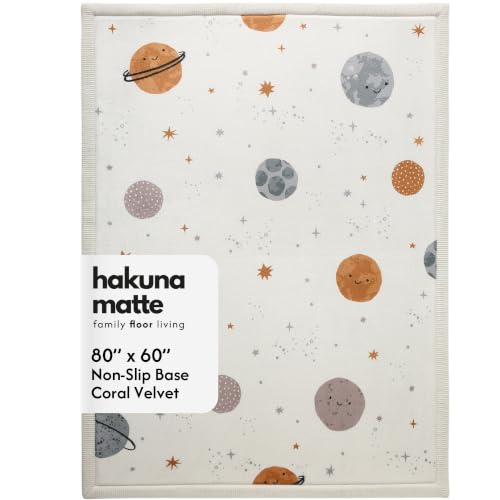
Soothing colors like sage green, warm beige, cream, and soft grey create a calming sensory environment for babies. Subtle celestial or botanical graphics provide visual stimulation for infants during tummy time without visually overwhelming the living room. Timeless styling ensures the rug transitions into an older child bedroom later.
Consider how contrasting patterns can hide minor everyday dust between scheduled weekly cleaning routines. Mottled or heathered neutral tones camouflage light lint far better than solid dark or stark white fabrics. Balanced palettes maintain a clean, tidy visual impression even during active play afternoons.
Choose patterns that harmonize with your existing sofa upholstery and living room curtain fabrics. Cohesive styling allows the rug to function as the primary decorative focal point of your family living space.
Sound Absorption and Thermal Insulation
Active toddlers dropping wooden blocks, rolling toy cars, and taking unsteady steps generate substantial floor noise. Thick foam play mats act as effective acoustic dampeners that absorb vibrations and deaden impact sounds. This soundproofing feature is especially beneficial for second-floor play areas and multi-family apartment buildings.
Hard flooring materials like ceramic tile and hardwood naturally draw heat away from small bodies during seated play. High-density foam mats establish a thermal barrier that keeps little hands and feet comfortably warm against chilly floors. Consistent ambient warmth encourages infants to spend more time exploring on their stomachs.
Look for closed-cell foam cores that effectively trap acoustic energy while resisting cold air drafts from crawl spaces below. The dual benefit of quiet play and warm floors creates a tranquil environment for both children and parents. Enhanced insulation also protects expensive hardwood finishes from temperature fluctuations.
Test acoustic dampening by dropping a hard wooden toy from waist height onto the mat versus bare flooring. A substantial reduction in sharp clatter confirms sufficient acoustic damping properties for quiet indoor play.
| Feature Specification | Recommended Standard | Parent Benefit | Key Watch Out |
|---|---|---|---|
| Foam Thickness | 1.2 to 1.3 Inches | Superior impact absorption for tumbling infants | Thin mats under 0.5 inches lack shock protection |
| Safety Certification | OEKO-TEX / CPSIA / ASTM | Guaranteed zero toxic off-gassing or lead content | Uncertified imports with chemical odor |
| Surface Texture | Coral Velvet / Microfiber | Gentle against sensitive skin during tummy time | Coarse synthetic loops causing friction burns |
| Backing System | Silicone Dot Grip / TPR | Prevents rug slipping across slick wood floors | Smooth textile backs sliding underfoot |
| Fluid Resistance | Hydrophobic Surface Coating | Prevents milk spills soaking into foam interior | Absorbent cores harboring mildew odors |
Why You Should Trust Us
Our evaluation methodology focuses on verifiable engineering specifications, parent usability metrics, and certified material safety standards. We analyzed physical dimensions, foam density ratings, and non-toxic lab testing protocols across the top nursery mats on the market. Our objective approach ensures recommendations based on durability, safety, and functional everyday performance.
We scrutinize manufacturer safety documentation to verify compliance with OEKO-TEX, CPSIA, and ASTM standards. In addition to reviewing structural build quality, we evaluate real-world maintenance requirements to see how fabrics withstand spills and heavy vacuuming. Our goal is to provide reliable, data-backed guidance without marketing bias.
Our review criteria are updated continually as new fabric technologies and safety standards enter the nursery textile market. We cross-reference manufacturer updates to maintain accurate guidance for growing families seeking secure home solutions. Transparency and child safety remain the foundational pillars of our product research.
Final Thoughts
Selecting the right floor covering creates a secure haven for early physical development while maintaining the beauty of your shared living space. When choosing among the Best Living Room Rugs for Babies, prioritising certified non-toxic memory foam and reliable non-slip backing ensures lasting peace of mind. Balancing ease of cleaning with thick cushioning supports your baby through every milestone from tummy time to running.
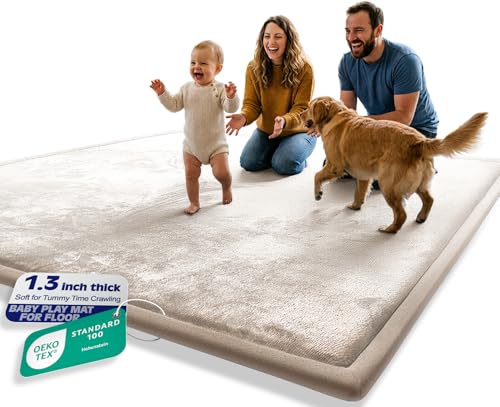
For the best overall combination of plush comfort and refined styling, the Huloo Sleep Ultra Soft Fluffy Baby Play Mat delivers exceptional 1.3-inch foam padding beneath an elegant 3D carved jacquard surface. Its thick core absorbs sudden tumbles effortlessly while the neutral aesthetic elevates your main living room.
Parents seeking exceptional value and budget-friendly convenience will appreciate the ACOMOPACK Baby Play Mat for Floor,1.3″ Thick, which offers certified safety and soft velvet touch at an accessible price point. Its slow-rebound foam protects little knees during active crawling without draining your nursery budget.
If you require expansive coverage for large open floor plans or oversized playpens, the Extra Large 79″x118″ Baby Activity Play Mat Rug provides a sprawling protective surface for multiple children. Pairing your spacious floor setup with quality furnishings from our furniture and comfort guide completes a safe, cohesive family home.
Frequently Asked Questions
What makes the Best Living Room Rugs for Babies different from standard area rugs in 2026?
Baby-focused living room rugs incorporate thick memory foam cores and certified non-toxic fabrics specifically engineered for crawling and fall protection. Standard decorative carpets typically lack high-impact shock absorption and often contain rough fibers that irritate infant skin during extended tummy time.
How thick should a living room baby play mat be for tummy time and crawling?
A thickness between 1.0 and 1.3 inches provides the ideal balance of firm developmental support and soft impact cushioning. This depth prevents babies from feeling the hard subfloor while maintaining enough surface stability for learning to push up and walk.
Are foam baby rugs safe for hardwood floors and underfloor heating?
High-quality rugs made with breathable elastic foam and non-staining dot backing are completely safe for hardwood finishes. Most premium options are designed to tolerate moderate radiant floor heating without warping or releasing harmful odors.
How do I clean milk spills and spit-up from a thick memory foam rug?
Blot the liquid immediately using a dry microfiber cloth, as water-repellent surface treatments prevent fast absorption into the foam. For sticky residues, wipe gently with a damp cloth and mild baby-safe detergent before letting the fabric air dry thoroughly.
How long does a vacuum-compressed baby floor mat take to fully expand?
Compressed memory foam rugs generally take between three and seven days to expand to their full advertised thickness and smooth out fold lines. You can accelerate this process significantly by gently using a garment steamer or low-heat iron over a damp protective cloth.
Can I use a robot vacuum on high-density velvet baby rugs?
Most robot vacuums transition smoothly onto low-pile coral velvet and compressed memory foam mats without tangling brush rolls. However, models with beveled edges and non-slip backings offer the best stability when robotic cleaners mount the rug surface.
What safety certifications should I check when shopping for baby play rugs in 2026?
Always verify OEKO-TEX Standard 100, CPSIA, and ASTM certifications to confirm the absence of lead, phthalates, and harmful flame retardants. Products meeting these standards guarantee a clean, non-toxic breathing space for babies during daily floor play.
Why is a non-slip backing essential for infant play rugs?
A non-slip grip prevents the entire mat from shifting unexpectedly when babies push off to crawl or toddlers run across the room. Firm floor traction protects both young children and carrying caregivers from dangerous sliding accidents on slick floorings.
How can I remove creases and wrinkles from a newly unboxed foam rug?
Laying the rug flat in a warm room allows ambient heat to relax compressed synthetic fibers over several days. For stubborn packaging folds, light steaming on a low setting quickly restores the plush texture and even surface profile.
Which material is best for babies with sensitive skin or allergies?
Hypoallergenic synthetic coral velvet and jacquard microfibers are ideal because they resist shedding and trap less dust than natural wool. These gentle textiles provide a smooth, friction-free surface that minimizes skin redness during tummy time sessions.