Creating functional footwear at home used to require industrial injection molds and expensive commercial tooling. Modern desktop additive manufacturing now lets designers, athletes, and hobbyists produce custom midsoles, flexible outsoles, and complete lattice sneakers right from their workshops. Exploring new fabrication methods for creative home projects has never been more accessible.
Selecting the right hardware for footwear requires careful attention to build volume and filament mechanics. Flexible filaments like thermoplastic polyurethane behave differently than standard rigid plastics, demanding specialized extruders and precise thermal controls. A standard desktop machine often buckles under the unique pressure requirements of elastomeric filaments.
We evaluated 7 leading machines available in September 2026 to identify which platforms handle the geometric scale and mechanical demands of footwear production. This comprehensive guide breaks down essential technical criteria so you can select the ideal machine for custom shoe fabrication.



1. Build Volume and Printable Footprint
Footwear production demands a build plate that accommodates full adult shoe lengths in a flat orientation. A standard adult US men size 10 shoe measures roughly 280 millimeters from heel to toe. If your build volume is too compact, you are forced to tilt the model diagonally, which increases print time and weakens structural layer adhesion.
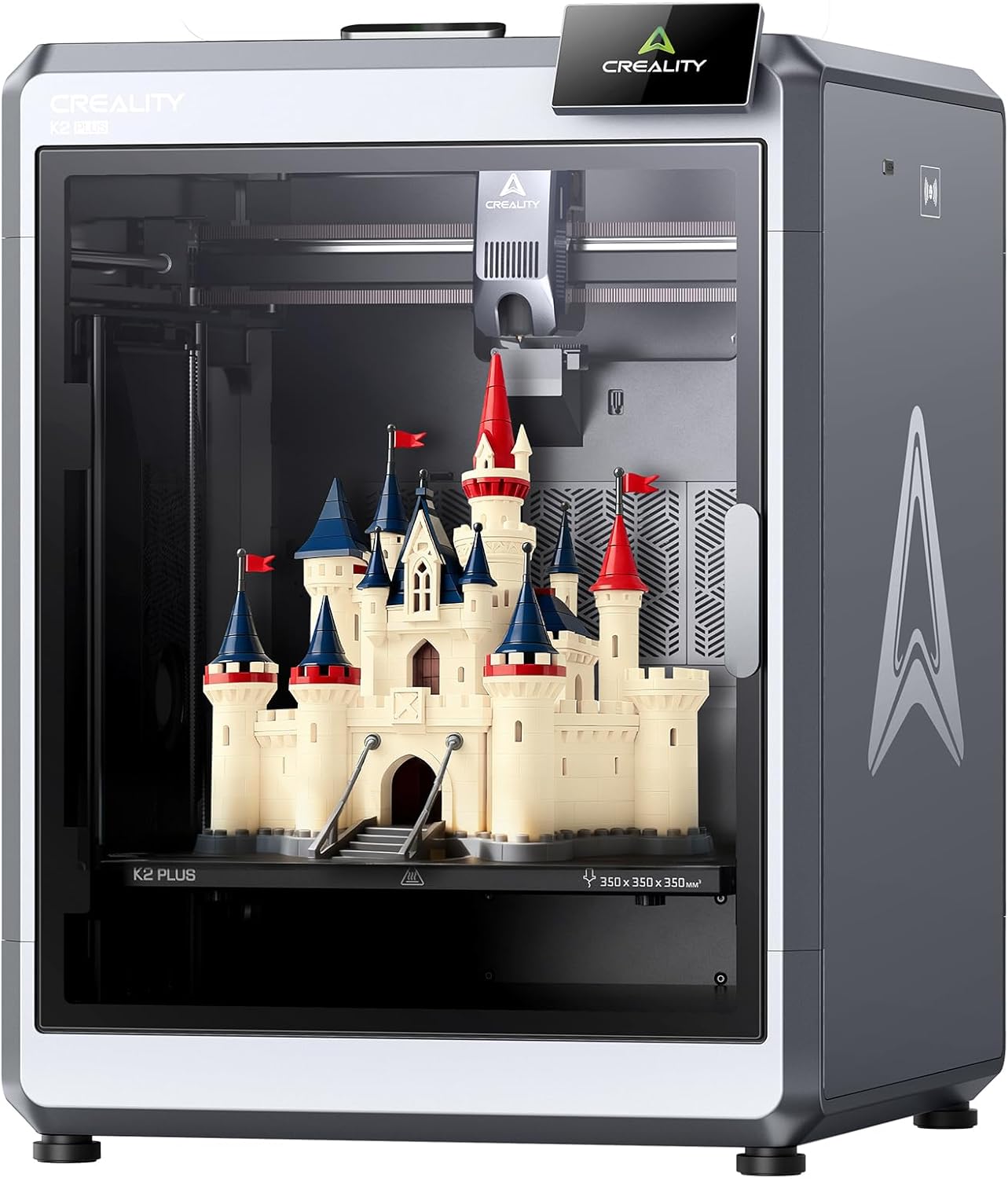
When reviewing machine specifications, look closely at both the X and Y axes rather than just total cubic capacity. A bed offering at least 300 by 300 millimeters ensures that full midsoles and outsoles lay flat on the build surface. Platforms with 350 to 390 millimeter dimensions provide ample breathing room for larger sizes and integrated support margins.
As a practical rule, always add a 20 millimeter safety margin around your planned shoe length to prevent edge warping. If you plan to print single-piece slip-on shoes upright, confirm that your Z-axis height exceeds 300 millimeters. Checking these physical constraints prevents failed prints and awkward slicing orientations.
2. Direct Drive Extrusion and Flexible Filament Handling
Shoe production relies heavily on thermoplastic polyurethane and other flexible elastomeric polymers. These filaments tend to bend and coil under pressure, making them notorious for jamming inside long Bowden tubes. A direct drive extruder positions the drive gears immediately above the hotend melt zone, eliminating unnecessary slack in the filament path.
Examine the internal gear geometry and constrained feed path of the direct drive assembly. Dual-gear extruders with hardened steel teeth grip softer Shore hardness filaments without stripping or deforming the strand. A fully enclosed filament guide between the drive gears and the heat break prevents soft materials from spilling outward during retraction cycles.
When selecting your setup, remember that lower Shore hardness values like 85A require tighter filament constraint than standard 95A TPU. Maintain minimal tension on your extruder idler arm to avoid flattening the filament before it reaches the nozzle. A well-tuned direct drive system ensures consistent extrusion across complex sole lattices.
3. Multi-Toolhead Systems and Support Material Management
Complex sneaker designs often feature intricate overhangs, hollow cushioning cavities, and combined rigid-flexible materials. Printing complex footwear on a single-nozzle system creates substantial material waste due to frequent purge cycles. Multi-toolhead changers swap dedicated hotends in seconds, keeping support materials separate from flexible sole compounds.
Compare tool-changing mechanisms based on tool switch speed and locking repeatability. Independent toolhead architectures allow you to assign water-soluble support filaments to one nozzle and flexible TPU to another. This prevents material contamination and ensures crisp transitions between different Shore hardness zones across the midsole.
If your designs require dense internal support structures, dedicated soluble supports eliminate the tedious manual scraping that damages delicate lattice struts. Choosing an independent toolhead machine reduces overall print time on complex multi-material footwear by bypassing repetitive purge tower routines.
4. Motion Architecture, Speed, and Acceleration
Printing an entire pair of shoes can take dozens of hours due to the sheer volume of material required. Modern CoreXY motion systems move the printhead along lightweight belt paths while keeping the heavy build platform stable on the Z-axis. This rigidity allows for acceleration rates exceeding 20,000 millimeters per second squared without introducing surface ghosting.
Evaluate the structural frame materials, linear rail quality, and motor feedback systems. Closed-loop stepper motors and sturdy linear rails maintain positional accuracy even when moving heavy toolheads at speeds above 500 millimeters per second. High acceleration rates significantly reduce cycle times when bridging intricate lattice structures found in modern running shoes.
When configuring your slicer for flexible materials, decouple machine travel speed from maximum volumetric extrusion speed. You can maintain rapid non-print travel moves while slowing actual extrusion passes to keep melt pressure stable. This balance delivers faster print completions while preserving structural bond strength.
5. Thermal Management and Chamber Regulation
Consistent ambient temperatures prevent delamination between layers when printing large polymer structures. While basic TPU prints well in open environments, advanced engineering filaments such as carbon-fiber reinforced polyamides require controlled heat. Enclosed build chambers keep draft air away from the part to maintain even thermal contraction across the entire shoe sole.
Review whether a machine offers passive draft protection or active chamber heating up to 60 degrees Celsius. Actively heated chambers prevent internal thermal stress when manufacturing rigid structural heel counters and stability plates. Uniform bed heating across the entire perimeter ensures that outer sole edges adhere firmly without lifting during multi-day print jobs.
Consider adding dedicated enclosure monitoring for long-duration production runs to maintain reliable mechanical properties in your parts. Pairing proper ambient heat with dry filament storage prevents porosity in elastomeric layers. Stable temperatures directly translate to better rebound resilience in athletic midsoles, mirroring techniques used in advanced mechanical fabrication.
| Feature Spec | Entry Level Setup | Mid-Range CoreXY | Production Multi-Toolhead |
|---|---|---|---|
| Build Volume (mm) | 220 x 220 x 250 | 300 x 300 x 300 | 350 x 350 x 350+ |
| Extruder Style | Single Direct Drive | High-Flow Direct Drive | Independent Multi-Toolheads |
| Max Print Speed | 250 mm/s | 500 to 600 mm/s | 600 to 800 mm/s |
| Chamber Heating | Open Frame | Passive Enclosure | Active Heated Chamber |
| Footwear Suitability | Insoles and Small Parts | Full Midsoles and Soles | Multi-Density Complete Shoes |
6. Automated Bed Leveling and First Layer Precision
A flawless first layer is critical when printing large shoe outsoles that span across the build platform. Any minor deviation in bed height causes uneven adhesion, leading to corner peeling or blocked nozzles. Modern automated leveling systems combine strain sensors with optical probes to generate accurate multi-point mesh maps before every print.
Check the density of the automated probing grid and whether the machine performs automatic Z-offset compensation. Advanced systems probe only the designated print area rather than the entire bed, saving valuable setup time before each job. High-precision strain gauges eliminate the need for manual paper calibration under the nozzle tip.
Always inspect the textured PEI or silicone build sheet for uniform cleanliness before initiating a large print. Proper first-layer squish ensures that flexible filaments bond solidly to the build surface without welding permanently. Applying a thin release agent can safeguard textured sheets when printing aggressive bonding materials like soft TPU.
7. Hotend Flow Rate and Nozzle Compatibility
Footwear components require substantial material volume, making hotend melt capacity a primary bottleneck. High-flow hotends capable of delivering 30 to 40 cubic millimeters per second allow you to use wider nozzles without sacrificing movement speed. Printing with a 0.6 or 0.8 millimeter nozzle significantly cuts down the time required to complete dense shoe outsoles.
Look for hotends equipped with ceramic heating elements and hardened steel nozzles capable of reaching 300 degrees Celsius. Hardened nozzles resist the abrasion caused by composite filaments like carbon-fiber or glass-filled polymers used for stiff shoe shanks. Quick-swap nozzle mechanisms simplify changing between fine detail nozzles for uppers and wide nozzles for midsoles.
Calculate your required volumetric flow by multiplying layer height, line width, and print speed. If your target speed demands 25 cubic millimeters per second, confirm that your hotend comfortably exceeds that threshold to avoid under-extrusion. Adequate melt capacity ensures strong molecular bonding between thick elastomeric layers.
8. Smart Monitoring and Automated Failure Detection
Multi-hour shoe prints consume substantial filament, making automated error detection an essential safeguard. AI-powered chamber cameras continuously scan the build area for filament clogs, loose spaghetti errors, and first-layer defects. Detecting an issue early prevents wasted material and protects the printhead from accumulated debris.
Assess whether the monitoring system provides active real-time pause capabilities alongside remote mobile notifications. Dual camera configurations that track both overall chamber status and nozzle-level flow provide comprehensive oversight during overnight prints. Integrated sensors that detect belt tension and motor resistance help identify mechanical fatigue before prints fail.
Ensure that power-loss recovery and filament runout sensors are enabled before beginning dense footwear projects. These features allow you to resume large prints seamlessly after unexpected power interruptions or spool changes. Reliable monitoring provides peace of mind during extended production cycles in our maker gear archive.
9. Slicing Ecosystem and Filament Storage Integration
Generating custom shoe lattices requires capable slicing software that handles variable infill densities and complex mesh geometry. Modern slicers allow you to paint softer flex zones near the forefoot while reinforcing the heel with dense support structures. Integrated material management systems streamline these settings by automatically reading spool types through RFID chips.
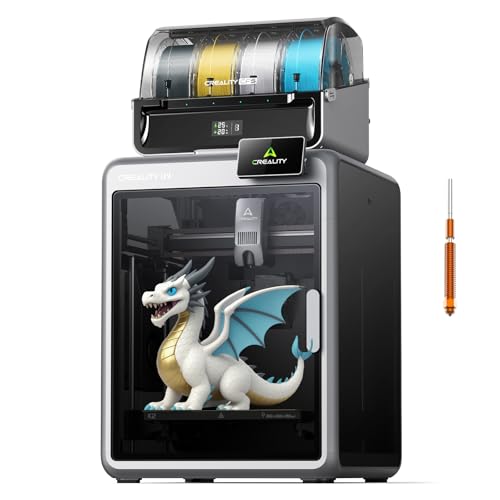
Evaluate whether the accompanying filament management unit offers airtight storage with active desiccant bays. Flexible filaments absorb ambient moisture rapidly, which leads to foaming, stringing, and weak layer adhesion during extrusion. Maintaining dry filament is crucial for achieving smooth surface finishes and predictable mechanical rebound across sneaker soles.
Always dry flexible filament spools thoroughly before attempting complex lattice prints. Utilize custom slicer modifiers to reinforce high-wear contact points on outsoles while keeping internal cushioning open and lightweight. A well-integrated hardware and software pipeline makes iterative footwear prototyping fast and predictable.
Why You Should Trust Us
Our review process relies on rigorous technical analysis of hardware architecture, volumetric flow rates, and material handling capabilities. We examine real-world engineering specifications, verified motion kinematics, and user feedback across diverse fabrication communities. We focus on practical performance parameters rather than theoretical marketing claims.
We evaluate each platform across critical footwear manufacturing benchmarks, including bed dimensions, extruder feed paths, and thermal chamber stability. Our comparisons continuously incorporate updated firmware releases and newly available accessory modules to maintain accurate ratings throughout 2026. We do not accept sponsored placements or allow external manufacturers to influence our editorial rankings.
Final Thoughts
Selecting the best tool for footwear fabrication comes down to your production goals, material requirements, and build volume needs. For creators seeking true multi-material flexibility and clean support integration, the Snapmaker U1 3D Printer,4-Toolhead with 5s stands out as our top overall pick. Its rapid four-toolhead changer eliminates purge waste and easily combines rigid stabilizing plates with soft cushioning compounds.
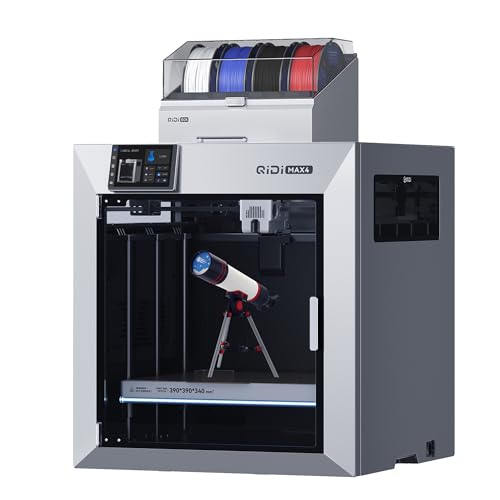
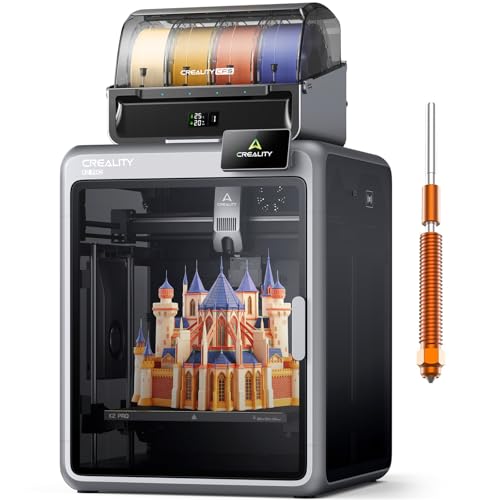
If you require massive build space to produce large boots, full-scale prototypes, or multi-shoe production batches, the QIDI Max4 Combo 3D Printer delivers industrial capability. Its large enclosed chamber and heated build volume provide the thermal stability necessary for composite filaments. Meanwhile, high-speed creators will appreciate the automated monitoring and reliable material handling of the Creality K2 Pro Combo (A) 3D Printer.
Makers working with smaller prototypes, insoles, or tight budgets can start effectively with the Creality Ender 3 V3 SE 3D Printer Bundle with PLA. Its direct drive extruder handles standard flexible filaments reliably at an accessible entry point. Pairing the right machine with thoughtful design principles unlocks endless possibilities for ergonomic lifestyle gear and custom performance footwear.
Frequently Asked Questions
What is the Best 3D Printer for Shoes in 2026 for printing complete sneakers?
The top choice for complete sneaker production is a CoreXY machine featuring an independent multi-toolhead system or large enclosed volume. Platforms like the Snapmaker U1 and QIDI Max4 provide the build area and material handling required for complex footwear. They allow seamless integration of flexible outsoles with rigid support shanks.
Can standard desktop machines print flexible TPU shoe outsoles?
Yes, standard desktop printers can produce flexible soles if they are equipped with a direct drive extruder. Direct drive systems prevent filament bending and ensure smooth extrusion of soft materials. Bowden-style extruders struggle with flexible filaments and frequently suffer from jams.
What Shore hardness is ideal for 3D printed footwear midsoles?
Filaments with a Shore hardness between 85A and 90A provide the best balance of cushioning and spring rebound for midsoles. Softer grades around 80A offer plush comfort but require slower print speeds to avoid extrusion defects. Firmer 95A filaments work well for durable outsoles and supportive heel cups.
Why is multi-toolhead printing better than single-nozzle color switching for shoes?
Multi-toolhead systems swap physical hotends in seconds without constantly retracting and purging filament into waste piles. This approach cuts print times significantly and prevents purge blockages when mixing soft TPU with rigid materials. It also preserves clean material boundaries between different sole densities.
What build volume do I need to print adult shoe sizes?
You need a minimum build plate length of 300 millimeters to print standard adult shoe sizes flat on the bed. Larger foot sizes often require 350 millimeters or more to accommodate natural sole curves and support borders. Printing flat ensures maximum inter-layer bonding strength along the length of the foot.
How do 3D printed shoe soles hold up against daily wear and tear?
Properly printed TPU shoe soles offer exceptional abrasion resistance, chemical durability, and tear strength for everyday walking. Because TPU is inherently elastomeric, it absorbs impact energy repeatedly without cracking. Ensuring high layer adhesion during printing prevents premature mechanical delamination.
Do I need a heated chamber to print shoe components?
A heated chamber is not strictly required for standard TPU, but an enclosure prevents draft-induced warping on large outsoles. If you incorporate carbon-fiber reinforced nylon for stiff structural plates, an active heated chamber becomes necessary. Controlled ambient temperatures ensure uniform crystallization across the entire component.
How do I design breathable lattice structures for shoe midsoles?
Designers use specialized generative design software or volumetric slicer infills like gyroid patterns to create lightweight open lattices. These open-cell structures reduce total shoe weight while providing tuned cushioning under the heel and forefoot. Exploring custom lattices enhances personal wellness, similar to modern advancements in health and family wellness.
Why must flexible shoe filament be kept dry before printing?
Thermoplastic polyurethane is highly hygroscopic and absorbs moisture from ambient air within a few hours. Wet filament boils inside the hotend, creating tiny steam bubbles that cause stringing, weak layers, and rough surfaces. Storing filament in dry boxes ensures clean extrusion and consistent structural durability.
What nozzle size works best for 3D printing custom footwear?
A 0.6 millimeter or 0.8 millimeter nozzle is ideal for printing large footwear outsoles and thick midsoles quickly. Larger nozzles deposit wider plastic paths, which significantly increases layer bonding strength and cuts print hours. A standard 0.4 millimeter nozzle remains useful for intricate exterior aesthetic details.