Protecting your property requires dependable surveillance that captures critical visual details without constant technical failures. Modern homeowners increasingly avoid subscription heavy consumer cameras in favor of standalone setups that keep footage private. Investing in the Best Wireless DIY Security Systems gives you continuous recording capabilities along with advanced person and vehicle detection tools across your entire perimeter.
Many traditional security setups suffer from weak Wi-Fi signals, dropped frame rates, and restrictive cloud storage paywalls that reduce daily usability. Current standalone kits solve these frustrations by pairing high throughput network recorders with high resolution optical sensors. Combining these surveillance kits with other smart home automation devices creates a comprehensive and responsive property protection network.
We evaluated 4 leading hardware packages for September 2026 from REOLINK to determine which configurations offer true long term dependability. Our breakdown highlights resolution benchmarks, hard drive storage thresholds, and deployment ease to help you select the ideal system for your specific property layout.


1. Video Resolution and Image Sensor Fidelity
Image resolution directly influences your ability to identify facial features, license plates, and clothing patterns during an incident. Baseline 5MP sensors offer sharp footage that easily exceeds standard 1080p hardware in everyday clarity. Upgrading to 4K or 12MP sensors provides the pixel density needed to digitally zoom in on distant activity without extreme pixelation.
Resolution specs must always be evaluated alongside image sensor dimensions and streaming bitrates for accurate real world expectations. A high megapixel count paired with a tiny optical sensor often results in muddy footage during overcast or shadowed conditions. Look for hardware that supports full 4K streaming modes with adjustable bitrates so your recorded files maintain crisp edge definition.
High resolution feeds require greater network bandwidth and fill local hard drives much faster than standard definitions. A reliable rule of thumb is allocating roughly double the storage capacity when jumping from 5MP up to 4K recording tiers. Prioritize higher megapixel cameras for wide open driveways while utilizing standard resolution sensors for narrow entryways and enclosed porches.
2. Power over Ethernet vs Wireless Infrastructure
DIY security shoppers often look for wireless flexibility but encounter dropped signals when wireless cameras attempt to transmit through thick exterior masonry. Plug and play Power over Ethernet connections solve this stability dilemma by sending electrical power and digital video through one single network cable. This architecture eliminates the need for nearby electrical outlets while maintaining continuous data throughput across distances up to 330 feet.
A single Cat5e or Cat6 cable run provides rock solid reliability that wireless networks simply cannot match during extreme weather or heavy radio interference. Wired transmission prevents video loss caused by household Wi-Fi congestion from streaming devices or gaming consoles. While running cables requires some upfront attic or crawlspace work, the resulting zero latency video stream delivers absolute peace of mind.
When planning your DIY installation, consider running pre-terminated Ethernet lines along exterior soffits and tucked behind downspouts for a clean appearance. Use exterior grade waterproof connector caps on every outdoor termination point to prevent moisture from corroding the copper pins over time. Choosing single cable infrastructure saves immense maintenance time compared to constantly recharging individual battery operated cameras.
3. Network Video Recorder Storage and Continuous 24/7 Recording
Motion-only recording frequently misses crucial context leading up to a security breach, making continuous 24/7 video capture essential. Dedicated Network Video Recorders come equipped with internal surveillance grade hard drives engineered to handle non stop write cycles. Having continuous footage ensures you can review events even if motion sensors failed to trigger during unusual ambient conditions.
Compare pre-installed drive sizes against your planned camera count and desired footage retention window before making a final purchase. A 2TB hard drive comfortably preserves roughly ten days of continuous video across four cameras before overwriting older footage. Multi camera setups running eight to sixteen 4K or 12MP channels require 4TB to 16TB arrays to maintain an adequate historical archive.
Look for NVR units that include external e-SATA expansion ports or secondary internal hard drive bays for future storage upgrades. Surveillance rated drives such as Western Digital Purple or Seagate SkyHawk manage heat better than regular desktop drives under continuous load. Calculate your storage needs based on your longest travel periods so footage remains accessible while you are away from home.
| Resolution Tier | Typical Bitrate per Camera | Recommended Drive for 4 Cameras (14 Days) | Primary Strengths |
|---|---|---|---|
| 5MP Super HD | 4096 kbps | 2TB to 3TB | Lower bandwidth, balanced drive usage |
| 4K Ultra HD (8MP) | 8192 kbps | 4TB to 6TB | Crisp facial recognition, wide coverage |
| 12MP Ultra HD | 10240 kbps | 6TB to 8TB | Extreme detail capture, maximum zoom range |
4. On-Device AI Detection and False Alert Filtering
Older surveillance cameras relied on basic pixel movement detection, triggering dozens of annoying false alerts from swaying tree branches, raindrops, or passing insects. Modern smart security systems utilize integrated on-camera neural processing to identify the specific shapes of humans, vehicles, and household animals. This intelligent filtering ensures your mobile device receives actionable alerts only when genuine physical activity occurs on your property.
Advanced recognition algorithms allow you to customize push notifications based on the exact detection category you wish to monitor. You can configure front driveway cameras to alert exclusively for vehicles while setting backyard cameras to prioritize human detection. If you enjoy monitoring active pets outside, pet detection algorithms help distinguish between neighborhood animals and actual trespassers.
Review the configuration menu to establish tailored motion zones and sensitivity thresholds for each individual camera channel. Masking out public sidewalks or fluttering flags prevents repetitive notification fatigue while preserving full monitoring sensitivity along private walkways. Accurate edge-based AI processing operates entirely inside the local camera hardware, ensuring zero subscription fees for intelligent identification features.
5. Night Vision Technologies and Active Illumination
Most property intrusions occur after dark, making low light surveillance capabilities a vital consideration for any homeowner. Standard infrared night vision uses invisible LED arrays to illuminate dark spaces, producing clean monochrome video up to 100 feet away. Advanced optical setups incorporate motion-activated spotlights that flood the scene with visible light to generate full color night footage.
Color night vision offers critical forensic value by capturing clothing colors, vehicle paint shades, and distinct hair tones that black and white footage obscures. Spotlight equipped cameras can be scheduled to activate illumination continuously throughout the night or illuminate only upon smart motion detection. Flexible systems allow you to switch between stealthy infrared monitoring and visible deterrent lighting depending on your specific security posture.
When positioning night vision cameras, avoid pointing lenses directly at reflective glass surfaces, metallic siding, or nearby roof overhangs. Infrared light bouncing off close objects will cause the camera auto exposure to darken the wider background, blinding your night view. Ensure the camera angle maintains an unobstructed view across the primary monitoring zone for balanced illumination.
6. Camera Form Factors and Weatherproof Durability
Selecting between bullet and dome camera form factors depends heavily on mounting location, visibility preferences, and vandalism risks. Bullet cameras feature prominent cylindrical bodies that serve as obvious visual deterrents along open driveway perimeters and detached garages. Dome cameras house optical lenses inside protective glass bubbles, making them discreet and resistant to physical redirection or tampering.
Outdoor durability requires robust metal enclosures carrying strong ingress protection ratings against wind driven rain, dust, and freezing winter temperatures. Dome cameras work exceptionally well under low porch ceilings and exterior entryways where visitors cannot easily tell which direction the lens is pointed. Much like protecting outdoor fixtures from harsh elements, proper camera housing prevents moisture intrusion from damaging internal electronic boards.
Pay close attention to the operating temperature range specified on each camera spec sheet before installing them in exposed climates. Extreme direct summer sunlight can cause overheating, while subzero winter weather can stiffen internal pan and tilt mechanisms on motorized models. Choose aluminum alloy housing over lightweight plastic to ensure years of continuous exposure without brittle structural breakdown.
7. Channel Capacity and Future System Scalability
Choosing the correct NVR channel capacity prevents costly equipment replacement when you inevitably decide to expand your camera coverage later. An 8-channel recorder supports up to eight independent camera feeds, making it ideal for compact single story residences. Larger multi story homes, sprawling properties, and small business facilities generally benefit from 16-channel or 24-channel NVR units.
Modern hybrid NVR recorders often support a combination of wired PoE channels alongside specific wireless or battery operated cameras over the local network. This expansion flexibility allows you to run wired cameras along primary building walls while adding specialized wireless cameras to remote fence lines. Verify whether an NVR requires identical camera models or supports varied resolutions across different ports.
A smart deployment practice is purchasing an NVR with at least two to four more channels than your initial camera bundle includes. Having unused PoE ports on the rear panel makes adding a dedicated porch camera or backyard camera quick and painless. Planning for scalability ensures your security infrastructure grows smoothly alongside future property additions.
8. Audio Capabilities and Two-Way Communication
Visual video recordings provide only half of the incident picture, making synchronized audio capture an invaluable secondary layer of property protection. Integrated microphones record ambient voices, barking dogs, breaking glass, and screeching tires that occur just outside the camera field of view. High fidelity audio streams often capture verbal exchanges that clarify the intent behind suspicious perimeter activity.
Advanced security cameras incorporate built-in weatherproof speakers alongside sensitive microphones to enable full two-way voice communication. This feature allows you to speak directly to delivery couriers, welcome expected guests, or issue verbal warnings to trespassers from your phone. Built-in speakers can also emit loud automated sirens when smart sensors detect unauthorized nighttime intrusions.
Check regional audio recording regulations regarding privacy expectations in outdoor spaces before enabling continuous sound capture across all channels. Most NVR software menus allow you to toggle audio recording on or off independently for each installed camera. Position two-way talk cameras near entry doorways where conversational audio remains clear and free from wind distortion.
9. Remote Access, Data Privacy, and App Usability
A truly effective DIY security system must balance effortless remote mobile access with uncompromising local data privacy and network security. Leading standalone systems provide free companion mobile apps and desktop clients that connect securely to your NVR without requiring paid cloud subscriptions. You can view fluid live streams, scrub through historical playback timelines, and download video clips directly to your smartphone.
Standalone NVR systems store all video files locally on internal hard drives, preventing third party cloud servers from accessing your private family footage. This closed loop architecture functions continuously even if your home internet connection experiences a complete service outage. Mobile streaming occurs via secure peer to peer encrypted tunnels when you choose to check cameras outside your home network.
Ensure your home router firmware stays updated and configure complex alphanumeric passwords on your NVR administrator account during initial setup. Avoid using default factory credentials to prevent unauthorized local network access to your video streams. Taking a few simple digital security precautions guarantees your surveillance hardware remains fully private and protected from digital tampering.
Why You Should Trust Us
Our security hardware evaluations rely on rigorous technical analysis of optical specifications, network throughput limits, and local storage architectures. We dissect verified hardware capabilities, comparing sensor dimensions, bitrate ceilings, and compression standards across various price categories. This methodical approach ensures our buying guidance reflects practical installation realities rather than hollow marketing claims.
We focus strictly on objective data points, examining hardware durability, power consumption metrics, and mobile application stability. By continuously tracking firmware release notes, user interface updates, and hardware revisions, our recommendations remain fresh and accurate for 2026. Our editorial integrity means we highlight genuine setup challenges alongside top performing features.
Our mission is empowering homeowners to build robust, subscription free security systems that deliver commercial grade reliability without professional installation expenses. We examine every product configuration through the lens of long term ownership costs, local privacy protections, and everyday ease of use. You receive straightforward, transparent recommendations designed to protect your household for years to come.
Final Thoughts
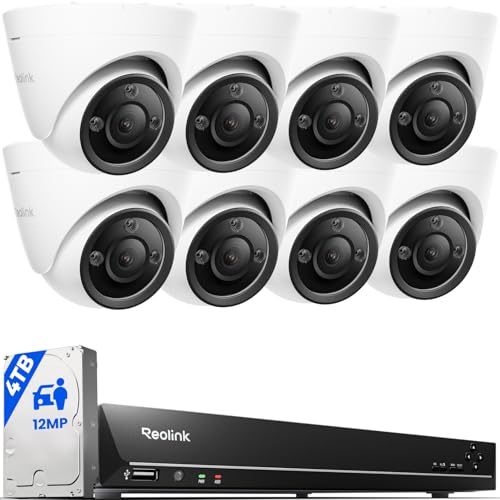
Selecting the ideal surveillance kit comes down to matching your property size, camera aesthetic preferences, and visual resolution expectations. For expansive properties requiring ultimate forensic detail and active deterrent spotlights, the REOLINK 16CH 12MP PoE Security Camera System stands out as our premier recommendation. Its extraordinary 12MP image sensor, two-way audio communication, and massive channel expansion capacity make it a future proof investment for complete property protection.
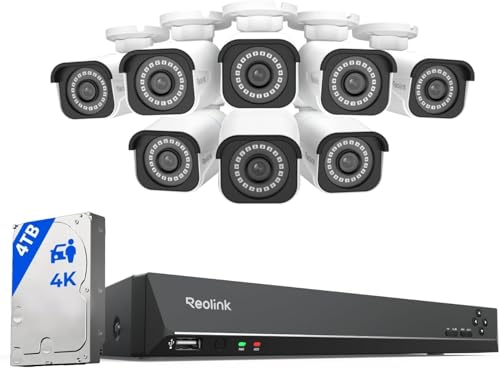
Homeowners seeking exceptional value without sacrificing reliable 24/7 recording should consider the REOLINK 8CH 5MP PoE Security Camera System as a practical entry point. This package delivers crystal clear 5MP Super HD resolution, responsive smart AI motion detection, and an included 2TB hard drive that easily handles daily residential monitoring needs. It provides all essential surveillance protections while keeping equipment expenses well within a moderate DIY budget.
If you prefer a low profile aesthetic that blends seamlessly into porch ceilings and exterior overhangs, the REOLINK 16CH 4K Security Dome Camera System is the top choice for discreet surveillance. Alternatively, the REOLINK 16CH 4K Security Bullet Camera System offers strong visual deterrence along extended perimeter lines. Both 4K systems provide rich 8MP clarity and expansive 4TB internal storage for reliable continuous monitoring.
Equipping your property with commercial grade surveillance creates a dependable safety barrier for your entire family. Whether monitoring backyard play areas or securing driveway safety gear for children, dependable local recording guarantees critical visual evidence is always preserved. Choose the channel count and camera style that best matches your home layout to enjoy true subscription free security.
FAQs
What makes the Best Wireless DIY Security Systems better than battery operated cameras?
Standalone PoE security systems utilize dedicated network cabling to deliver constant electrical power and stable digital video transmission without signal drops. Unlike battery cameras that sleep to conserve power, these systems record continuously 24/7 to local hard drives without requiring expensive monthly cloud subscription plans.
Do standalone NVR security camera kits require a monthly subscription fee?
No, standalone NVR systems store all recorded video files locally on internal high capacity hard drives without any mandatory monthly fees. Features like smart AI person detection, mobile push notifications, and remote live streaming remain completely free to use throughout the lifetime of the hardware.
Can I access my security cameras remotely when I am away from home?
Yes, you can access live camera feeds and historical recordings remotely using free manufacturer mobile applications on iOS and Android devices. As long as your NVR recorder is connected to your home internet router, encrypted peer to peer streaming allows seamless remote viewing from anywhere.
Will my security system continue recording if the home internet goes down?
Yes, your cameras connect directly to the NVR over a local wired network, allowing continuous 24/7 recording to proceed uninterrupted during internet outages. You will temporarily lose remote mobile viewing capabilities, but all physical footage remains safely stored on the internal hard drive for later review.
What is the primary difference between bullet cameras and dome cameras?
Bullet cameras have prominent protruding bodies that provide a clear visual deterrence along driveways, fence lines, and building corners. Dome cameras feature discreet low profile housings under protective glass domes, making them resistant to tampering and ideal for entry doorways and low porch ceilings.
How many days of footage can a 2TB or 4TB hard drive store?
A 2TB hard drive typically retains roughly ten days of continuous 24/7 video across four 5MP cameras before automatic loop overwriting begins. A 4TB hard drive running eight 4K cameras will generally store between seven and ten days of continuous footage depending on configured bitrate levels.
How does smart person and vehicle AI detection reduce false alarms?
Smart detection algorithms analyze the geometric shape and movement patterns of objects in the camera frame rather than relying on simple pixel changes. This intelligent processing filters out swaying tree branches, falling rain, shadows, and small insects, sending mobile alerts only for relevant human or vehicular activity.
Can I mix different camera resolutions on the same NVR recorder?
Most modern NVR units allow you to combine various camera models, including 5MP, 4K, and 12MP resolutions, across different channel ports. This flexibility allows you to place high resolution cameras at critical perimeter points while using standard cameras for secondary monitoring zones.
What is the maximum cable distance for a single PoE security camera?
Standard Power over Ethernet network cables can reliably transmit video data and electrical power up to 330 feet without signal degradation. For exceptionally large properties, specialized PoE extenders or remote network switches can extend transmission distances even further across your acreage.
How does full color night vision compare to traditional infrared night vision?
Traditional infrared night vision utilizes invisible LED light to generate clear black and white video footage in total darkness without drawing attention. Full color night vision uses integrated motion activated spotlights to illuminate the scene, capturing crucial color details such as clothing tones and vehicle paint.