Dining rooms serve as versatile spaces for family meals, festive entertaining, and late evening conversations. Installing modern lighting controls allows you to transition seamlessly from bright daytime illumination to warm, intimate evening settings. Upgrading your wall switches is one of the most practical home improvement upgrades you can choose to elevate your interior lighting atmosphere.
Selecting Best Smart Dimmer Switches for Dining Rooms in 2026 requires balancing wiring compatibility, wireless protocols, and fixture support. We evaluated 7 leading options for September 2026 to help you find the ideal match for your chandeliers, pendants, and recessed lights. Established brands like Leviton, Lutron, TREATLIFE and more provide dependable choices tailored to diverse household configurations.
Many homeowners struggle with erratic bulb flickering, complex multi-gang electrical boxes, and missing neutral wires during installation. This comprehensive guide details everything you must know about circuit layouts, load ratings, and smart ecosystems. With the right hardware in place, creating the ideal dining ambiance becomes completely effortless.



Neutral Wire Requirements
The presence of a neutral wire inside your dining room switch box determines which smart dimmer models you can install. Homes constructed before the mid 1980s frequently lack dedicated neutral conductors inside wall switch enclosures. Most standard Wi-Fi switches require a continuous neutral connection to power their internal radios and logic boards.
Before purchasing any hardware, turn off the breaker and remove your existing switch plate to inspect the wiring cluster. A neutral bundle usually consists of two or more white wires tucked into the rear of the electrical box. If you only see black line and load wires alongside a bare copper ground wire, your setup lacks a neutral line.
If your home lacks neutral wiring, select dedicated no-neutral switches like the Lutron Caseta ecosystem. These specialized devices maintain micro-power trickle currents through the lighting circuit without illuminating the bulbs. Choosing a no-neutral model eliminates the substantial expense of hiring an electrician to pull new electrical cabling through finished walls.
Circuit Topology and Multi-Way Switching
Dining rooms often feature multiple entry points controlled by two separate wall switches on a 3-way circuit. Standard single-pole dimmers only work in setups where a single switch controls a dedicated light fixture. Installing a single-pole device on a 3-way lighting circuit will cause operational failures or power loop errors.
To determine your circuit configuration, observe whether you can adjust the dining fixture from more than one wall location. If dual switches control the fixture, you must acquire a 3-way compatible smart kit or a master-remote dimmer pair. Dedicated kits include specific primary and secondary units designed to communicate across traveler wires.
For homes where running secondary physical traveler wiring is impossible, consider smart switches that offer wireless accessory remotes. Systems utilizing wireless companion remotes allow you to convert single-pole boxes into virtual multi-location controls without cutting into drywall. This capability provides flexible switch placement tailored to your dining room furniture setups.
Bulb Load Capacity and Dimmable LED Performance
Dining room fixtures such as multi-arm chandeliers and multi-bulb pendant clusters place unique electrical demands on dimming controls. Smart dimmers feature strict maximum wattage limits divided between modern LED loads and legacy incandescent lamps. Exceeding rated maximums can cause the switch to overheat, reset unexpectedly, or shorten its operational lifespan.
Calculate your total fixture load by multiplying the wattage of each bulb by the total number of sockets in the fixture. A decorative chandelier holding eight 9W dimmable LED bulbs generates a cumulative load of 72W. Ensure your chosen dimmer provides an LED capacity of at least 150W to maintain an adequate safety buffer.
Always verify that your dining room bulbs are explicitly marked as dimmable by the bulb manufacturer. Pairing non-dimmable LEDs with smart dimming switches causes severe buzzing, strobe flickering, and premature driver burnout. High quality smart dimmers handle up to 150W LED or 400W incandescent loads with complete stability.
Low-End Trim Calibration and Flicker Prevention
Dining ambiance depends heavily on achieving stable, low-level illumination without visible light flicker or humming noises. Inexpensive dimmers often cut electrical phases inconsistently at low percentages, resulting in bulb dropout or harsh buzzing. Premium smart dimmers include digital low-end trim adjustments within their companion smartphone apps.
Trim calibration enables users to set the minimum operational voltage threshold for specific bulb brands and driver designs. Setting this floor ensures the dining lights turn on reliably at the lowest brightness level without jumping to full intensity first. It also prevents the lights from shutting off completely when dimmed below ten percent.
When configuring your dining room switch, test the lowest possible dimming step in a completely darkened room. Adjust the low-end calibration slider upward until all bulbs ignite cleanly with zero buzzing or rhythmic pulsing. Proper trim calibration creates a refined dining atmosphere comparable to high-end hospitality lighting.
Wireless Connectivity and Hub Architecture
Smart dimmer switches rely on wireless communication standards to receive mobile commands, schedule automations, and connect with voice assistants. Most budget-friendly models utilize standard 2.4GHz Wi-Fi connections that connect directly to your household router without extra gear. Proprietary mesh networks and dedicated smart hubs offer alternative connectivity methods designed for greater reliability.
Direct Wi-Fi switches eliminate the purchase cost of an external hub and simplify initial device pairing. However, adding numerous Wi-Fi smart switches can congest residential routers and degrade wireless performance across other household devices. Proprietary hub systems operate on dedicated radio frequencies that keep smart home traffic entirely off your primary network.
For extensive smart lighting installations, hub-based architectures deliver superior response speeds and rock-solid reliability during broad internet outages. Hubs continue running local schedules and wireless remote commands even if your primary broadband provider experiences temporary downtime. If you prefer simple plug-and-play setup, a direct 2.4GHz Wi-Fi dimmer remains completely sufficient.
Smart Ecosystem and Voice Assistant Compatibility
Integrating your dining room lighting with broader smart home ecosystems unlocks hands-free voice control and whole-room automation routines. Compatibility varies widely among leading platforms including Amazon Alexa, Google Assistant, Apple HomeKit, and Samsung SmartThings. Choosing hardware that matches your existing smart speakers ensures smooth day-to-day operation.
Voice commands allow you to adjust dining lighting levels instantly when your hands are full while serving dinner courses. A simple phrase can dim the chandelier to thirty percent without requiring you to leave the dining table. Ensure the manufacturer offers a certified software integration rather than an unreliable third-party bridge.
Apple HomeKit users must check for explicit HomeKit or Matter certification, as many budget Wi-Fi dimmers omit Apple support. Hub-based systems like Lutron provide native HomeKit certification alongside Alexa and Google Assistant compatibility. Review platform specifications carefully to prevent ecosystem fragmentation across your residential devices.
Physical Interface Design and Wall Box Aesthetics
The physical switch on your dining room wall should provide intuitive manual control for family members and visiting dinner guests. Modern smart dimmers utilize touch-sensitive sliders, mechanical rocker paddles with side buttons, or discrete brightness indicator LEDs. Clean faceplates preserve the visual elegance of your formal dining space.
Evaluate whether the physical interface allows one-touch power toggling while retaining your preferred dimming level in internal memory. Soft LED indicator lights on the switch face help guests locate the control in the dark without being distracting. Look for standard Decora wall plate sizing so you can match existing switch covers effortlessly.
Switches with illuminated tactile rockers give clear visual feedback on current brightness percentages right on the wall. Avoid overly complex capacitive glass panels that confuse guests unfamiliar with your smart home configuration. A functional, elegant switch combines traditional tactile feel with advanced digital capabilities seamlessly.
Fade Rates, Preset Brightness, and Scene Automation
Transitioning between lighting states smoothly enhances the perceived luxury and comfort of any dining environment. High quality smart switches feature adjustable fade-on and fade-off rates that ramp illumination levels gradually over several seconds. Gentle fading prevents the jarring shock of sudden bright light activation during intimate gatherings.
Advanced app controls allow you to program custom lighting scenes linked to specific times of evening or dinner events. You can automate a Dinner Party scene that dims the chandelier, lowers the accent lights, and coordinates with your climate and ambiance control. Preset brightness features ensure the switch activates at a gentle fifty percent by default.
Vacation modes and randomized scheduling enhance overall home security by simulating active household occupancy while you travel. The dimmer turns dining lights on and off at variable evening intervals to deter potential intruders. These sophisticated software features transform basic wall switches into comprehensive smart automation tools.
Electrical Box Clearance and Multi-Gang Fit
Smart dimmers house internal electronics, microprocessors, and heat sinks, making them substantially deeper than conventional mechanical switches. Standard electrical wall boxes in older dining rooms can become cramped when housing bulky switch bodies and thick wire nuts. Verifying box depth prevents frustrating installation delays and damaged electrical wiring.
When installing smart dimmers inside multi-gang wall boxes alongside other switches, physical clearance becomes even more critical. Many smart dimmer models feature side metal tabs that require removal when mounting multiple devices side by side. Removing these cooling tabs slightly lowers the total allowable wattage load for that specific switch.
Measure your dining room wall box depth before purchasing to confirm at least two inches of usable interior clearance. Compact dimmer profiles prevent pinched wires and ensure the switch sits perfectly flush against the drywall finish. Proper physical fit guarantees safe heat dissipation and a clean, professional appearance.
Smart Dimmer Switch Specification Comparison
| Model | Neutral Wire | Protocol | Max LED Load | Multi-Way Support |
|---|---|---|---|---|
| Lutron Caseta Smart Dimmer Switch | No Neutral Required | Clear Connect (Hub) | 150W | Yes (Pico Remote) |
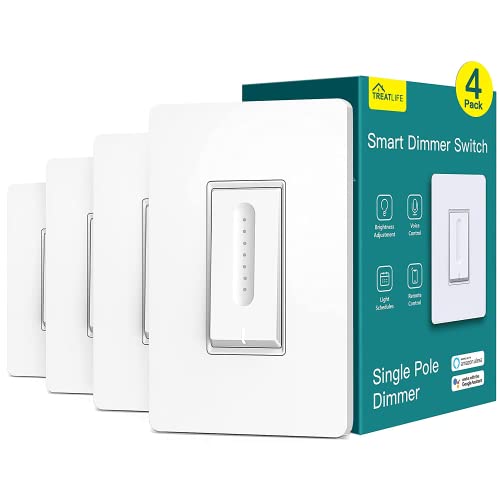
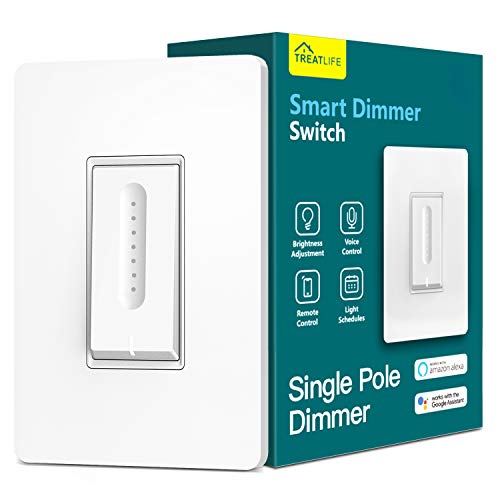
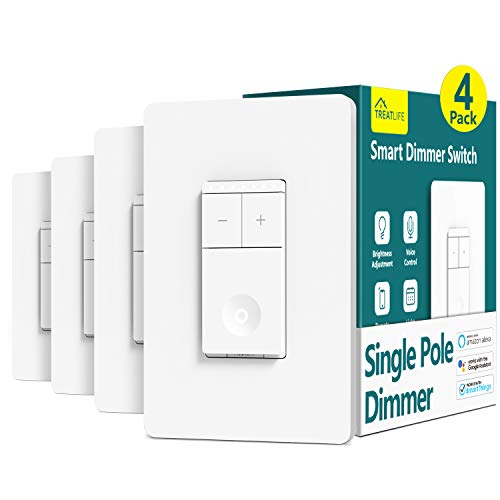
| TREATLIFE Smart Dimmer Switch | Neutral Required | 2.4GHz Wi-Fi | 150W | Single-Pole Only |
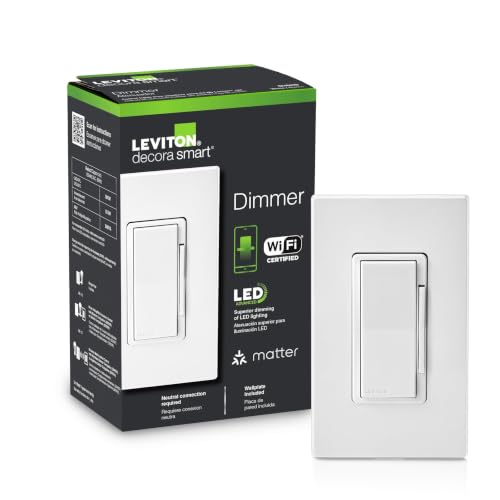
| Leviton Decora Smart Dimmer Switch, Wi-Fi | Neutral Required | 2.4GHz Wi-Fi | 300W | Yes (Multi-Location) |
| Kasa Smart Dimmer Switch HS220P3, Single Pole | Neutral Required | 2.4GHz Wi-Fi | 150W | Single-Pole Only |
| Kasa Smart 3-Way Dimmer Switch Kit, KS230 KIT v2 | Neutral Required | 2.4GHz Wi-Fi | 150W | Yes (3-Way Hardware) |
Why You Should Trust Us
Our smart home evaluation team conducts rigorous, objective analysis across residential electrical hardware and lighting control systems. We analyze electrical specifications, wireless performance standards, and real-world compatibility reports to provide reliable recommendations. Our evaluation methodology focuses on electrical safety compliance, certified platform integrations, and long-term hardware reliability.
We compare product specifications systematically against national electrical codes, load safety thresholds, and manufacturer engineering data. Every switch featured in our guides is evaluated for build quality, installation complexity, app stability, and dimming consistency. We do not accept paid manufacturer placements, ensuring our ratings remain entirely independent and focused on consumer value.
Our dynamic database systems continuously track updates in smart home standards, firmware revisions, and wireless protocols like Matter. This continuous data aggregation ensures our buying guides remain accurate and timely throughout 2026. We focus on providing clear, actionable insights so you can upgrade your home lighting with complete confidence.
Final Thoughts
Selecting the right smart dimmer for your dining room depends on your home wiring architecture, fixture wattage, and smart platform preferences. For houses without a neutral wire inside the switch box, the Lutron Caseta Smart Dimmer Switch represents the premier overall pick. Its proprietary hub delivers exceptional response speed, ultra-reliable operation, and flawless dimming performance across leading smart home platforms.
Homeowners with modern neutral wiring seeking excellent everyday value should look closely at the TREATLIFE Smart Dimmer Switch. This standalone Wi-Fi unit requires no external hub, supports smooth touch dimming, and pairs effortlessly with Alexa and Google Assistant. It offers an accessible, budget-friendly path to upgrading standard dining room lighting without technical complexity.
If your dining room features dual switch locations controlling a single chandelier, the Kasa Smart 3-Way Dimmer Switch Kit, KS230 KIT v2 is the ideal solution. It includes both primary and companion units engineered to handle multi-point dimming smoothly over standard traveler wiring. Exploring our detailed smart home hardware reviews will help you select matching controls for adjacent living areas.
For heavier lighting loads and high-wattage decorative fixtures, the Leviton Decora Smart Dimmer Switch, Wi-Fi delivers robust performance. Its advanced low-end trim calibration, custom fade rates, and 300W LED capacity make it exceptionally well-suited for grand dining spaces. Whichever model you choose, upgrading to smart dimming will elevate your dining experiences for years to come.
Frequently Asked Questions
Do I need a neutral wire to install Best Smart Dimmer Switches for Dining Rooms in 2026?
Most smart dimmer switches require a neutral wire to maintain power to their internal wireless radios while the light fixture is off. However, specialized models like the Lutron Caseta series operate without a neutral conductor by drawing microscopic current through the circuit. Always inspect your wall box wiring before purchasing to select a compatible hardware model.
Can I use smart dimmer switches with LED dining room chandeliers?
You can safely control LED chandeliers provided all installed bulbs are explicitly designated as dimmable. Pairing smart dimmers with non-dimmable LED bulbs results in severe flickering, electrical buzzing, and premature bulb failure. Always check that the total wattage of your chandelier bulbs stays well within the switch rated LED capacity.
What is the difference between single-pole and 3-way smart dimmers?
A single-pole dimmer controls a lighting fixture from one dedicated wall location. A 3-way dimmer setup allows you to control a single light fixture from two distinct wall switches, such as opposite entrances to a dining room. You must purchase 3-way compatible smart switches if your dining room utilizes dual switch locations.
Why do my dining room LED lights flicker when dimmed?
LED flickering typically occurs when the dimmer delivers electrical current below the stable threshold of the bulb internal driver. You can resolve this issue by accessing the companion app settings and adjusting the low-end trim calibration slider upward. Setting a proper minimum voltage floor ensures smooth, stable illumination without visible strobe effects.
Do smart dimmer switches require a dedicated smart home hub?
Many popular smart dimmers connect directly to your home 2.4GHz Wi-Fi network without requiring any extra bridge or hub hardware. Hub-based systems use dedicated wireless protocols that reduce network congestion and continue running local automations during internet outages. Both architectures deliver responsive control, allowing you to choose based on your system scale.
Can I control my dining room dimmer using voice commands?
Almost all modern smart dimmer switches integrate smoothly with voice assistants including Amazon Alexa and Google Assistant. Once linked in your smart home app, you can turn lights on, adjust brightness percentages, or activate dining scenes using voice commands. Apple HomeKit users should verify native HomeKit certification before purchasing.
How does adjustable fade rate improve dining room lighting?
Adjustable fade rates allow lighting to ramp up or down gradually over several seconds rather than turning on instantly at full brightness. This gentle transition creates an elegant visual effect that is comfortable on the eyes during evening dinners. Many smart switches let you customize fade durations directly inside their mobile applications.
What happens to smart dimmer switches during an internet outage?
Smart dimmers retain full manual functionality at the wall switch even if your household internet connection drops completely. You can tap the physical rocker to turn lights on or off and adjust brightness levels manually without interruptions. Cloud-dependent voice commands and remote app access will resume automatically once your internet service reconnects.
Can smart dimmer switches help reduce household energy costs?
Dimming your dining room lighting reduces overall electrical power consumption and extends the operational lifespan of your bulbs. Operating dimmable LED fixtures at fifty percent brightness uses significantly less wattage than running them continuously at full power. Automated scheduling also ensures dining lights turn off automatically late at night.
Is professional electrical installation required for smart dimmers?
Homeowners comfortable with basic DIY electrical tasks and circuit safety can typically install a smart dimmer in fifteen to thirty minutes. However, if you are unsure about identifying line, load, and neutral wires, consulting a licensed electrician is strongly recommended. Reviewing our maintenance and home care tips helps you plan safe residential upgrades.