Choosing the right desktop display transforms daily computer tasks from a visual chore into an engaging visual experience. Finding the Best 27-Inch Curved Monitors in September 2026 gives you the ideal blend of desk space efficiency and deep panoramic viewing. Many desktop workers struggle with visual fatigue on flat screens, making an ergonomic display upgrade essential for long workdays.
Modern display manufacturing has evolved rapidly over recent production cycles, lowering entry barriers while increasing baseline performance. Today, you can secure high refresh rates, high pixel counts, and advanced color gamuts across KTC models without excessive enterprise costs. Exploring a balanced workstation setup often pairs well with items from our furniture and comfort guides to maximize daily productivity.
We compiled this detailed guide to help you bypass common buying traps like mismatched resolutions and poor panel types. Evaluating the top 5 options across the current market helps you identify which panel technology suits your daily workflow. Read on to discover the ideal specifications for smooth motion, sharp text rendering, and accurate color output.


Display Resolution and Pixel Density
Screen resolution dictates the total number of physical pixels active across the display surface. On a medium desktop chassis, selecting a Quad High Definition (QHD) 2560×1440 resolution provides approximately 77 percent more workspace than standard 1080p panels. This substantial pixel boost keeps fine lines crisp and allows side-by-side document editing without blurry text edges.
Pixel density is measured in pixels per inch (PPI) and indicates the physical sharpness of your content. A 27-inch panel featuring 1440p resolution achieves roughly 108 PPI, which hits the optimal sweet spot for desktop viewing distances. Choosing a lower resolution on screens of this size can cause noticeable pixelation, while higher resolutions may require aggressive operating system scaling.
When selecting your next screen, prioritize 1440p native resolution over high refresh 1080p alternatives whenever text clarity matters. The added visual real estate lets you arrange complex timelines, spreadsheets, and browser windows without constant window switching. A balanced pixel density ensures long working sessions remain comfortable without straining your eyesight.
Panel Technology and Contrast Ratios
The core panel architecture determines how liquid crystals manipulate light to produce dark shadows and bright highlights. Fast In-Plane Switching (IPS) panels are renowned for wide viewing angles and consistent color fidelity across the entire glass surface. Alternatively, High Vertical Alignment (HVA) panels focus on deep light blocking to achieve native contrast ratios up to 4000:1.
Contrast ratio is the measurement between the deepest black and the brightest white a display can generate simultaneously. Standard IPS screens typically deliver around 1000:1 to 1300:1 contrast ratios, which look clean in well-lit office spaces. Deep contrast VA panels shine in darker environments, preventing dark video scenes and night games from looking washed out or gray.
For photo retouching or collaborative work where viewers stand off to the side, prioritize an IPS panel for color stability. If you frequently watch cinematic movies or play atmospheric games in a dim home office, choose a high-contrast HVA option. Matching your panel type to your ambient room lighting produces the most satisfying visual results.
Refresh Rate and Motion Clarity
Refresh rate refers to the number of individual frames your display draws every single second, measured in Hertz (Hz). Moving from an outdated 60Hz baseline up to 100Hz, 120Hz, or 144Hz creates instantly noticeable fluidity across your desktop. Rapid cursor tracking, smooth web scrolling, and snappy animations reduce perceived input latency during intensive work sessions.
Higher refresh rates prevent fast-moving graphics from blurring or smearing across the panel during high-speed action. A 144Hz panel refreshes more than twice as fast as basic office screens, delivering clear object outlines in competitive games. Even casual users notice that high refresh monitors make operating system navigation feel substantially more responsive.
Check your computer hardware output ports before purchasing to ensure your system can drive high refresh speeds. Running at 120Hz or 144Hz requires modern video interfaces such as DisplayPort 1.4 or HDMI 2.0. Aiming for at least 100Hz ensures a fluid baseline experience across both productivity software and entertainment titles.
Curvature Radius and Viewing Immersion
Curvature radius indicates the circular arc of the screen, expressed as the letter R preceded by a millimeter measurement. A 1500R curve forms an arc matching a circle with a 1500-millimeter radius, creating a pronounced wrap-around effect. A milder 1800R or flat design offers a subtler visual profile that integrates easily into multi-monitor arrangements.
Curved screens match the natural peripheral arc of human eyes, keeping screen edges at an equal focal distance from your pupils. This anatomical alignment reduces the constant refocusing your ocular muscles perform when scanning from the center to the corners. The resulting panoramic field of view enhances immersion in flight simulators, racing titles, and wide spreadsheet grids.
Select a 1500R curve if you sit within arm length of your screen and want total visual immersion. If you share your screen with colleagues or work on strict architectural drafting, a flatter arc prevents straight lines from appearing curved. Designing an organized workstation within your home and living space starts with choosing the right ergonomic curve.
Panel Performance Comparison
Comparing panel specifications side by side clarifies how various hardware features align with your computing priorities. The table below outlines key technical metrics across common display configurations found in modern desktop monitors.
| Feature Category | IPS Panel Architecture | HVA / VA Panel Architecture | Target Application |
|---|---|---|---|
| Native Contrast Ratio | 1000:1 to 1300:1 | 3000:1 to 4000:1 | Dark Room Contrast & Media |
| Viewing Angle Stability | 178° Ultra-Wide | 178° with Slight Shift | Multi-User Collaboration |
| Color Gamut Coverage | 109% – 123% sRGB | 129% sRGB / 109% DCI-P3 | Content Creation & Gaming |
| Standard Refresh Range | 100Hz – 120Hz | 120Hz – 144Hz | High-Speed Motion Tracking |
| Best Operating Setting | Bright Office Environments | Dim / Ambient Gaming Dens | Versatile Workspace Setup |
Reviewing these technical metrics helps you balance motion performance against ambient light requirements. Selecting the proper panel foundation guarantees that your display handles both daytime office productivity and evening entertainment effortlessly.
Adaptive Sync and Tearing Prevention
Screen tearing occurs when your computer graphics processing unit outputs frames out of phase with your monitor refresh cycle. Adaptive sync protocols dynamically lock the display refresh rate to the exact frame delivery of your graphics hardware. Technologies like AMD FreeSync and NVIDIA G-Sync compatibility eliminate stuttering and horizontal screen slice artifacts.
Enabling variable refresh rate functionality produces continuous, fluid motion even when complex visual effects drop your system frame rate. Without adaptive sync, fluctuating frame counts create jarring frame drops or duplicate image projections. A display equipped with broad sync compatibility handles unpredictable software demands with effortless stability.
Verify that your selected screen includes variable sync support over both DisplayPort and HDMI input channels. This dual-input flexibility lets you connect gaming consoles and desktop computers while maintaining full synchronization benefits. Smooth frame delivery protects visual comfort during intensive graphical workloads.
Color Gamut Coverage and HDR Support
Color gamut describes the complete spectrum of visible shades a digital display can physically recreate for the viewer. Standard color reproduction relies on the sRGB color space, where 99 to 129 percent coverage delivers rich, natural hues. Professional video editing often utilizes the wider DCI-P3 gamut to achieve cinematic greens, deep reds, and balanced secondary tones.
High Dynamic Range (HDR) capability allows displays to process rich luminance data alongside expanded color palettes. With HDR10 signal decoding, compatible content gains distinct separation between subtle shadow details and intense specular highlights. Monitors offering 300 to 350 nits peak brightness provide clear visibility under typical ambient indoor lighting.
Look for factory-calibrated displays that provide true 8-bit color depth or advanced color lookup tables out of the box. Factory calibration ensures accurate skin tones and realistic digital assets without requiring costly hardware calibration tools. Broad gamut coverage elevates graphic design projects and cinematic media playback alike.
Eye Care Engineering and Flicker Reduction
Extended computer usage exposes your retinas to high-energy blue wavelengths that can disrupt sleep cycles and cause ocular dryness. Integrated hardware blue light filters shift intense light spectrums away from hazardous bands without severely tinting your display image. This optical protection keeps text sharp and white backgrounds comfortable throughout eight-hour work shifts.
Traditional monitor backlights use pulse-width modulation (PWM) to control brightness, creating microscopic flashing that induces headaches. Anti-flicker and direct current (DC) dimming circuits regulate LED power continuously to maintain a steady light beam. Removing invisible backlight flutter significantly reduces neuromuscular eye fatigue during detailed spreadsheet analysis.
When shopping for a daily work monitor, always confirm the presence of certified flicker-free backlights and hardware blue light settings. Combining eye care hardware with proper desk ergonomics protects your vision over years of daily computing. Thoughtful optical engineering makes prolonged screen interaction sustainable and comfortable.
Ergonomics, Thin Bezels, and VESA Compatibility
Physical adjustability plays a crucial role in maintaining good posture and preventing upper back strain throughout the day. Basic stands typically offer front-to-back tilt adjustments ranging from minus 5 degrees to plus 15 degrees. Adding an aftermarket monitor arm requires a standard VESA 100mm by 100mm mounting interface on the rear chassis.
Three-sided ultra-thin bezel frames maximize active screen space while minimizing visual separation in multi-monitor desk arrays. Placing two slim-bezel monitors side by side creates an uninterrupted visual canvas for extensive data monitoring. A clean aesthetic footprint also keeps your desktop clutter-free and visually organized.
Prioritize displays that include solid metal or reinforced composite stands alongside standard VESA mounting cutouts. Having mounting flexibility ensures you can adapt your screen height as your workspace needs change over time. Proper ergonomic alignment keeps your neck aligned naturally with the top third of the viewing panel.
Connectivity Interfaces and Port Selection
Modern productivity displays function as centralized connection hubs for desktop towers, business laptops, and gaming consoles. DisplayPort 1.4 connections handle maximum bandwidth for uncompressed high refresh rates and deep color signals. Dual HDMI 2.0 ports provide versatile audio-video inputs for external streaming boxes and mobile workstations.
Dedicated 3.5mm analog audio outputs allow you to route clean sound signals directly to external desktop speakers or headphones. Having accessible rear input jacks simplifies cable management, preventing tangled cords from cluttering your desk surface. Robust port configurations ensure hassle-free switching between work laptops and home gaming hardware.
Ensure that your target monitor includes the necessary DisplayPort or HDMI cables directly inside the factory retail packaging. Checking input compatibility beforehand prevents annoying display adapter bottlenecks when connecting modern graphics cards. Flexible connectivity guarantees that your display investment remains useful across multiple computer upgrades.
Why You Should Trust Us
Our evaluation process combines rigorous technical spec comparisons with verified hardware engineering data across top consumer display categories. We analyze panel responsiveness, color gamut certifications, backlight uniformity, and connectivity standards across leading manufacturing brands. By cross-referencing real-world feature benchmarks, we provide balanced and objective hardware recommendations.
We do not rely on marketing slogans or unverified promotional claims when evaluating desktop visual hardware. Our team systematically compares refresh timings, contrast ratios, and physical mounting standards against modern computing requirements. This objective analysis ensures that every featured product delivers reliable performance for its designated price tier.
Our review catalog stays continually updated to reflect evolving display technologies, firmware improvements, and manufacturing revisions. We focus entirely on transparent guidance to help consumers make confident electronic investments. You can explore our broad selection of technology insights through our category overview.
Final Thoughts
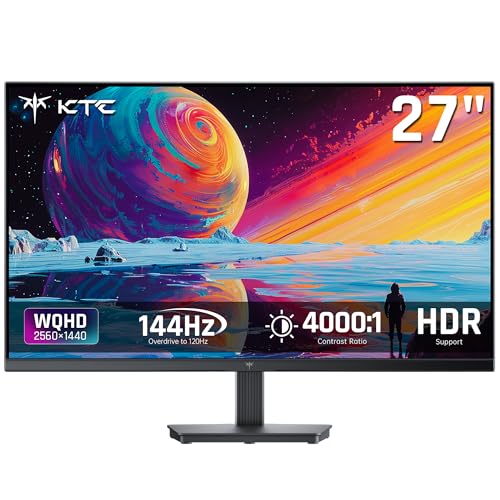
Selecting the ideal display depends on your specific balance of color accuracy, motion performance, and workspace real estate. For users seeking the ultimate balance of high contrast and rapid motion, the KTC 27 Inch QHD Computer Monitor serves as our top recommendation. Its exceptional 4000:1 contrast ratio, 144Hz refresh rate, and factory-calibrated color deliver stunning performance across both work and gaming.
Shoppers looking for premium IPS color consistency and ultra-smooth navigation on a modest budget should consider the KTC 27 Inch Computer Monitor. This model combines sharp 1440p resolution with a 120Hz refresh rate and wide 123 percent sRGB color gamut coverage. It represents outstanding daily value for home office professionals who demand clean visual clarity.
If you require an expansive screen canvas for immersive multitasking, the KTC 32 Inch 2K Computer Monitor delivers expansive desktop space. Meanwhile, compact desk setups benefit from the ultra-dense pixel layout found on the KTC 24 Inch QHD 100Hz Computer Monitor. For those needing versatile multi-input switching, the KTC 32 Inch Monitor 2K Monitor offers extensive preset options and wide connectivity.
Investing in a high-quality display improves daily computing comfort, visual clarity, and multitasking efficiency across all software applications. Match your preferred panel curvature and refresh rate to your specific desk layout for the most rewarding daily experience. Take time to assess your workflow needs so your chosen screen delivers lasting visual satisfaction.
FAQs
What makes Best 27-Inch Curved Monitors better than standard flat screens?
Curved monitors align the outer edges of the panel with the natural optical arc of human vision. This geometric contour keeps all screen sections at an equal focal distance, reducing ocular refocusing and neck movement. Users enjoy improved peripheral immersion, enhanced depth perception, and reduced reflections across wide workspaces.
Is a QHD 1440p resolution necessary for a 27-inch display in 2026?
A 1440p resolution provides 108 pixels per inch on a 27-inch display, delivering razor-sharp text and detailed interface elements. Choosing 1080p on this screen size often results in visible pixel grids and constrained application space. Opting for 1440p ensures crisp document rendering and generous desktop workspace for seamless multitasking.
How does panel curvature reduce eye fatigue during long work sessions?
When viewing a flat monitor, the edges of the display sit further away from your eyes than the center point. A curved panel maintains consistent focal distance, which prevents your ocular muscles from constantly readjusting their focal length. Maintaining ergonomic habits explored in our health and family guides further enhances daily physical comfort.
Can I mount these monitors on a standard VESA monitor arm?
Most modern desktop monitors feature standard VESA 100mm by 100mm mounting patterns on the rear enclosure. This universal pattern allows you to attach single or dual articulating gas-spring monitor arms with ease. Utilizing a monitor arm frees up valuable desk space and provides complete freedom over height and angle positioning.
What is the difference between IPS and VA panels in Best 27-Inch Curved Monitors?
IPS panels excel at color accuracy and maintain consistent image quality across wide off-axis viewing angles. VA panels deliver significantly deeper contrast ratios up to 4000:1, making them superior for viewing dark content in dim environments. Choose IPS for professional graphic creation and VA for high-contrast entertainment immersion.
Does a 120Hz or 144Hz refresh rate matter if I only use the monitor for office work?
High refresh rates deliver noticeable ergonomic benefits during regular office navigation and document scrolling. Moving mouse cursors and dragging software windows appears significantly smoother, which reduces visual tracking strain. While gamers benefit from lower response times, everyday productivity users appreciate the enhanced desktop responsiveness.
How do I enable FreeSync or G-Sync on my graphics card?
Connect your computer to the display using a certified DisplayPort 1.4 or HDMI 2.0 cable to support variable sync bandwidth. Open your graphics driver control software, locate the variable refresh rate section, and toggle the sync protocol on. Finally, verify that adaptive sync is enabled within your monitor on-screen display menu.
What video cable provides the highest refresh rate and resolution?
DisplayPort 1.4 provides substantial data bandwidth to handle 1440p resolution at 144Hz with full color depth. Modern HDMI 2.0 cables also deliver 1440p up to 120Hz or 144Hz on compatible hardware configurations. Using the cable supplied in the product box ensures full compatibility without signal degradation.
Are curved displays suitable for graphic design and photo editing?
Curved displays perform well for graphic design when equipped with wide color gamuts such as 100 percent sRGB or DCI-P3. However, artists working on strict architectural blueprints may prefer flat panels to avoid perceived grid distortion. For general photo editing and digital content creation, curved IPS panels offer excellent color fidelity.
How far should I sit from a 27-inch display for optimal viewing comfort?
The recommended viewing distance for a 27-inch display is approximately 20 to 30 inches, or roughly arm length away. Sitting at this distance allows your peripheral vision to encompass the entire screen without excessive head turning. Proper seating posture ensures you experience the full ergonomic advantage of curved panel geometry.