Milling your own timber converts fallen logs and salvaged trees into valuable hardwood slabs. It gives woodworkers complete control over board thickness and grain orientation right on site.
Standard crosscutting puts intermittent stress on an engine, but continuous rip cuts demand massive torque and superior cooling. Saws lacking sufficient displacement quickly overheat, leading to warped guide bars and premature engine failure.
In this guide for September 2026, we evaluate 5 top options from zozen, Husqvarna, FARMMAC to help you build an efficient slabbing setup. Explore our home and living guides for inspiration on planning wood projects with freshly cut lumber.




Engine Displacement and Continuous Torque
Engine displacement serves as the primary metric for determining how well a powerhead handles heavy timber. Milling pulls the entire length of the bar through dense wood grain, demanding continuous high horsepower.
Small engines under 50cc struggle during extended rip cuts and easily bog down mid plank. Professional milling setups typically require at least 60cc for small logs and over 90cc for wide hardwood slabs.
A practical rule of thumb is allocating roughly 2cc of displacement for every inch of log diameter you intend to cut. Checking technical specs on small engine mechanics can help you understand continuous horsepower ratings before buying.
Choosing a heavy duty engine prevents thermal breakdown during long milling passes. Higher displacement motors maintain consistent chain speed, ensuring flat surfaces and preventing dangerous chain binding.
Guide Bar Length and Usable Cutting Width
The stated length of your guide bar does not equal the maximum width of lumber you can produce. Attaching a milling frame clamps down on both ends of the bar, which reduces usable cutting width by four to six inches.
A 36 inch guide bar generally yields an effective cutting path of approximately 30 to 32 inches inside the frame. Buying a bar that matches your largest anticipated log prevents the frustration of being stopped by oversized trunks.
Solid alloy bars withstand the rotational flexing and downward pressure inherent in chainsaw milling far better than laminated alternatives. Thicker bar bodies resist heat warpage and maintain track alignment across broad cutting passes.
Always confirm that your powerhead oiling port aligns correctly with your chosen bar tail mount. Mismatched bar patterns starve the nose sprocket of oil, leading to immediate overheating and chain seizure.
Ripping Chain vs Standard Crosscut Chain
Standard chains feature cutting teeth sharpened at thirty to thirty five degree angles designed to sever wood fibers across the grain. Feeding a standard crosscut chain down the length of a log produces stringy noodles that quickly clog your clutch cover.
Dedicated ripping chains feature cutter teeth ground to a shallow ten degree angle for smooth lengthwise cutting. This tooth geometry shears timber along the natural fiber direction, producing fine dust and leaving glass smooth plank surfaces.
You can purchase pre ground ripping chains or reshape standard semi chisel cutters using a precision bench grinder. Running semi chisel profiles is ideal for milling because they retain a sharp cutting edge longer when encountering grit inside bark.
Maintaining accurate depth gauge height is essential for smooth feed pressure during long cuts. Keep rakers filed to twenty five thousandths of an inch to prevent the saw from grabbing or stalling in hardwood.
Auxiliary Bar Oiling and Chain Lubrication
Ripping lumber generates tremendous friction along the entire contact surface of the guide bar. Built in factory oil pumps are engineered for quick crosscuts and often fail to lubricate long bars adequately during slabbing.
Running bars thirty inches or longer requires an auxiliary oiler kit mounted directly to the nose of the milling frame. This secondary reservoir drips bar oil straight onto the chain tip, keeping the drive links cool and fully lubricated.
Always adjust your factory oiler screw to maximum discharge before starting any milling operation. Dedicated high tack lubricants provide clean flow while preventing oil starvation along the underside of wide slabs.
Inspect the bar oil groove regularly throughout your milling sessions to clear packed sawdust. Clogged oil passages force the chain to run dry, rapidly stretching the metal links and ruining the bar rails.
Milling Frame Rigidity and Spliced Rail Construction
The structural frame holds your chainsaw at a fixed height above the log to guarantee uniform plank thickness. Flimsy or poorly secured frames vibrate loose under load, producing uneven waves across the finished lumber.
Premium mills utilize aircraft grade extruded aluminum profiles paired with zinc coated steel hardware. This combination provides the essential rigidity needed for straight cuts while keeping the total assembly lightweight enough for field transport.
Modular frames with spliced rail connectors allow operators to adapt the mill width to match specific timber dimensions. You can shorten the frame for yard work on small logs or expand it when tackling wide trunk burls.
Check all clamping bolts and height adjustment lock nuts with a wrench before each cutting pass. Loose hardware creates slop in the guide rails, which ruins the thickness calibration of your slab.
Thermal Management and Air Filtration Systems
Milling forces a chainsaw to operate under sustained full throttle loads for several minutes at a time. Saws without advanced centrifugal air filtration rapidly ingest fine wood dust, choking the carburetor and causing power loss.
Air injection systems spin incoming air to throw out heavy dust particles before they reach the primary filter element. Saws equipped with high surface area pleated filters require fewer cleaning stops during intensive lumber production.
Proper fuel mixture plays a critical role in internal engine cooling during heavy slabbing tasks. Running a slightly rich fuel mixture with quality synthetic two stroke oil protects cylinder walls from heat scoring under heavy loads.
Allow your chainsaw to idle for thirty seconds after finishing a cut before shutting down the ignition. This cooldown period allows the flywheel fan to pull ambient air over the cylinder fins, preventing heat soaking.
Crankcase Metallurgy and Structural Durability
Chainsaw powerheads built with full magnesium alloy crankcases handle the high structural stresses of milling far better than composite plastic shells. Continuous downward levering against the mill frame can crack plastic motor housings over time.
Metal crankcases dissipate internal engine heat faster than polymer bodies, protecting internal bearings from thermal failure. Magnesium construction provides exceptional strength while maintaining manageable carrying weight during remote forestry work.
Look for powerheads featuring reinforced bar studs pressed securely into metal crankcase bosses. Strong bar mounting hardware prevents stripped threads when tightening heavy milling brackets against the saw body.
Routine inspection of crankcase sealing gaskets ensures that vibration does not cause air leaks. Maintaining an airtight crankcase prevents lean fuel conditions that can destroy a two stroke engine during heavy cuts.
Vibration Damping and Operator Ergonomics
Sustained chainsaw vibration leads to rapid operator fatigue and long term nerve strain. Effective isolation systems decouple the engine and bar assembly from the operator handles using steel springs or rubber dampeners.
Offset handle designs and adjustable push bars give operators better mechanical leverage when feeding the mill forward. Proper ergonomic positioning lets you guide the assembly smoothly without bending over or straining your lower back.
Pairing smooth engine vibration damping with sharp ripping teeth reduces chattering along the log surface. This mechanical balance produces cleaner cuts while preserving your physical stamina during long days of timber milling.
Exploring ergonomic workshop furniture in our furniture and comfort section can help you design comfortable lumber staging benches. A comfortable staging height saves energy when rolling heavy logs onto your milling setup.
Log Preparation and First Cut Guide Systems
The quality of every board you cut depends entirely on establishing a flat reference plane on your very first pass. Because raw logs are naturally tapered and curved, you must mount a straight guide rail or ladder across the top.
Secure your guide rails firmly using leveling brackets and heavy wood screws to prevent shifting mid cut. Any twist or dip in the initial rail setup will translate directly into every subsequent plank sliced from the log.
Strip dirty outer bark with a debarking tool or drawknife along the planned path of the saw chain. Removing embedded grit, sand, and small stones protects cutter sharpness and extends the working life of your ripping chain.
Insert plastic felling wedges behind the guide bar as the saw progresses along the cut line. Wedges keep the heavy top slab from pinching down on the bar, preventing chain binding and engine strain.
| Log Diameter | Minimum Displacement | Recommended Bar Length | Ideal Frame Capacity |
|---|---|---|---|
| Up to 16 Inches | 55cc to 60cc | 20 to 24 Inches | 24 Inch Mill Frame |
| 18 to 28 Inches | 70cc to 90cc | 28 to 36 Inches | 36 Inch Mill Frame |
| 30 to 36 Inches | 90cc to 105cc+ | 36 to 42 Inches | 36 to 48 Inch Mill Frame |
| Over 36 Inches | 105cc to 120cc | 48 to 60 Inches | 48 to 72 Inch Double Ended Mill |
Why You Should Trust Us
Our recommendations stem from rigorous analysis of mechanical specifications, structural engineering data, and real world milling requirements. We evaluate engine displacement, thermal efficiency, bar mounting patterns, and frame metallurgy across multiple commercial and consumer models.
We cross reference manufacturer dynamometer curves, torque outputs, and vibration ratings to identify equipment built for continuous rip cuts. Our team consults experienced sawyers and forestry workers to ensure every featured tool handles heavy timber processing.
Our database is continuously monitored and updated to reflect hardware revisions, design improvements, and performance feedback. Check our general outdoor gear category for more independent tool comparisons.
Final Thoughts
Selecting the right milling gear requires matching your saw displacement and frame width to the timber you plan to harvest. Heavy hardwood logs demand raw power and rigid bar clamping, while light yard slabbing thrives on portable setups.
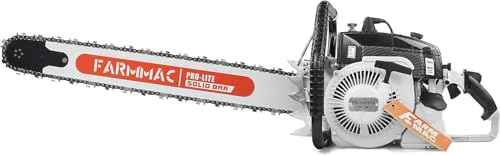
For heavy duty milling and wide timber, the FARMMAC F070W Gas Chainsaw with 36 Inch Alloy serves as our top powerhouse pick. Its massive 105cc engine delivers the sustained torque needed to pull wide bars through dense oak and walnut without bogging down.
If you already own a reliable ranch saw, pairing it with the Zozen Chainsaw Mill, Fits 14”-36” Planking Milling offers incredible value and modular flexibility. This spliced aluminum frame adapts quickly across multiple bar lengths while remaining easy to pack into remote woods.
For mid size logs and general farm work, the Husqvarna 460 Rancher Gas Powered Chainsaw delivers exceptional ergonomics and dependable air filtration. You can also review the Husqvarna 455 Rancher Gas Chainsaw, 20 inch or the standalone FARMMAC Chainsaw-Mill-Portable-Saw-Mill to build a balanced kit tailored to your cutting needs.
Frequently Asked Questions
What engine size is required for Best Chainsaws for Milling Lumber in 2026?
A saw with at least 60cc of displacement is recommended for milling softwoods up to sixteen inches in diameter. For hardwoods or logs exceeding twenty four inches, you should choose a powerhead with 90cc to 105cc displacement.
Can I use a standard crosscut chain for milling lumber?
Standard crosscut chains can cut lengthwise, but they produce rough surfaces and long stringy shavings that frequently jam the clutch. Using a dedicated ripping chain ground to a ten degree angle delivers smooth boards and prevents saw bogging.
How much bar length do I lose when attaching a chainsaw mill?
Attaching a portable milling frame clamps to both ends of the guide bar, consuming four to six inches of usable length. If you plan to cut thirty inch wide slabs, you must use at least a thirty six inch guide bar.
Why do chainsaws overheat during milling cuts?
Milling forces the engine to run at full throttle under continuous heavy load for extended durations. Overheating occurs when air filters clog, fuel mixtures run too lean, or the bar oiler fails to lubricate the chain track.
What fuel mix ratio should I use for heavy chainsaw slabbing?
Many experienced sawyers run a slightly richer fuel mixture such as 25 to 1 or 40 to 1 using high grade synthetic two stroke oil. The extra oil provides vital boundary lubrication and helps cool the internal cylinder during long cuts.
How do I make the first level cut on an uneven log?
Mount a rigid aluminum ladder or wooden guide rail assembly across the top of the raw log using leveling brackets. The chainsaw mill rides flat on this artificial surface to create your initial true reference plane.
Is an auxiliary bar oiler necessary for milling?
Auxiliary oilers are highly recommended whenever using guide bars longer than twenty eight inches. The auxiliary reservoir drips lubricant directly onto the bar nose, preventing friction heat from ruining the chain and bar rails.
What is the difference between a magnesium and plastic crankcase for milling?
Magnesium crankcases offer superior thermal heat dissipation and withstand the structural twisting forces created by mill clamping brackets. Composite plastic cases can flex or warp when exposed to the continuous heat of timber slabbing.
How thick can I cut lumber with portable chainsaw mills?
Most portable chainsaw mills adjust to produce lumber thicknesses ranging from one half inch up to twelve or thirteen inches. This wide adjustment range allows you to cut thin siding, standard dimensional framing, or thick live edge mantel slabs.
How do felling wedges help during the milling process?
Placing plastic wedges into the cut kerf behind the bar prevents the top slab from sagging under its own weight. This eliminates pinching against the guide bar, keeping the chain moving freely and protecting your clutch.