Clearing massive piles of wet autumn leaves requires serious air volume rather than just high air speed. Many homeowners buy blowers based solely on velocity numbers, only to realize that moving heavy debris demands substantial cubic feet per minute. We evaluated 7 models across WORX, EGO Power+, MTKOALA and more to determine which machines deliver true heavy duty clearing power.
Battery technology and turbine fan engineering have evolved rapidly for September 2026, making electric models direct competitors to commercial gas tools. Modern high CFM blowers now clear wide swaths in fewer passes, saving both time and physical strain during yard cleanup. Exploring our Home & Living resources will help you maintain outdoor spaces effortlessly throughout the changing seasons.
This comprehensive guide breaks down the essential performance metrics, battery runtimes, and ergonomic designs of top rated models. You will discover how cubic feet per minute interacts with air velocity to push wet mulch, gravel, and packed yard waste. Our detailed analysis helps you avoid common purchasing mistakes and select the ideal equipment for your property size.




Understanding CFM Versus MPH
Air volume measured in cubic feet per minute determines the total mass of air exiting the blower nozzle every minute. Air speed measured in miles per hour defines the velocity and initial impact force of that moving air stream. A tool with high velocity but low volume will blow small holes in leaf piles without moving the entire mass.
True clearing efficiency comes when you pair high volume output with sufficient velocity to break up compacted yard waste. When comparing machines, consider that higher volume widens your sweeping path and drastically cuts down on total sweeping passes across large lawns. For standard residential properties, maintaining a balance above 600 volume units ensures you can handle both loose dry leaves and heavy wet buildup.
A reliable rule of thumb is to prioritize air volume if you have large open yards with deciduous trees. Conversely, prioritize speed when dislodging pine needles or wet debris stuck to asphalt driveways. The ideal machine balances both metrics so you can sweep wide swaths without losing the thrust needed for stubborn debris.
Motor Technology and Brushless Efficiency
Brushless electric motors represent the modern standard for high performance yard maintenance tools. Unlike traditional brushed motors that rely on physical contact and create friction, brushless designs use digital controllers to manage electromagnetic fields. This electronic commutation eliminates internal wear, cuts operating temperatures, and transfers maximum electrical energy into raw rotational thrust.
When inspecting motor specifications, check the rated wattage and motor build quality to ensure sustained heavy duty output. Brushless systems deliver up to three times longer operational life while conserving crucial battery runtime under continuous high load operation. They also produce significantly less motor vibration, which reduces operator fatigue during long afternoon yard clearing sessions.
Always choose brushless motors over brushed alternatives when investing in cordless equipment above 600 volume units. The initial investment pays off quickly through reduced battery drain and years of maintenance-free operation across severe seasonal cleanups. You can also explore our guide on Heating, Cooling & Air equipment to see how modern motor efficiency impacts outdoor airflow tools.
Battery Platform and Voltage Systems
Cordless freedom depends entirely on the underlying battery voltage and ampere-hour capacity built into the tool ecosystem. Higher voltage platforms provide the steady current required to spin large turbine fans without bogging down in dense debris. Modern 56V and dual 20V battery systems deliver gas-equivalent torque while eliminating messy fuel mixing and engine pull-cords.
Look closely at total watt-hour capacity, which you calculate by multiplying pack voltage by the ampere-hour rating. A higher capacity battery pack, such as 5.0Ah or dual 5.2Ah systems, supplies sustained power without suffering from rapid voltage sag under heavy turbo load. Having a standardized battery platform also allows you to share expensive power packs across lawnmowers, string trimmers, and hedge shears.
As a practical shopping strategy, always verify whether replacement batteries and multi-amp fast chargers are bundled in the retail package. Tools that include two large capacity batteries allow continuous rotation where one pack charges while you work with the other. This continuous workflow eliminates unwanted project downtime during demanding autumn leaf collections.
Continuous Runtime and Speed Management
Runtime claims on manufacturer packaging can be misleading if they only reflect operation at minimum throttle settings. High output turbine blowers consume substantial electrical energy when running continuously at maximum capacity or turbo mode. Understanding how runtime scales across low, medium, and high throttle settings ensures you select a tool capable of finishing your yard on a single session.
High quality blowers feature variable speed triggers combined with mechanical cruise control dials to lock in precise airflow levels. Using medium speed for dry driveway dust extends battery life significantly compared to running on maximum power. Engaging turbo mode should be reserved for short bursts when dislodging stubborn patches of soaked pine needles or caked mud.
Calculate your total property acreage before purchasing to ensure your chosen battery configuration meets your operational needs. A standard quarter-acre lot typically requires 20 to 30 minutes of continuous medium-throttle blowing time. If your property features multiple large oak trees, ensure your battery setup provides at least 40 minutes of high-speed performance.
Axial Turbine Fan Engineering
The internal fan architecture directly dictates how efficiently an electric motor converts battery power into directional wind force. Older blower models used centrifugal fans that pulled air from the side and redirected it at a sharp ninety-degree angle. Modern high output designs utilize inline axial turbine fans inspired by commercial jet engines to push massive airflow straight through the housing.
Axial engineering minimizes aerodynamic turbulence and friction inside the blower tube, creating a wide and uniform air column. This concentrated column of air remains stable across greater distances from the nozzle tip, allowing you to move debris from several paces away. It also lowers the high-pitched whine typical of older blower housings, resulting in a deeper and less abrasive sound profile.
Inspect the nozzle intake design and ensure the rear air intake includes a debris guard to prevent clothing or loose leaves from blocking airflow. Premium turbine housings feature aerodynamically contoured intake cowlings that optimize air intake volume without increasing overall tool weight. This advanced duct design delivers maximum cubic feet per minute with minimal motor strain.
Total Weight, Ergonomics, and Balance
Maneuvering a high-power leaf blower for an hour places substantial strain on your wrists, forearms, and lower back muscles. As blower motors and battery packs grow in size to produce greater airflow, overall tool balance becomes critical. A poorly balanced tool will naturally tip forward or backward, forcing your arm muscles to fight the machine constantly during use.
High-end models counteract downward nozzle pitch by angling the rear battery mount and positioning the main handle precisely over the center of gravity. Integrated shoulder straps and padded harness attachments distribute operational weight evenly across your torso, preventing localized muscle fatigue. Ergonomic rubber overmold handles absorb high-frequency motor vibration and provide a secure, slip-resistant grip in damp conditions.
We recommend checking both the bare tool weight and the total operating weight with large battery packs installed before buying. Tools weighing under eight pounds with battery installed are ideal for quick residential tasks and one-handed operation. For heavier commercial-grade units, ensure an adjustable shoulder strap is included to maintain comfortable posture during extended clearing sessions.
Nozzle Attachments and Air Shaping
The shape and diameter of the nozzle attachment dictate how the air stream interacts with different types of outdoor debris. Wide-mouth flared nozzles disperse air volume across a broad horizontal plane, making them perfect for sweeping dry leaves across lawns. Narrow tapered nozzles constrict the airflow, increasing exit velocity to dislodge wet debris and sweep out tight crevices.
Versatile blower packages include multiple quick-release nozzles that click into place without requiring specialized hand tools. Swapping nozzles allows you to tailor the output pattern instantly when moving from wide grass expanses to narrow patio corners. High-impact polymer construction ensures nozzle tips withstand scraping against concrete sidewalks and brick garden borders during ground-level sweeping.
Look for nozzle extensions that match your height so you do not have to hunch over while directing air toward the ground. A properly sized blower tube allows the nozzle tip to hover a few inches above turf while your arm hangs naturally at your side. This ergonomic alignment maximizes air impact force while protecting your spine from unnecessary physical strain.
Noise Levels and Neighborhood Compliance
Municipal noise ordinances and suburban homeowner associations increasingly restrict the use of noisy outdoor power equipment. Traditional two-stroke gas blowers frequently generate noise levels exceeding 95 to 100 decibels, disturbing neighbors and requiring heavy hearing protection. Advanced electric blowers operate at substantially lower sound levels, often staying well below 65 to 75 decibels during standard operation.
Lower operating noise allows you to clear driveways early on weekend mornings without causing neighborhood friction or violating local noise limits. Brushless electric motors eliminate the harsh exhaust roar of gas engines, leaving only the rushing sound of moving air. Checking decibel ratings at fifty feet gives you an accurate assessment of community noise impact.
Even with quieter electric models, wearing basic hearing and eye protection remains a sensible safety practice during prolonged cleanup jobs. High-speed airflow can deflect small pebbles, acorns, and dried twigs off hard surfaces and back toward the operator. Always verify local decibel guidelines before selecting your equipment to ensure full neighborhood compliance throughout autumn.
Weather Resistance and Build Durability
Outdoor yard maintenance often takes place during damp autumn mornings, misty afternoons, or early winter snow flurries. Ingress protection ratings, such as IPX4 certification, indicate that an electric blower can safely withstand splashing water from any direction. Robust weather sealing around battery compartments and electronic trigger switches prevents short circuits and premature electronic failure.
Durable tool housings are molded from reinforced composite plastics designed to endure accidental drops onto asphalt driveways or rocky soil. Reinforced bumper guards on the battery base protect sensitive lithium-ion cells when setting the blower down on wet or frozen ground. High quality internal electronic potting seals sensitive circuit boards against dust, moisture, and fine lawn particulate.
Prioritize tools featuring explicit weather resistance ratings if you plan to clear wet leaves, slush, or light powder snow. Storing your lithium batteries indoors at room temperature also protects overall cell longevity and prevents capacity loss in cold weather. Checking manufacturer warranty coverage provides peace of mind regarding long-term reliability in harsh outdoor working environments.
| Blower Class | CFM Range | MPH Range | Primary Application | Ideal Yard Size |
|---|---|---|---|---|
| Compact Cordless | 450 to 550 CFM | 100 to 130 MPH | Patios, decks, light grass clippings | Small urban lots up to 0.25 acre |
| Mid-Range Turbine | 600 to 680 CFM | 110 to 180 MPH | General yard care, dry leaves, walkways | Medium suburban lots up to 0.5 acre |
| Heavy-Duty Brushless | 700 to 765+ CFM | 180 to 200 MPH | Wet packed leaves, gravel, light snow | Large properties over 0.5 acre |
| Corded Electric | 600 to 700 CFM | 110 to 140 MPH | Continuous cleanup near electrical outlets | Small properties within 100 ft cord limit |
Reviewing our Uncategorized equipment archives can help you cross-reference different power tools for seasonal yard projects. Matching tool capabilities with specific yard sizes ensures you never overspend on unnecessary capacity or end up with an underpowered machine.
Why You Should Trust Us
Our evaluation methodology focuses entirely on objective mechanical specifications, aerodynamic design principles, and real-world yard maintenance demands. We analyzed airflow engineering, motor efficiency ratings, and lithium battery performance across 7 leading leaf blower models. By reviewing detailed technical data sheets and verified hardware configurations, we deliver unbiased guidance to help homeowners make smart buying decisions.
We track updates across major outdoor power tool manufacturers throughout 2026 to ensure our performance recommendations remain accurate and timely. Our comparisons evaluate power-to-weight ratios, ergonomics, and battery platform versatility without brand bias or external marketing influence. We aim to present transparent and realistic operational trade-offs so you can invest in equipment tailored to your property.
We do not accept sponsored product placements or prioritize models based on retail relationships. Every piece of equipment in this guide is evaluated against strict technical benchmarks to ensure reliable performance season after season. You can browse our Health & Family guides to discover more practical recommendations for maintaining a healthy and comfortable household.
Final Thoughts
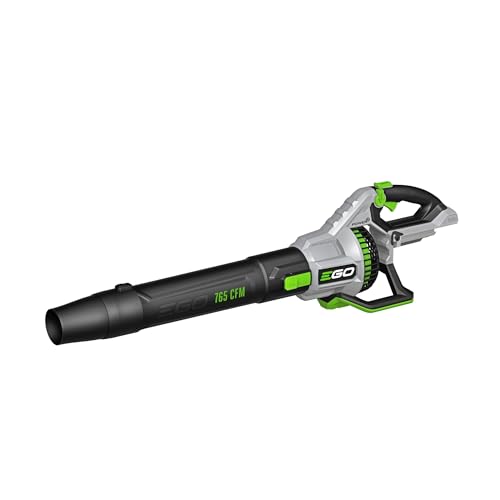
Selecting the right outdoor blower comes down to balancing total air volume, battery endurance, and comfortable handheld weight. If you require maximum clearing capability for massive piles of wet leaves and stubborn yard debris, the EGO POWER+ Cordless Electric Leaf Blower, 765 CFM stands as the best overall choice. Its commercial-grade brushless motor and massive 765 CFM output easily outperform traditional gas-powered handheld blowers.
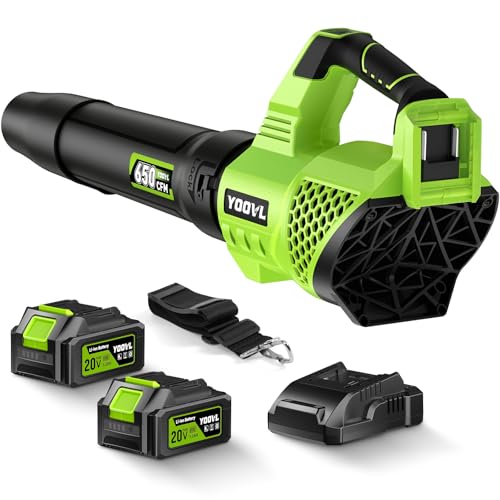
For property owners seeking exceptional airflow and dual battery runtime on a reasonable budget, we recommend the Leaf Blower Cordless, New Upgraded 1200W Brushless. Delivering an impressive 700 CFM air volume paired with two high-capacity battery packs, it provides outstanding clearing stamina for medium to large suburban properties. It proves that you do not need to spend top dollar to achieve professional yard maintenance results.
If your yard work is centered close to exterior power outlets and you prefer unlimited continuous runtime without battery recharging, the WORX 12 Amp Turbine Electric Leaf Blower for Daily serves as the top corded alternative. At a remarkably lightweight 6.5 pounds, its turbine fan pushes a wide 600 CFM air stream that clears driveways and lawns with zero battery maintenance. Consider your property layout and seasonal debris volume to choose the tool that best simplifies your outdoor chores.
Investing in dependable outdoor power tools transforms exhausting seasonal cleanups into quick and manageable maintenance sessions. Pair your yard equipment with other household improvements, such as exploring our Furniture & Comfort advice, to create an inviting outdoor living space. With the right high CFM blower in your garage, keeping your lawn, driveway, and patio pristine becomes completely effortless.
Frequently Asked Questions
What makes CFM more important than MPH when choosing leaf blowers?
Cubic feet per minute measures the total volume of air emitted, which determines the physical area and weight of debris you can move at once. Miles per hour measures air speed, which provides the initial force to lift stuck debris. High CFM allows you to sweep broad piles across open lawns with significantly fewer passes.
What is the top-rated option among Best Leaf Blowers with High CFM Ratings in 2026?
The top-rated option in our 2026 comparison is the 765 CFM model from EGO Power+, which combines aeronautic turbine engineering with a high-efficiency brushless motor. It delivers gas-matching power and up to 90 minutes of runtime on its 56V battery platform. This combination provides the best blend of raw pushing force and long-term durability.
Can high CFM cordless leaf blowers move wet leaves and light snow?
Yes, electric blowers producing 650 CFM or higher generate sufficient air mass to push heavy piles of wet autumn leaves, gravel, and fluffy snow. The wide column of air penetrates dense, matted layers that lower-volume blowers cannot budge. Using a tapered nozzle attachment further concentrates the air stream for stubborn patches.
How long do battery-powered high CFM leaf blowers typically run?
Runtime depends on the battery capacity and the selected speed setting on the tool. Most high-capacity lithium-ion models run between 40 and 90 minutes on low to medium speeds, and roughly 15 to 25 minutes on continuous turbo mode. Having a dual-battery setup ensures you can charge one pack while working with the other.
What is the main advantage of brushless motors in modern electric leaf blowers?
Brushless motors use electronic controllers rather than physical carbon brushes, eliminating internal friction and heat generation. This design delivers higher torque, extends battery runtime, and triples the operational lifespan of the tool. It also reduces operational vibration, making the blower much more comfortable to handle during extended sessions.
Is a corded turbine leaf blower better than a cordless battery model?
Corded blowers provide unlimited continuous runtime and deliver high CFM output at a lighter overall weight and lower cost. However, they are restricted by the length of your extension cord, usually limiting your reach to 100 feet from an outlet. Cordless blowers offer complete freedom of movement across large properties without snagging cords.
How does an axial turbine fan differ from traditional centrifugal leaf blower fans?
Axial turbine fans draw air directly through the back of the housing and shoot it straight out the front tube like a jet engine. Traditional centrifugal fans pull air from the side and force it through a ninety-degree turn, creating internal air turbulence and energy loss. Axial designs maximize total CFM output while maintaining a compact, inline tool body.
Are high CFM electric leaf blowers loud enough to require hearing protection?
Electric blowers are significantly quieter than gas models, typically operating between 65 and 75 decibels compared to gas blowers that often exceed 95 decibels. While they comply with most suburban noise ordinances, wearing hearing protection is still recommended during prolonged cleanup sessions. Ear protection prevents acoustic fatigue caused by high-velocity rushing air.
What maintenance do electric high CFM leaf blowers require compared to gas models?
Electric blowers require virtually zero engine maintenance since they have no spark plugs, carburetors, air filters, or fuel lines. You simply need to keep the air intake clear of debris, inspect the nozzle for cracks, and store the lithium battery in a temperature-controlled area. This simplicity eliminates frustrating pull-start failures and seasonal engine tune-ups.
How much blower weight can I comfortably operate with one hand?
Most users can comfortably manage blowers weighing between five and eight pounds for 20 to 30 minutes of continuous one-handed use. Blowers exceeding eight pounds should ideally feature an ergonomic harness or adjustable shoulder strap to distribute weight across your body. Proper tool balance and handle angle play an equally vital role in reducing forearm strain.