Deep cleaning stubborn tile grout, baked kitchen grease, and stained upholstery often feels like an uphill battle without commercial chemicals. Modern canister steam machines provide an efficient alternative by turning ordinary tap water into pressurized, high-temperature vapor that lifts dirt on contact. Investing in the right unit simplifies weekend chores and eliminates the need for expensive single-use scrubbing solutions across your home.
Finding the right balance between rapid heating, sustained pressure output, and useful accessory sets can be challenging for homeowners. Many entry-level machines lose pressure after only a few minutes of active use, which slows down your cleaning progress significantly. You can integrate these versatile tools alongside your everyday smart home maintenance setups to maintain pristine living spaces without unnecessary physical exhaustion.
Our updated guide to Best Steam Cleaners under $300 examines 2 leading options available in September 2026 to help you choose the best setup for your floors and furniture. We break down the technical specifications, tank volumes, and nozzle kits that separate dependable performers from underpowered appliances. This detailed breakdown ensures you get maximum cleaning power while staying comfortably within your target equipment budget.

Steam Pressure and Bar Output Ratings
Operating pressure determines the physical force that pushes hot vapor deep into porous surfaces like grout lines and vehicle floor mats. Manufacturers measure this output in bars or pounds per square inch to indicate how aggressively the machine dislodges stuck particles. Higher pressure ratings allow you to clean faster because the velocity of the steam breaks surface tension without requiring excessive manual scrubbing.
When shopping for canister systems, look for pressure ratings between 3.5 and 4.5 bar for consistent residential performance. Units operating below this range often struggle with caked grease on oven doors and mineral deposits around plumbing fixtures. A reliable pressure gauge or regulator lets you manage the output force so you avoid damaging delicate surfaces during detailed tasks.
A good rule of thumb is to prioritize units with continuous pressure delivery rather than brief peak bursts. Inexpensive boilers may produce high initial pressure that drops dramatically after thirty seconds of trigger engagement. Consistent bar output ensures your cleaning pace remains steady across large floor areas and lengthy automotive detailing sessions.
Boiler Heating Time and Steam Duration
Boiler wattage directly dictates how quickly your machine transforms cold water into high-temperature cleaning vapor ready for use. Efficient heating elements range between 1500 and 1800 watts, bringing a full reservoir to operational heat in under ten minutes. Fast warm-up cycles reduce downtime and make spontaneous spot cleaning around the kitchen far more practical.
Continuous steam duration measures the total run time you receive before the reservoir runs completely dry and requires replenishment. High-capacity units generally deliver between 35 and 50 minutes of uninterrupted cleaning vapor under normal trigger operation. Matching this duration to your home layout prevents frequent interruptions during comprehensive weekend cleaning projects.
Keep in mind that boiler systems require brief cooling intervals before you can safely unscrew the safety cap for a refill. Choosing a machine with an ample run time minimizes the number of cooling cycles you must endure during major cleaning sessions. Balancing rapid warm-up speeds with realistic run times keeps your workflow smooth and productive.
Water Tank Capacity and Boiler Design
Reservoir volume determines the overall weight and working stamina of any canister steam machine you choose to operate. Tank sizes in this price tier typically range from 1.0 to 1.6 liters of total liquid capacity. Larger tanks provide longer cleaning runs but add noticeable heft when pulling the wheeled canister across area rugs and thresholds.
Boiler materials also influence the longevity and heat retention capabilities of the cleaning appliance over years of regular use. Stainless steel boilers resist corrosion from mineral deposits and withstand continuous thermal expansion far better than basic aluminum alternatives. A well-insulated interior tank also maintains internal steam pressure between intermittent trigger pulls.
When assessing capacity specs, always look for the recommended fill level rather than the absolute physical tank volume. Boilers require empty expansion space above the water line to generate dry, pressurized vapor without sputtering hot water drops. Maintaining the proper fill line protects the internal heating element from premature burnout and ensures clean vapor delivery.
Operating Temperature and Sanitization Thresholds
Vapor temperature at the boiler core must reach high levels to effectively eliminate bacteria, dust mites, and bed bug eggs. Premium models generate internal boiler temperatures approaching 275 to 300 degrees Fahrenheit before routing vapor through the hose assembly. This intense thermal energy dissolves stubborn fats and sanitizes surfaces without leaving chemical residues behind.
As the vapor travels through the extension tubes, the temperature drops slightly by the time it exits the cleaning nozzle. For verified chemical-free sanitation, the tip temperature should remain at or above 212 degrees Fahrenheit at the contact point. This level of heat provides reliable disinfection in pet friendly households where floor cleanliness is a high daily priority.
You can calculate sanitization effectiveness by holding the attachment steady over the target surface for five to ten seconds. This concentrated thermal contact kills up to 99.9 percent of common household pathogens without damaging resilient tile or stone. High temperatures also ensure rapid evaporation, leaving hard floors dry and streak-free within minutes.
Attachment Versatility and Specialty Tools
The utility of a canister steam system depends heavily on the variety and quality of its included accessory kit. Comprehensive packages include floor heads, nylon detail brushes, brass scrubbers, squeegees, and specialized fabric steaming attachments. Having the correct nozzle prevents surface scratching while maximizing the concentrated thermal cleaning power on hard grime.
Detail brushes with stiff nylon bristles are ideal for scrubbing grout lines, shower door tracks, and sink faucets safely. Brass wire brushes tackle heavy carbon deposits on barbecue grates and cast iron pans, though they should never touch delicate finishes. Triangular floor pads and microfiber bonnets lift dissolved soils from sealed tile without scattering dirty moisture.
Check whether the tool connections use durable locking pins or basic friction-fit tapers that can loosen over time. Quick-connect locking mechanisms keep hot accessories firmly secured during vigorous scrubbing motions across textured floors and wall tiles. Investing in a system with readily available replacement pads ensures low operating costs over many years.
Key Specification Comparison
| Feature | Compact Canister Units | Heavy-Duty Canister Units |
|---|---|---|
| Tank Capacity | 1.0L to 1.2L | 1.5L to 1.6L |
| Steam Duration | 25 to 35 Minutes | 40 to 50 Minutes |
| Pressure Rating | 3.5 to 4.0 Bar | 4.5 to 5.0 Bar |
| Accessory Count | 12 to 17 Pieces | 18 to 22 Pieces |
| Reach Radius | 18 to 22 Feet | 22 to 26 Feet |
Hose Length and Reach Maneuverability
Total reach combines the length of the electrical power cord, the flexible steam hose, and the rigid extension wands. A generous working radius lets you clean high curtains, ceiling fans, and vehicle interiors without constantly dragging the boiler base behind you. Compact canisters should feature smooth-rolling caster wheels that track effortlessly across floor transitions.
A steam hose measuring at least five feet paired with a sixteen-foot power cord provides excellent mobility for medium-sized homes. This layout allows you to leave the water reservoir safely on the ground while scrubbing full staircases or tile walls in bathroom sanitation practices. Shorter hoses force you to lift the heavy boiler unit, increasing user fatigue during extended sessions.
Look for flexible hose assemblies with reinforced thermal insulation that remain comfortable to handle during prolonged operation. Extension wands should connect tightly without flexing or leaking hot vapor near your hands and wrists. Superior reach transforms an unwieldy utility tool into an agile cleaning solution for every room.
Safety Features and Child Lock Mechanisms
Pressurized boiling water presents real burn risks if safety engineering is neglected by manufacturers in budget appliances. Crucial safety mechanisms include pressure relief valves, safety locking boiler caps, and dedicated child lock switches on the steam handle. These features prevent accidental discharge and protect curious family members from coming into contact with scalding steam.
Safety filler caps are designed to spin freely without unthreading whenever the internal boiler remains under significant pressure. This mechanical safeguard prevents users from opening a hot tank and suffering dangerous steam burns during mid-chore refills. Trigger locks also prevent hand strain by offering continuous steam modes without requiring sustained finger pressure.
Always inspect the handle assembly for clear trigger locking indicators that show whether the steam valve is open or sealed. Automatic shut-off sensors that deactivate the heating element when water levels run completely dry are equally essential. These protective layers ensure worry-free operation throughout the working life of the appliance.
Build Quality and Maintenance Requirements
The durability of your steam appliance relies heavily on impact-resistant plastic housings and heavy-duty brass valve fittings. Canister bodies must withstand accidental bumps against baseboards, furniture legs, and garage floors without cracking or chipping. High-grade polymer casings also provide thermal barriers that keep exterior surfaces cool to the touch during use.
Mineral scale buildup is the primary cause of heating element failure and blocked steam nozzles over long-term ownership. Using distilled or demineralized water prevents calcium deposits from choking internal tubing and maintains peak pressure delivery. If you use tap water, performing regular vinegar flushes helps clear internal scaling before it compromises the boiler core.
Examine the storage footprint and onboard cord management features before finalizing your equipment purchase for home use. Integrated tool caddies and molded hose wraps keep your nozzles organized and protect fine brush bristles from bending inside storage closets. Proper maintenance combined with solid build quality delivers years of dependable sanitizing power.
Why You Should Trust Us
Our evaluation framework relies on comprehensive technical data analysis, verified user feedback, and strict engineering specification reviews across the floor care industry. We examine boiler material grades, verified pressure measurements, and real-world heat dissipation curves to assess performance without marketing bias. This analytical approach separates durable appliances from poorly constructed machines that degrade under heavy use.
We continuously monitor consumer sentiment, warranty claim trends, and long-term durability reports to maintain accurate buying guidance. By comparing accessory build standards, cord safety ratings, and replacement part availability, we highlight tools that offer genuine long-term value. Our focus remains entirely on delivering transparent, data-driven comparisons that protect your home maintenance budget.
Final Thoughts
Selecting the right machine from the available Best Steam Cleaners under $300 depends on your specific balance of attachment variety, run time, and pressure power. High-heat vapor makes household sanitation faster and removes grime from difficult areas that standard mops simply cannot reach. Investing in a dedicated canister unit elevates your cleaning routine while protecting indoor air quality from harsh cleaning chemicals.
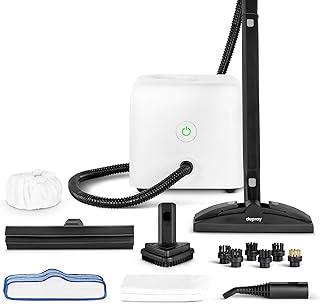
For versatile household jobs requiring strong pressure and abundant accessories, the Udodik 300°F Steam Cleaner for Home, 4.5 Bar delivers exceptional value and high-temperature performance. Its generous twenty-piece toolkit and fast heat-up cycle make it an outstanding choice for deep tile scrubbing, automotive interiors, and sanitizing household fabrics. The continuous steam lock also reduces hand fatigue during expansive whole-home cleaning sessions.
If you value proven reliability, minimalist styling, and heavy-duty sanitization, the Dupray Neat Steam Cleaner with 17-Piece Kit remains a gold standard in the mid-range cleaning category. This model excels at chemical-free sanitation across hard floors, upholstery, and bathroom fixtures with its solid build quality and smooth mobility. It works wonderfully for sanitizing curtains, furniture, and refreshing bedroom mattresses without leaving moisture behind.
Take time to assess your floor types, storage constraints, and accessory preferences before deciding on your preferred steam cleaner. Both featured options provide dependable sanitizing power and versatile attachments that simplify deep home maintenance. Choosing either model gives you a reliable, chemical-free way to keep your living environment clean and fresh.
FAQs
How does steam pressure affect cleaning performance on grout?
High steam pressure forces hot vapor deep into the microscopic pores of cement grout, breaking up trapped dirt and mildew without requiring chemical detergents. The velocity of the steam lifts the loosened grime to the surface where a microfiber pad can wipe it away instantly. Choosing a unit with at least 4.0 bar pressure makes cleaning neglected grout lines significantly faster and less physically demanding.
Can you use tap water in Best Steam Cleaners under $300?
While most modern canister machines accept regular tap water, using distilled or demineralized water is strongly recommended to prolong machine life. Tap water contains dissolved minerals like calcium and magnesium that precipitate out during boiling, forming hard scale inside the heating chamber. Using purified water eliminates scale formation and keeps the steam nozzles spraying freely over years of operation.
Are these steam cleaners safe for sealed hardwood flooring?
Steam cleaners can safely sanitize sealed hardwood floors when used with a wide floor pad, a microfiber cloth, and continuous sweeping motions. You should never hold the steam head in one spot on wood, as concentrated moisture and extreme heat can damage polyurethane finishes or warp planks. Always verify that your hardwood is fully sealed without open seams before applying pressurized steam.
What temperature is required to kill bed bugs and dust mites?
Sustained surface temperatures of at least 160 to 180 degrees Fahrenheit are sufficient to kill bed bugs, their eggs, and microscopic dust mites on contact. High-grade canister cleaners reach tip temperatures well above 200 degrees Fahrenheit, ensuring lethal thermal penetration into mattress seams and sofa cushions. Moving the nozzle slowly across upholstery fibers provides complete pest elimination without leaving chemical residue.
How long does a typical tank of water last during active steaming?
Most mid-sized canister steam cleaners provide between 35 and 50 minutes of continuous steam output from a single reservoir fill. Actual working time varies depending on your trigger habits and whether you use continuous flow or intermittent pulsing bursts. Intermittent trigger use extends your overall cleaning session significantly while conserving water volume inside the boiler tank.
Do steam cleaners leave wet residue on upholstery and carpets?
Quality canister systems produce dry steam with very low water droplet content, leaving fabric surfaces only slightly damp to the touch. When using a microfiber bonnet over the upholstery tool, the cloth absorbs excess moisture while capturing the dissolved dirt particles. Upholstery treated with dry steam typically dries completely within fifteen to thirty minutes under normal indoor airflow.
Which accessories are essential for deep kitchen cleaning?
Deep kitchen sanitization requires stiff nylon detail brushes, brass wire nozzles for baked oven racks, and flat scraper tools for stovetop residue. A concentrated jet nozzle is also vital for blasting grease out of range hood filters, hinge joints, and cabinet corners. Microfiber bonnets finish the job by wiping away melted oils from stainless steel backsplashes without leaving streaks.
How often should you descale a home canister steam cleaner?
If you regularly operate your steam machine with municipal tap water, descaling the boiler every twenty to thirty cleaning cycles is ideal. You can rinse the tank with a solution of equal parts white vinegar and warm water, letting it sit before flushing thoroughly. Routine maintenance of this kind fits naturally into comprehensive seasonal home prep checklists to keep all appliances running efficiently.
What is the top-rated option among Best Steam Cleaners under $300 in 2026?
The top-rated choices balance fast warm-up cycles, robust operating pressure above 4.0 bar, and versatile attachment kits that handle varied surfaces. Machines that feature durable stainless steel boilers and lockable triggers for continuous steam provide the most dependable user experience for whole-home cleaning. Selecting a model with strong verified customer ratings ensures dependable long-term performance across demanding sanitizing jobs.
Can you use cleaning chemicals inside the water tank?
You must never add chemical detergents, disinfectants, or essential oils directly into the water reservoir of a canister steam cleaner. Adding chemicals inside a pressurized boiler can degrade heating components, destroy internal silicone seals, and produce dangerous toxic fumes when vaporized. The extreme heat of pure water vapor provides complete sanitization on its own without requiring chemical boosters.