YouTube audiences expect sharp visuals and accurate color representation from modern content creators. Built-in laptop cameras and outdated optics often result in grainy, washed out footage that hurts viewer retention across tutorials and live broadcasts.
We evaluated 7 top options for September 2026, analyzing leading brands like Logitech, OBSBOT, EMEET. Modern creator cameras now combine large optical sensors with intelligent motorized tracking and fast autofocus to streamline production.
Finding the right camera eliminates tedious color grading sessions and keeps your presentation professional. Whether you record sitting at your desk or move around your studio, our guide works alongside our insights on home and living setups to optimize your video workflow.




Selecting visual recording equipment for a channel involves balancing physical optics, sensor capabilities, and onboard processing. Understanding these key technical elements helps you pick hardware that matches your recording space and content style.
1. Sensor Size and Low-Light Sensitivity
The physical size of an image sensor dictates how much ambient light reaches the pixels during filming. Larger sensors like 1/1.5 inch or 1/2 inch formats capture significantly more light than standard compact modules. This increased surface area yields cleaner signals with reduced digital noise in dim rooms.
When comparing specifications, pay close attention to the fraction representing sensor dimensions. A 1/1.28 inch sensor is noticeably larger than a 1/2.8 inch sensor and handles variable background lighting much better. Cameras with wider ISO ranges also preserve shadow details without introducing distracting color artifacts.
If your recording studio lacks dedicated professional softboxes, always prioritize buying a larger optical sensor. The improved light gathering reduces your dependence on harsh supplementary lighting and keeps your skin tones looking natural on camera.
2. Resolution and Native Frame Rates
Video resolution establishes the base clarity of your upload, while frame rate dictates how fluid motion appears on screen. Standard 1080p resolution at 30 frames per second works well for casual talking head videos. Fast-paced gaming channels and tutorials benefit substantially from 60 frames per second or higher.
Ultra HD 4K capture allows you to crop, pan, and reframe your shots in post-production without degrading visual quality for 1080p final exports. High-speed options supporting 100 or 120 frames per second deliver buttery smooth motion that eliminates blur during energetic presentations and physical demonstrations.
A practical rule of thumb is to select 4K resolution if you create static instructional content where you crop into specific areas. Choose high frame rate 1080p hardware if your videos feature rapid physical movements or dynamic motion graphics.
3. AI Subject Tracking and PTZ Mechanics
Pan-tilt-zoom hardware paired with artificial intelligence algorithms allows a camera to follow your movement across a room automatically. Motorized two-axis gimbals physically rotate the lens to keep you centered in the frame. This capability replaces the need for a dedicated camera operator during solo recording sessions.
Evaluate tracking systems by looking at response speed and available tracking modes. Premium units offer upper body tracking, hand tracking, and specialized zone restrictions to prevent the lens from wandering toward background distractions. Smooth mechanical rotation prevents jerky movements that can disorient your viewers.
Creators who teach whiteboard concepts or demonstrate physical products should look for customizable tracking boundaries. Setting non-tracking zones ensures the lens stays focused on your working area even when you reach for external props.
4. Autofocus Technology and Close-Up Distance
Fast and accurate focusing is critical when holding items up to show fine details to your audience. Traditional contrast autofocus often hunts back and forth before locking onto a subject. Modern phase detection autofocus locks onto targets within fractions of a second for seamless transitions.
Review minimum focusing distances to understand how close an object can get before blurring occurs. Dual all-pixel phase detection systems excel at quickly switching focus between your face and a small product held inches away from the glass. This rapid locking keeps product reviews crisp and watchable.
Test focusing behavior by bringing an object directly toward the lens while watching for focus breathing. Reliable camera units maintain stable exposure while snapping sharpness to the foreground object without hesitation.
5. High Dynamic Range and Lighting Control
High dynamic range processing balances bright background windows against darker foreground subjects to prevent blown-out highlights. Direct-current-gain HDR and staggered exposure techniques blend multiple frames to retain balanced contrast across complex studio environments.
Check whether HDR functions operate at your preferred resolution and frame rate combinations. Some cameras disable HDR when operating in maximum 4K or ultra-high frame rate modes due to onboard processing limits. Verify that color correction tools allow custom gamma curve adjustments for precise fine-tuning.
When positioning your desk near a bright window, choosing a camera with robust hardware HDR prevents your face from turning into a dark silhouette. Combining proper sensor exposure with our tips on furniture and comfort creates an inviting and functional streaming space.
6. Field of View and Lens Versatility
Field of view determines the horizontal and diagonal width of the scene captured by the camera. Narrow angles around 65 degrees isolate single speakers and hide messy room backgrounds. Wide angles between 85 and 90 degrees capture multiple hosts or broad whiteboard setups.
Some specialized streaming cameras incorporate dual-lens configurations combining wide-angle optics with dedicated telephoto lenses. This optical arrangement enables simultaneous wide overview capture and pristine zoomed-in framing without relying solely on noisy digital magnification.
If your recording studio is compact, select a camera that supports software field of view adjustments. Narrowing the capture angle digitally or optically keeps viewers focused on your presentation rather than ambient room clutter.
7. Audio Processing and Microphone Arrays
Integrated microphone quality is essential for quick recording sessions, portable vlogging, and guest video calls. Multi-microphone arrays utilize spatial audio algorithms to isolate speech while rejecting background keyboard clicks and cooling fan noise.
Examine the pickup pattern specifications to see whether the unit uses omnidirectional or directional elements. Advanced tri-microphone arrays combine wide ambient capture with directional voice pinpointing to maintain clarity across varying speaker distances.
While serious video creators eventually invest in dedicated external XLR or USB microphones, having dependable onboard noise cancellation provides a crucial backup for mobile recordings and impromptu live sessions.
8. Software Control and Automation Tools
Software suites allow creators to dial in manual white balance, saturation, sharpness, and digital framing presets. Comprehensive desktop applications let you store custom profiles for different lighting conditions and times of day.
Look for integration with industry tools such as Stream Deck plugins, Open Sound Control protocols, and global hotkeys. Advanced units also incorporate touchless gesture and voice controls, allowing you to trigger tracking or zooms without touching physical buttons during a live take.
Before making a final choice, confirm that the camera companion software runs natively on your operating system. Deep software integration saves significant setup time before every recording session.
| Camera Model | Max Resolution & Rate | Sensor Format | Primary Focus Feature | Ideal Video Production Use |
|---|---|---|---|---|
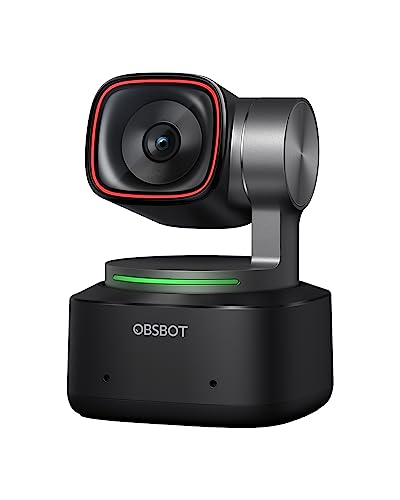
| OBSBOT Tiny 3 | 4K @ 30 FPS / 1080p @ 120 FPS | 1/1.28″ CMOS | Dual All-Pixel PDAF | Flagship Studio Production |
| OBSBOT Tiny 2 | 4K @ 60 FPS | 1/1.5″ CMOS | All-Pixel 0.3s AF | Dynamic Live Streaming |
| OBSBOT Meet 2 | 4K @ 30 FPS | 1/2″ CMOS | AI Dynamic Framing | Compact Travel & Desk Setup |
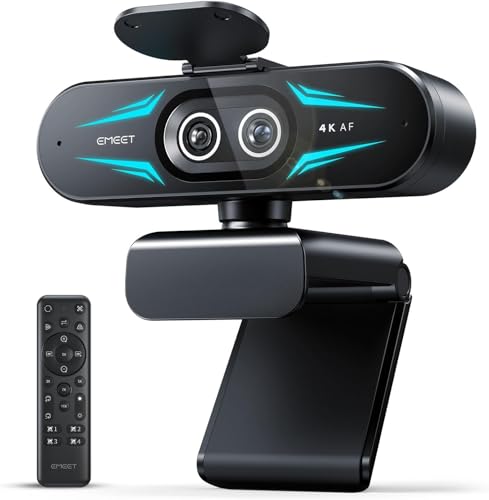
| EMEET C60E | 4K Dual Camera | 1/2.8″ CMOS | PDAF & 11X Hybrid Zoom | Product Demos & Teaching |
| OBSBOT Tiny SE | 1080p @ 100 FPS | 1/2.8″ Stacked CMOS | Dual Native ISO AF | High-Motion Gaming Streams |
| Logitech C920x | 1080p @ 30 FPS | Standard CMOS | HD Auto Light Correction | Budget Starters & Casual Calls |
Why You Should Trust Us
Our evaluation process focuses on rigorous analysis of optical hardware specifications, sensor architectures, and real-world utility for content creators. We dissect manufacturer claims against verified technical parameters like sensor dimensions, native frame rates, and autofocus response benchmarks.
We categorize visual gear across distinct price tiers to help creators maximize their investment. By examining third-party developer software integration, audio pickup array designs, and thermal performance, we ensure our recommendations address genuine recording workflow requirements.
Our comparisons remain entirely objective and data-driven. We continuously monitor technological shifts in the streaming and video production industries to keep our guides accurate, practical, and dependable for creators at all experience levels.
Final Thoughts
Choosing the right video hardware dramatically accelerates your production workflow and builds audience trust through crisp visuals. For creators who demand uncompromised studio quality, the OBSBOT Tiny 3 AI-Powered Spatial Audio 4K Webcam represents the premier flagship choice. Its massive 1/1.28 inch sensor and spatial audio array deliver unmatched image depth and pristine voice separation.
Creators seeking maximum versatility for product reviews and physical tutorials will appreciate the EMEET C60E Dual-Camera 4K Webcam for Streaming. Its innovative dual-lens configuration makes switching between wide-angle scene capture and detailed product macro shots effortless during live demonstrations.
If high-motion gameplay or rapid movements define your channel, the OBSBOT Tiny SE 1080P 100FPS Webcam for PC delivers exceptional value with its ultra-smooth 100 frames per second capability. Those needing an ultra-portable compact unit for mobile filming can rely on the OBSBOT Meet 2-4K Webcam for PC with 1/2″ Sensor for balanced clarity in any setting, and you can explore more gear comparisons on our general review collection.
FAQs
What makes Best Webcams for YouTube in 2026 superior to built-in laptop cameras?
Dedicated creator cameras feature significantly larger optical sensors that capture more light and detail than tiny built-in laptop lenses. They also provide motorized subject tracking, rapid phase detection autofocus, and manual exposure controls essential for professional video creation.
Do I really need 4K resolution when filming YouTube videos?
Recording in 4K provides extra pixel data that allows you to crop and reframe shots in post-production without losing 1080p sharpness. It also ensures your content looks crisp on large 4K displays and television screens.
How does frame rate affect live streaming and recorded videos?
A standard 30 frames per second rate works well for static talking head formats. Higher frame rates like 60, 100, or 120 frames per second eliminate motion blur, making physical gestures and high-action gaming look remarkably smooth.
What is the benefit of AI tracking in modern streaming cameras?
AI tracking uses intelligent algorithms and motorized gimbals to keep you centered in the frame as you move around your workspace. This allows dynamic solo presentations and tutorial demonstrations without requiring manual camera adjustments.
How important is sensor size when choosing a webcam?
Sensor size is the single most critical factor for low-light performance and image quality. Larger sensors capture more light, produce richer colors, and create subtle natural background blur that makes your video stand out.
Can I use dynamic gesture controls during live YouTube broadcasts?
Modern streaming cameras allow you to lock tracking targets or trigger digital zooms using simple hand gestures. This hands-free operation lets you adjust your shot composition without touching your computer mouse or interrupting your presentation.
Do high-end webcams work directly with Open Broadcaster Software?
Most modern creator cameras connect via standard USB plug-and-play protocols and integrate seamlessly with Open Broadcaster Software and other streaming platforms. Dedicated desktop utilities allow advanced fine-tuning that syncs directly with your scene layouts.
What is the top-rated option among Best Webcams for YouTube in 2026 for dynamic presentations?
Cameras featuring mechanical pan-tilt-zoom gimbals and large optical sensors offer the most versatile performance for dynamic creators. Units like the Tiny series provide smooth motorized tracking and fast autofocus to handle unpredictable movement.
Is built-in webcam audio good enough for professional YouTube channels?
Modern multi-mic arrays with spatial processing deliver clean audio for casual calls and mobile vlogs. However, investing in a dedicated external microphone remains recommended for serious voice-over work and studio production quality.
How do dual-camera systems benefit tutorial and product review creators?
Dual-camera setups combine a wide-angle lens for wide room coverage with a telephoto lens for extreme close-ups. This hardware pairing lets you display detailed item views and your face simultaneously without swapping lenses.