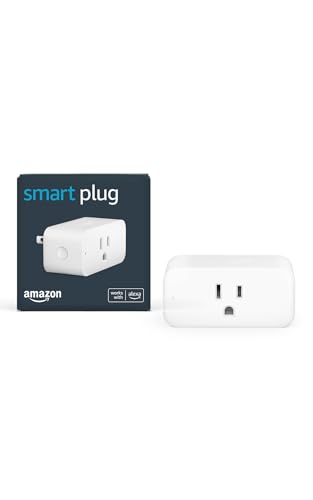
Automating everyday household fixtures no longer requires rewiring your walls or investing in costly dedicated appliances. Adding a simple smart adapter allows you to control floor lamps, humidifiers, and kitchen accessories directly from your phone or using voice commands. Choosing the right hardware ensures your appliances run on dependable schedules without frequent connection drops.
Our evaluation covers 10 models available in September 2026 to help you navigate newer standards like Matter and traditional single ecosystem plugs. Selecting an underpowered unit or one with poor network handling can lead to offline errors and safety hazards. Exploring smart device integration also pairs well with broader home automation upgrades across your living space.
This guide explains vital electrical ratings, connectivity protocols, and physical dimensions that prevent blocked wall sockets. Understanding these core specifications will help you choose dependable hardware tailored to your specific power requirements and preferred voice ecosystem.





Electrical Current and Maximum Power Capacity
Every smart socket carries a specific current rating that dictates what types of appliances it can safely operate. Standard models typically support either 10 amps at roughly 1200 watts or 15 amps at 1800 watts under typical residential voltage. Exceeding these electrical limits can trigger internal thermal cutoffs or create genuine fire hazards in your home.
Low-draw electronics like accent lamps, standing fans, and decorative holiday string lights operate smoothly on standard 10 amp outlets. High-wattage heating appliances such as space heaters, air fryers, electric kettles, and toaster ovens require heavy duty 15 amp hardware. Check the manufacturer label on your appliance before deciding which plug rating to deploy in that room.
A reliable rule of thumb is to calculate total running wattage by multiplying appliance amperage by 120 volts. Always leave a twenty percent safety buffer for resistive heating elements that experience initial startup current surges. When connecting heavy duty climate appliances, pair your choices carefully with dedicated space heaters and air conditioners to avoid overloading household circuits.
Matter Protocol and Cross-Platform Interoperability
Smart home ecosystems traditionally operated inside closed software gardens that required proprietary hubs or brand specific applications. The introduction of Matter has altered this landscape by standardizing communication across Apple Home, Amazon Alexa, Google Home, and Samsung SmartThings. Investing in Matter certified devices simplifies long term smart home expansion across multiple household platforms.
Matter compatibility allows your family members to control the exact same physical switch using different smartphone brands and voice assistants. Setup processes are unified through standardized QR code scanning, eliminating the requirement to register secondary user accounts on third party cloud servers. This standard also guarantees that your hardware remains compatible with future platform updates without requiring hardware replacements.
Be aware that operating Matter devices within Apple Home or Google Assistant still requires a compatible local controller hub like an Apple HomePod or Nest Hub. If your home lacks a dedicated Matter controller, choose hardware that provides standalone mobile application access as an alternative onboarding pathway.
Local LAN Control Versus Cloud Dependency
Traditional smart accessories rely entirely on remote cloud servers to interpret scheduling commands and trigger on or off actions. When your home broadband connection drops, cloud dependent sockets frequently fail to execute preset automation routines or respond to mobile triggers. Local area network control solves this vulnerability by processing command signals directly inside your private router environment.
Devices supporting local LAN communication maintain their internal clock timing and execute scheduled lighting routines even during broad internet service outages. This architecture also dramatically reduces input latency, allowing lights to toggle on instantly without the slight delay caused by routing signals through distant overseas servers. Evaluating local execution capabilities is vital if you prioritize uninterrupted automation stability.
Review manufacturer technical documentation to verify whether timers reside on physical onboard memory chips or remote servers. Hardware that stores automated schedules locally guarantees consistent operation for critical loads like aquarium filters, terrarium lights, and plant grow lamps.
Wi-Fi Frequency Support and Bluetooth Onboarding
Nearly all residential smart sockets communicate over standard 2.4 gigahertz Wi-Fi bands due to superior physical wall penetration and extended signal range. Modern dual band and mesh routers often broadcast single unified network names that combine 2.4 gigahertz and 5 gigahertz frequencies. This combined network setup can occasionally cause connection failures during the initial pairing procedure.
Modern smart sockets resolve pairing headaches by integrating secondary Bluetooth radios explicitly dedicated to device onboarding. When you plug the socket into an outlet, the companion mobile application automatically detects the Bluetooth beacon and transmits local Wi-Fi credentials seamlessly. This streamlined workflow eliminates the frustrating step of manually disconnecting from home Wi-Fi to join temporary hardware broadcast points.
If your router lacks separate network bands, temporarily separate the radio frequencies or step farther away from your access point during initial setup. Once onboarded, the hardware maintains a solid connection to the 2.4 gigahertz band even through dense drywall and household furniture.
Form Factor, Physical Dimensions, and Socket Clearance
Early generations of smart plugs featured bulky cylindrical enclosures that completely blocked neighboring wall receptacles from normal use. Modern industrial designs utilize slim, rectangular, or low profile puck shapes engineered to occupy only a single outlet space. Preserving access to secondary outlets is critical when outfitting crowded living areas, home offices, and entertainment centers.
Look for ultra compact profiles measuring approximately 1.2 to 1.5 inches in total vertical thickness for tight placements behind couches and media consoles. Side positioned physical override buttons are equally important, allowing manual toggling without having to reach into difficult clearance angles. Well engineered compact bodies allow you to stack two smart units vertically inside a standard duplex wall plate.
Measure your available depth clearances if you plan to install plugs behind headboards, nightstands, or decorative accent tables. Selecting low profile hardware enhances both safety and aesthetics when designing cozy smart home lighting setups throughout your home.
Technical Specifications and Category Comparison
Comparing electrical ratings and technical standards side by side ensures you purchase the proper hardware for each household location. The table below outlines key engineering differences between common smart plug categories found in modern homes.
| Plug Type | Current Rating | Max Wattage | Primary Application | Ideal Protocol |
|---|---|---|---|---|
| Standard Mini | 10A to 15A | 1200W to 1800W | Lamps, Fans, Chargers | 2.4GHz Wi-Fi / Bluetooth |
| Matter Compatible | 15A | 1800W | Cross Platform Smart Homes | Matter over Wi-Fi / LAN |
| Heavy Duty | 15A | 1800W | Heaters, Coffee Makers | 2.4GHz Wi-Fi / Local Timers |
| Outdoor Rated | 15A | 1875W | Patio Lights, Pond Pumps | Extended Range Wi-Fi (IP64) |
Matching appliance demands with the correct category prevents premature relay degradation and unexpected breaker trips. Standard mini models excel at low load lighting, while heavy duty and outdoor designs provide robust protection for demanding motorized and heating equipment.
Automation Routines, Sunset Tracking, and Away Modes
The primary advantage of connected power adapters is the ability to run automated schedules without manual oversight. Basic companion applications allow you to build straightforward on and off daily timers for routine living habits. Advanced software suites expand on this capability by offering solar tracking that shifts operational times based on shifting local sunrise and sunset hours.
Vacation or away modes add security by toggling connected living room lamps at randomized intervals during evening hours. This random cycling mimics real human occupancy, effectively deterring opportunistic intruders while your family travels. Grouping features also allow you to synchronize multiple sockets across an entire room to respond simultaneously to a single button press.
Check if your prospective platform supports countdown auto off timers that shut down styling irons or kitchen gear after a predetermined duration. These safety countdowns protect your home against accidental fires while trimming phantom power consumption from idle electronic devices.
Outdoor Environmental Protection and Ingress Ratings
Standard indoor smart sockets cannot withstand moisture exposure, freezing temperatures, or high ambient humidity levels found outside. Outdoor smart hardware features ruggedized thermoplastic shells, silicone socket gaskets, and specialized internal potting to protect sensitive microcontrollers. Installing an indoor rated plug in an exterior outlet invites immediate short circuits and permanent hardware failure.
Look for an Ingress Protection rating of at least IP64 when shopping for patio string lights, fountain pumps, and holiday displays. An IP64 certification guarantees total dust protection alongside resistance to splashing water from rainstorms and yard sprinklers. Outdoor models also incorporate extended range radio antennas capable of transmitting through dense exterior masonry, siding, and double pane glass.
Always mount outdoor smart outlets at least twelve inches above ground level to avoid contact with pooling rainwater or winter snow drifts. Ensure the protective weather covers remain securely snapped over unused outlets when external power cords are disconnected.
Safety Certifications and Fire Retardant Construction
Smart plugs sit continuously energized inside your electrical walls, making verified laboratory safety compliance non negotiable. Reputable hardware carries formal testing certifications from recognized organizations like Underwriters Laboratories (UL), Intertek (ETL), or the Federal Communications Commission (FCC). These marks confirm the unit underwent rigorous electrical, thermal, and mechanical safety testing.
Certified plugs utilize V-0 flame retardant polycarbonate housings that self extinguish within seconds if an internal component experiences catastrophic electrical failure. Quality manufacturing also includes integrated overcurrent and thermal protection mechanisms that automatically sever electrical current during dangerous power surges. Uncertified generic plugs frequently skip these internal protections to minimize manufacturing expenses, introducing severe risks to your home.
Verify that physical certification marks are stamped directly into the plastic casing rather than merely printed on retail packaging. Safe electrical hardware provides dependable long term automation while protecting your property from avoidable wiring hazards.
Why You Should Trust Us
Our product evaluations rely on deep technical analysis of electrical specifications, wireless hardware standards, and verified platform integrations. We dissect circuit capacity ratings, network architecture, and firmware reliability to deliver objective buying guidance. Our focus centers on long term dependability, physical build quality, and realistic interoperability within modern smart home ecosystems.
We continuously track software updates, emerging connectivity protocols like Matter, and standard safety certifications across major manufacturing brands. By cross referencing verified user experiences, manufacturer engineering data, and structural design tolerances, we eliminate misleading marketing claims. Our transparent approach ensures you receive practical recommendations based strictly on safety, convenience, and performance.
Final Thoughts
Choosing the right smart outlet depends on your household voice ecosystem, electrical loads, and intended installation environment. If you want seamless cross platform control that works across Apple Home, Alexa, and Google Home, the TP-Link Tapo Matter Supported Smart Plug Mini is our top overall recommendation. Its Matter integration, compact flame retardant chassis, and smooth local LAN control ensure your automations run smoothly even during internet drops.
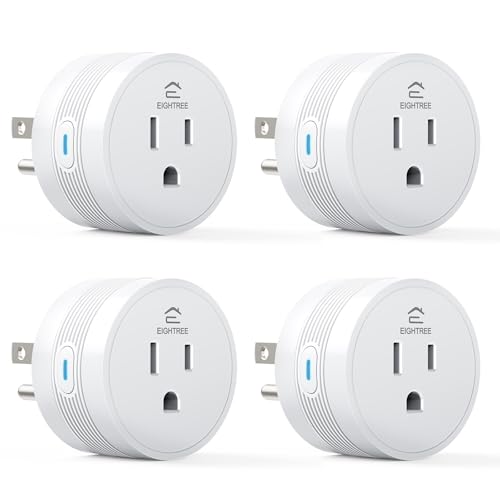
For households operating high draw kitchen appliances or space heaters, high current capacity is essential. The EIGHTREE 15A Smart Plug Works with Alexa & Google delivers robust 15 amp support with an ultra slim profile that fits behind tight furniture. It provides exceptional value for automating heavy appliances while maintaining full scheduling versatility.
If you need to automate landscape lighting, fountain pumps, or holiday decorations outside, weather resistance is paramount. The Kasa Outdoor Smart Plug KP401 offers IP64 weatherproofing, extended wireless transmission range, and dependable sunrise tracking. For straightforward multi pack indoor setups, options like the Govee Smart Plug, WiFi Outlet Compatible deliver reliable voice control and easy Bluetooth pairing.
Evaluate your appliances, verify current requirements, and select hardware that matches your home connectivity goals. Explore our general smart device hub for more hardware analysis and home automation advice.
Frequently Asked Questions
What are the Best Wi-Fi Smart Plugs for mixed platform households in 2026?
The top options for households utilizing multiple smartphone platforms are Matter certified models. These devices operate seamlessly across Apple Home, Google Assistant, Amazon Alexa, and Samsung SmartThings without requiring proprietary ecosystem bridges.
Can I use smart plugs on 5GHz Wi-Fi networks?
Most smart plugs operate exclusively on 2.4GHz Wi-Fi frequencies due to better wall penetration and greater physical range. If your router broadcasts a combined mesh network, Bluetooth onboarding features help route the initial connection directly to the 2.4GHz band.
Do smart plugs continue running schedules if the internet goes down?
Plugs equipped with local LAN communication or onboard internal memory chips continue executing preprogrammed schedules during broadband outages. Cloud dependent units may fail to trigger timed routines until active internet communication is restored.
What is the difference between 10A and 15A smart outlets?
A 10A model handles up to 1200 watts and is designed for low power loads like table lamps, desk fans, and phone chargers. A 15A model supports up to 1800 watts, making it mandatory for high draw appliances like space heaters, toaster ovens, and air fryers.
Do smart plugs consume electricity when turned off?
Smart outlets consume a tiny amount of standby power, typically between 0.5 and 1.5 watts, to keep their internal Wi-Fi radios listening for commands. This minimal phantom draw is vastly outweighed by the energy savings generated through automated scheduling.
Can I plug a power strip into a smart plug?
You can plug a multi outlet power strip into a 15 amp smart socket provided the combined wattage of all connected devices stays well below 1800 watts. Connecting high draw appliances simultaneously to a single smart plug can trip circuit breakers or damage the socket relay.
How does Bluetooth onboarding make setup easier?
Bluetooth onboarding allows your smartphone to discover nearby new plugs instantly without requiring you to switch Wi-Fi networks manually. The app transmits your home network credentials directly over Bluetooth, resulting in faster and more reliable initial configuration.
Are smart plugs safe to leave plugged in continuously?
Plugs carrying official UL or ETL certifications are engineered and thoroughly lab tested for continuous daily operation. These models feature fire resistant polycarbonate housings, surge protection, and internal thermal cutoffs to ensure safe long term usage in modern connected living spaces.
How do I reset a smart plug if it loses connection?
Most units can be reset by pressing and holding the physical power button on the side of the housing for five to ten seconds. The LED status indicator will begin blinking rapidly, signaling that the device has entered pairing mode and is ready for reconfiguration.
Can smart plugs help lower my monthly electric bill?
Smart sockets reduce electricity costs by completely cutting phantom standby power to entertainment gear and scheduling climate devices to run only when needed. Automating lights and air purifiers to turn off when rooms are unoccupied eliminates unnecessary energy waste.