

Worried about hidden mold and the health risks it brings? The best indoor air quality monitors for mold catch warning signs—like high humidity, elevated PM2.5 and VOCs—so you can act before spores spread and allergy symptoms worsen.
This curated guide compares reliable options for mold detection and air health: quick DIY kits, compact monitors, and pro-grade sensors. Read on to find a monitor that fits your home, budget, and need for alerts, accuracy, and continuous tracking.
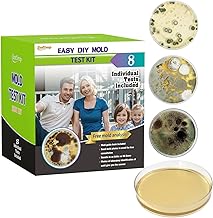
Best Overall: Mold Test Kit for Home — 12-Test DIY Mold Detector — simple swab tests with clear ID guide for fast on-site results
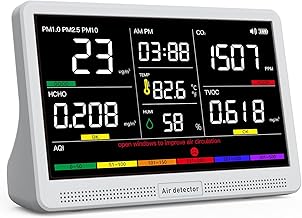
Best Budget: Indoor Air Quality Monitor — CO2, PM2.5 & TVOC — affordable sensor pack for PM2.5, CO2 and formaldehyde alerts
Best Premium: BREATHE Airmonitor Plus — Professional CO2 & VOC Monitor — advanced VOC/PM sensors with app for detailed diagnostics
Best for Long Hours: Professional Indoor Air Quality Monitor — Long-Lasting — built for continuous use with durable runtime and steady readings







Buying Guide
Can an air quality monitor detect mold?
Short answer: not directly. Most consumer air quality monitors measure gases (CO2, TVOCs, formaldehyde), particulates (PM1/2.5/10), temperature and humidity — they do not identify specific biological agents like mold spores. That means a high humidity reading or elevated particulate counts can indicate conditions that favor mold growth, but they are proxy signals, not a diagnosis.
When you see repeated spikes in humidity, TVOCs or particles, follow up with a visual inspection and targeted testing. For definitive identification of mold species or active spore counts, use a dedicated mold test or hire a professional inspector; for at-home confirmation, a DIY mold test kit can be a practical next step. Example: DIY Mold Test Kit.
Sensors and measurements to prioritize for mold risk
Not all sensors are equally useful when your goal is spotting mold-friendly conditions. Focus on devices that measure humidity and particle loads, and consider VOC/formaldehyde readings as additional context.
- Relative humidity — sustained readings above ~60% raise mold risk; continuous RH monitoring is the single most useful indicator.
- Temperature — affects RH and condensation risk; track alongside humidity.
- PM2.5 / PM10 — spikes in particulate counts can reflect mold fragments or dust that harbors spores, useful as an indirect signal.
- TVOC / Formaldehyde — not mold-specific, but rising VOCs can indicate building material off-gassing or damp-related microbial VOCs.
Reducing indoor particulates through regular cleaning can help lower PM readings — consider tools like best robot vacuum for fine dust to keep floors free of dust and fragments that raise PM counts.
For higher confidence in those measurements, look for monitors that specify sensor types and refresh rates. Devices marketed as professional-grade often use higher-quality particle and VOC sensors; for example, the BREATHE Airmonitor Plus is an example of a monitor that emphasizes multi-sensor coverage for CO2, PM and VOCs.
Accuracy, calibration and where to place the monitor
Accuracy matters because small differences in readings can change whether you treat a signal as a potential mold problem. Consumer monitors vary: look for CO2 NDIR sensors (for CO2 stability), optical/laser particle counters for PM, and documented calibration procedures.
- Check the product specs for sensor type and recommended recalibration interval.
- Prefer devices that offer self-calibration or supplier-supported calibration services for long-term reliability.
- Pay attention to sampling frequency — faster refresh rates give earlier warnings of changes.
For removing settled particles that can skew readings, use cleaning equipment with strong filtration — see best robot vacuum with hepa filter.
Placement tips: install monitors in commonly occupied rooms and near suspected trouble spots (bathrooms, basements, crawlspaces), keeping them away from HVAC vents, open windows and direct sunlight. A good rule: mount at breathing height (about 3–6 feet off the floor) and avoid corners where air can stagnate.
Alerts, connectivity and data logging
Real-time alerts and historical data make it far easier to spot patterns that suggest mold risk — repeated nightly humidity spikes or VOC increases after showers, for example. When choosing a monitor, consider the app experience, cloud storage limits, alert customization, and smart-home compatibility.
- Instant alerts (push, email or audible) help you react quickly to sustained high humidity or particulate spikes.
- Exportable logs or graphing features are useful for documenting issues for a contractor or inspector.
- If you use a smart-home ecosystem, check integrations — devices with Alexa or other assistants can make alerts part of your routine. Example: Amazon Smart Air Quality Monitor supports Alexa and offers simple alerts for common IAQ metrics.
If you rely on a smart-home setup, consider pairing detectors with compatible devices like best robot vacuum for smart homes so your IAQ alerts and cleaning schedules work together.
Budget, intended use and ongoing maintenance
Decide whether you need a basic consumer monitor for occasional checks or a more feature-rich unit for continuous surveillance. For routine household awareness, a budget monitor that tracks humidity and PM may suffice. If you’re monitoring a damp basement, rental property or running renovation projects, invest in a device with wider sensor coverage and better accuracy.
- Factor in maintenance: optical particle sensors and VOC sensors can drift over time — check warranty and calibration options.
- Consider power and portability — battery models are convenient for spot checks; plugged units are better for continuous monitoring.
- Use a layered approach: monitors for ongoing detection, visual inspections for source identification, and targeted mold tests or professional assessments for confirmation.
Homes with allergy concerns should pair monitoring with cleaning strategies — tools such as best robot vacuum for allergies can reduce airborne triggers that show up in monitor data.
FAQ
Can air quality monitors detect mold?
Most consumer air quality monitors cannot detect mold spores directly; they measure humidity, particles, and VOCs that point to conditions where mold can grow. A sudden rise in humidity or persistent high particulate counts can be a useful early warning, but they aren’t a replacement for a confirmatory mold test. If you suspect active growth or smell a musty odor, follow up with targeted testing or a professional inspection. For a simple way to check surfaces and HVAC systems at home, consider a dedicated mold test kit like the Mold Test Kit.
Which air quality readings usually indicate a mold problem?
Watch for consistently high indoor humidity (generally above about 60%), frequent condensation, and unexplained increases in particulate matter or musty VOC levels. Temperature swings that create condensation on walls or windows also raise the risk of mold. Use trend data rather than single spikes—persistent conditions are more meaningful than brief excursions. If multiple indicators persist in one area, inspect the area for visible growth and consider testing.
What are good budget monitors to spot mold-friendly conditions?
Look for monitors that report humidity, PM2.5/PM10, and TVOC since those sensors help identify environments where mold can thrive. The inexpensive “Indoor Air Quality Monitor for Home” is a solid budget pick for those basic metrics, while smart options add alerts and historical charts for trend tracking. If you want a compact smart monitor that works with voice assistants and gives easy alerts, the Amazon Smart Air Quality Monitor is a popular runner-up. Whichever you choose, check that it logs data so you can spot chronic issues rather than one-off readings.
Can an air quality monitor replace professional mold testing?
No—monitors are best used for prevention and early detection of conditions that favor mold, not for definitive identification of species or contamination levels. Professional testing or lab analysis is necessary when you have visible growth, extensive water damage, or health symptoms tied to mold exposure. Use a monitor to guide when and where to test, and bring in pros for large infestations or complex HVAC contamination. Combining monitors with targeted testing gives the most reliable picture of indoor mold risk.
Where should I place indoor monitors to catch mold-prone areas?
Place monitors near likely moisture sources—bathrooms, laundry rooms, basements, and near HVAC returns—while keeping them at breathing height (about 3–5 feet) and away from direct vents or sunlight. Avoid placing units right against walls or in corners where airflow is poor, since that can skew readings. For larger homes, use multiple monitors or move a portable unit between rooms to compare conditions. Check areas with past water problems frequently and monitor during activities that raise humidity, like showering or cooking.
Final Verdict
Strong performers stood out for sensor breadth, reliable real‑time alerts and clear data history — not flashy extras. For mold risk detection prioritize multi‑sensor coverage (humidity, CO2, PM2.5/PM10, VOC/HCHO), stable calibration, prompt alerts and an easy-to-read display so you can respond quickly. The top monitors shared robust multi‑sensor arrays, intuitive alerts/displays and consistent readings that make mold conditions obvious without guesswork.
🏆 Best Overall: Mold Test Kit for Home — 12 Detection Tests, HVAC & Surfaces
💰 Best Budget: Indoor Air Quality Monitor — CO2, PM2.5/PM10, TVOC & HCHO
⭐ Best Premium: BREATHE Airmonitor Plus — CO2, PM1/PM2.5/PM10, VOC & Formaldehyde



Write Your Review
No reviews yet. Be the first to share your experience!