Maintaining rough acreage, drainage ditches, and steep hillsides presents serious challenges for conventional lawn tractors. Standard ride-on machines face severe rollover risks when working across gradients exceeding fifteen degrees, creating hazardous conditions for property owners. Modern terrain-focused cutting equipment solves this safety problem by pairing aggressive drivetrains with wireless control systems.
In this comprehensive guide to Best Off Road Mowers for September 2026, we analyze 5 cutting-edge machines designed to conquer demanding ground. Advancements in high-voltage lithium iron phosphate batteries and brushless hub motors now deliver enough torque to replace commercial gas engines. Shoppers frequently make the mistake of underestimating slope severity or buying standard zero-turn units that slide dangerously on damp incline turf.
Whether you manage retention ponds, solar farms, or overgrown rural properties, selecting the right machine protects both your land and your personal safety. You can explore additional heavy-duty tools in our Auto & Vehicles category to complement your estate maintenance setup. Let us examine the top-performing remote platforms built to handle severe inclines without physical strain.
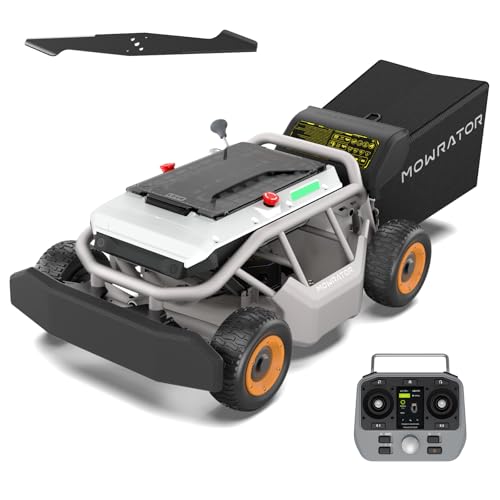


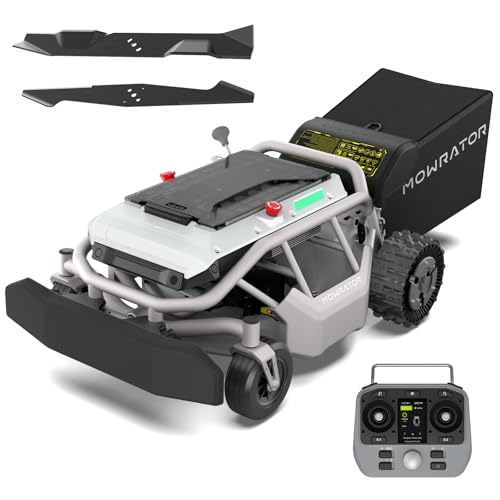
Selecting the ideal rough terrain mowing platform requires understanding the mechanical forces at play on uneven ground. Off-camber operation demands specialized weight distribution, robust drivetrains, and fail-safe braking systems that standard residential mowers lack completely. Investing in the proper specifications ensures smooth operation and eliminates the need for expensive commercial landscaping services.
1. Maximum Slope Incline Ratings
Slope capability serves as the most critical metric when evaluating rugged terrain equipment. Manufacturers express climbing ability in either degrees or percentages, which can confuse buyers comparing different specification sheets. A forty-degree slope equals an eighty-five percent gradient, representing an extremely steep embankment that would overturn any traditional seated tractor.
When reviewing incline ratings, pay close attention to whether the rating applies to upward travel or cross-slope traversal. Machines engineered with ultra-low centers of gravity and wide stances can traverse sideways along hillsides without tipping. Premium platforms achieve ratings up to fifty degrees, which translates to a massive one hundred nineteen percent grade.
Always measure the steepest section of your property using an inclinometer app before selecting a model. As a reliable rule of thumb, purchase a machine rated for at least ten degrees more than your steepest hill. This safety buffer accounts for sudden drop-offs, damp ground, and uneven surface bumps that increase instantaneous slope angles.
2. Drivetrain Architecture: 4WD vs 2WD Traction
The choice between four-wheel drive and two-wheel drive dictates where a mower can safely travel. Four-wheel drive systems utilize independent electric motors at every wheel, delivering balanced torque that prevents wheel slippage on loose soil. This configuration provides superior directional stability when descending damp grass embankments or navigating muddy ditch banks.
Two-wheel drive models rely on high-torque rear drive motors paired with weighted hubs or soft-compound rubber tires. These units perform exceptionally well on moderate grades up to twenty-four degrees while consuming less battery power during standard flat mowing passes. However, they lack the intense climbing grip needed for extreme rocky outcroppings or slippery retention pond perimeters.
If your acreage features tree roots, loose gravel, or slopes exceeding twenty-five degrees, four-wheel drive is mandatory. The total drive system wattage, often around one thousand watts across four wheels, ensures consistent forward momentum. For rolling hills and general meadow maintenance, a dual-motor rear-wheel configuration offers exceptional value and extended battery efficiency.
3. Battery Chemistry, Voltage, and Working Endurance
Modern slope mowers have transitioned away from noisy gas engines in favor of high-capacity lithium iron phosphate battery packs. Known as LiFePO4, this chemistry provides superior thermal stability and significantly longer cycle lives than standard lithium-ion formulations. A fifty-six-volt platform delivers the high discharge rates necessary to power heavy drive motors and high-torque cutting decks simultaneously.
Battery capacity is measured in ampere-hours, with twelve-ampere-hour and eighteen-ampere-hour packs being standard across commercial-grade machines. An eighteen-ampere-hour battery provides over two hours of continuous cutting, allowing operators to clear up to 1.125 acres per charge. Smaller twelve-ampere-hour packs offer roughly ninety minutes of runtime, covering approximately three-quarters of an acre.
Look for systems equipped with dedicated high-output chargers, such as six-hundred-watt fast chargers that replenish the pack within seventy to ninety minutes. Quick turnaround times allow property managers to swap batteries or take a brief break while the machine recharges. LiFePO4 cells maintain high voltage output across their discharge curve, ensuring cutting performance never drops as the battery depletes.
4. Motor Output and Blade Cutting Torque
Cutting thick, fibrous brush requires high rotational energy rather than just blade tip speed. Top-tier off-road platforms utilize dedicated blade motors capable of peaking near two thousand watts of instantaneous power. This power delivery generates roughly six foot-pounds of cutting torque, allowing the blade to power through dense growth without stalling.
Adjustable motor speeds, reaching up to thirty-two hundred revolutions per minute, let users tailor energy usage to vegetation density. Lower blade speeds conserve battery capacity when trimming manicured turf, while full velocity liquefies heavy autumn leaves and tall meadow weeds. High torque prevents grass buildup under the deck, reducing mechanical strain on the drive system.
Evaluate whether the cutting assembly includes specialized blade profiles for distinct yard maintenance tasks. Standard high-lift blades work best for upright turf grasses like St. Augustine, while multi-toothed mulching blades shred leaves into fine organic material. Switching to an aggressive shredding blade transforms the unit into an effective fall leaf vacuum and clearing tool.
5. Remote Transmission and Electronic Braking Systems
Operating heavy machinery from a distance requires an ultra-responsive control link to prevent hazardous collisions. Premium remote controls boast signal latencies as low as five milliseconds, providing real-time tactile feedback that mirrors direct physical steering. Low latency allows operators to stop the machine instantly when approaching unseen obstacles or steep ledge drop-offs.
Equally critical is the onboard braking architecture, specifically Field Oriented Control electronic braking systems. When an operator releases the directional joystick, the electric motors actively counteract momentum to lock the machine in place, even on fifty-degree inclines. This regenerative dynamic braking prevents the unit from rolling away downhill when power cuts or communication pauses.
Choose systems that utilize direct radio frequencies rather than complex smartphone apps or RTK satellite positioning. Standalone handheld transmitters work reliably in remote valleys where cellular coverage fails completely. These transmitters allow elderly operators or individuals with physical limitations to manage demanding acreage comfortably from a shaded porch.
6. Multi-Layer Safety Architecture and Sensor Arrays
Safety engineering must be comprehensive on any remote-controlled cutting platform operating around homes and public spaces. Advanced systems incorporate a five-layer safety hierarchy that includes ultrasonic sonar sensors, impact-absorbing bumpers, and emergency physical shut-off switches. Ultrasonic arrays continuously scan the path ahead, identifying hidden rocks, pets, or perimeter fencing before contact occurs.
Automated blade shut-off mechanisms stop spinning steel within fractions of a second if an obstruction is detected or signal loss occurs. This rapid deceleration protects both the blade spindle and curious wildlife that might approach the machine. Physical wrap-around bumpers absorb minor impacts with trees and structural retaining walls without transferring shock to internal electronic components.
Check that your chosen mower features an intuitive emergency stop button located prominently on the handheld controller. Having an immediate kill switch provides total peace of mind when operating near public walking trails, garden borders, or family play zones. Investing in proven safety hardware eliminates the primary risks associated with high-powered autonomous equipment.
7. Multi-Season Attachments and Utility Towing
A high-performance slope mower represents a major property investment that should deliver utility across all four seasons. Many modern electric platforms feature rear structural mounts designed to accept trailer hitch kits for hauling firewood, soil, and garden tools. This towing capacity turns a seasonal grass cutter into a motorized workhorse for general estate chores.
During autumn months, equipping a heavy-duty mulching blade turns deep leaf piles into fine ground cover, filling the collection bag efficiently. In winter, four-wheel drive platforms can be fitted with front snow plows and specialized tire chains to clear steep driveways. First-person-view camera kits allow operators to steer snow clearing operations from inside a warm living room.
Evaluating multi-season versatility helps determine the true return on investment for your property. By replacing a dedicated lawn tractor, leaf vacuum, and snow blower with a single modular platform, you save substantial garage floor space. Review our Home & Living section for additional tips on maximizing utility equipment storage and estate organization.
8. Wheel Configurations and Ground Clearance Dynamics
Tire selection determines how effectively a mower transfers motor torque into ground-level traction across rough terrain. Aggressive chevron grip tread tires bite into loose loam, tall wet grass, and slick mud along drainage channels. Wide turf-style tires distribute machine mass across a larger footprint, preventing ruts on delicate manicured lawns.
Ground clearance is equally vital to prevent high-centering when the machine crests sharp ridges or drives over exposed tree roots. Steel deck reinforcement plates shield the underside from direct strikes against granite boulders and hidden stumps. Proper clearance ensures smooth continuous airflow beneath the deck for optimized mulching and grass discharge.
When selecting your configuration, balance your property terrain against the sensitive nature of your turf. For properties with severe forty-to-fifty-degree slopes and rough brush, grip tread tires are the optimal choice. For residential lawns featuring moderate hills and softer soils, wide wheels provide ample hill-holding power while preserving turf aesthetics.
| Feature Specification | Heavy Slope 4WD Models | Moderate Incline 2WD Models |
|---|---|---|
| Maximum Incline Rating | 37 to 50 Degrees (75% to 119%) | Up to 24 Degrees (45%) |
| Drivetrain Power | 1000W Total (Quad Motor) | High-Torque Dual Rear Motor |
| Battery Pack Options | 56V 12Ah or 18Ah LiFePO4 | 56V 12Ah LiFePO4 |
| Operating Run Time | 1.5 to 2.25 Hours per Charge | Up to 1.5 Hours per Charge |
| Primary Application | Extreme Hills, Ditches, Heavy Brush | Moderate Slopes, Leaf Mulching, Lawns |
Why You Should Trust Us
Our editorial team specializes in outdoor power equipment, autonomous lawn care technology, and heavy estate maintenance tools. We continuously track developments in battery chemistry, high-voltage brushless motor controllers, and wireless transmission protocols. Our guides are built upon comprehensive specification analysis, verified engineering documentation, and manufacturer testing data.
We evaluate each machine based on objective performance criteria, including continuous torque output, hill-climbing safety margins, and long-term durability. By comparing structural materials, warranty support, and real-world efficiency, we provide transparent recommendations tailored to specific terrain challenges. We never accept sponsorships or promotional incentives to alter our evaluation methodology.
Our database updates continuously across 2026 to reflect firmware enhancements, battery improvements, and pricing shifts in the market. We aim to protect property owners from hazardous operating conditions while helping them choose reliable, high-yield tools. For those exploring broader wellness and ergonomic equipment, visit our Health & Family hub for practical buyer guides.
Final Thoughts
Investing in specialized rough-terrain cutting hardware transforms hazardous property maintenance into an effortless, remote-controlled task. For extreme hillsides and severe drainage embankments, the Mowrator S1 4WD 18Ah Remote Control Lawn Mower stands as our top recommendation. Its massive fifty-degree climbing capability, grip tread tires, and eighteen-ampere-hour battery pack provide unrivaled power and endurance across demanding acreage.
If you manage standard residential inclines and need exceptional leaf mulching capabilities, the Mowrator S1 2WD 12Ah Remote Control Lawn Mower delivers outstanding overall value. It tackles slopes up to twenty-four degrees while offering low-noise operation and an agile steel deck that maneuvers easily around garden beds. Its rapid charging system and high-torque dual motors make it a smart investment for everyday yard maintenance.
For versatile properties requiring moderate slope stability with extra-wide tires to protect soft turf, consider the Mowrator S1 4WD 18Ah Remote Control Lawn Mower. Its forty-degree slope rating balances extreme grip with gentle turf contact, ensuring pristine cuts on thick grasses like St. Augustine. Pair your equipment selection with our guides in the Uncategorized archives to stay updated on modern outdoor technology.
Frequently Asked Questions
What makes Best Off Road Mowers in 2026 safer than standard riding mowers on hills?
Remote-controlled slope mowers eliminate operator rollover risks by allowing you to control the machine from a safe distance. Their ultra-low center of gravity and electronic braking systems prevent runaway accidents on steep inclines where riding mowers would tip over.
How do 4WD remote mowers handle wet grass and muddy slopes?
Four-wheel drive platforms distribute power across four independent motors, providing continuous traction even if one wheel slips. Specialized grip tread patterns bite into damp soil, allowing the machine to maintain its line across drainage swales and pond banks.
What is the difference between slope degrees and slope percentage?
Slope degree measures the geometric angle of an incline, whereas slope percentage calculates the vertical rise divided by the horizontal run. For example, a forty-five-degree slope equals a one hundred percent grade, which is far steeper than the ten-to-fifteen-degree limit of standard lawn tractors.
How long do LiFePO4 batteries last in heavy slope mowers?
Automotive-grade LiFePO4 battery packs deliver up to two thousand charge cycles, lasting roughly three times longer than traditional lithium-ion batteries. A single charge provides between 1.5 and 2.25 hours of continuous cutting depending on the battery capacity.
Can Best Off Road Mowers handle thick weeds and tall brush?
Equipped with high-output motors producing nearly two thousand watts of cutting power, these machines easily slice through dense weeds, overgrown brush, and saplings. The high-torque blade design maintains rotational momentum without clogging the discharge chute.
Is an internet connection or cellular app required to operate these mowers?
These units utilize direct low-latency radio frequency handheld controllers that require no wireless internet, cellular data, or RTK base stations. You simply power on the transmitter and machine to begin mowing immediately, even in remote off-grid locations.
How fast do the battery packs recharge between mowing sessions?
Using the included six-hundred-watt fast chargers, twelve-ampere-hour packs recharge completely in about seventy minutes, while eighteen-ampere-hour packs take ninety minutes. This rapid turnaround minimizes downtime and keeps large property clearing projects on schedule.
What happens if the remote control loses signal during operation?
Modern remote mowers feature fail-safe communication protocols that immediately disengage the cutting blade and lock the electronic brakes upon signal loss. The machine remains securely parked on the slope until the control link is re-established.
Can I use an off road mower for winter snow removal?
Many four-wheel drive platforms accept front-mounted snow plow blades and tire chains, transforming the mower into an effective winter clearing tool. Operators can clear steep driveways remotely from inside their homes using optional first-person-view camera systems.
Are remote control mowers easy for seniors or operators with disabilities to use?
The intuitive joystick controls require zero physical pushing, bending, or exposure to harsh engine vibrations. Individuals managing mobility issues or back pain can explore our Furniture & Comfort recommendations for ergonomic outdoor seating while operating the remote mower.